
Best weight loss injections compared in 2026
Tirzepatide ranks best overall among weight loss injections in 2026. Compare semaglutide, liraglutide, and compounded GLP-1 by weight loss and heart risk data.

Tirzepatide is the sharpest weight loss injection on the market in 2026, but it isn't the right pick for every patient — and "best" changes depending on what you're optimizing for.
Best overall: Tirzepatide (Zepbound/Mounjaro). Best for cardiovascular risk reduction: Semaglutide (Wegovy/Ozempic). Best for shorter treatment courses: Liraglutide (Saxenda). Best access option when brand-name supply is tight: compounded GLP-1 medication through a licensed telehealth provider.
- Tirzepatide is the best weight loss injection overall in 2026, averaging 20.9% body weight loss at 72 weeks in the SURMOUNT-1 trial.
- Semaglutide carries the strongest cardiovascular data of any GLP-1 injection after the 2023 SELECT trial.
- Liraglutide (Saxenda) is a daily-dose option best suited to shorter courses, not maximum weight loss.
- Compounded GLP-1 medication fills access gaps but its regulatory status keeps shifting as FDA shortage designations change.
- A licensed telehealth provider, not a drugstore shelf, is where medically supervised access to any of these starts in 2026.
Why this matters
The gap between weight loss injections isn't small. Average weight loss ranges from roughly 8% to nearly 21% of body weight depending on the drug, and the mechanism behind that gap also decides which side effects you'll deal with and how often you'll be sticking a needle in your leg.
Cardiovascular data adds a second axis entirely. A patient managing heart disease alongside obesity isn't optimizing for the same outcome as someone who just wants the highest number on the scale. VevaRX prescribes both semaglutide and tirzepatide through medically supervised telehealth visits, and the right injection depends on which of those two goals matters more to the person taking it.
What makes the best weight loss injection
- Average weight loss in published trials — the single biggest differentiator between GLP-1 and GIP/GLP-1 injections.
- FDA-labeled indications — whether the drug is approved specifically for weight management, diabetes, or both.
- Dosing frequency — weekly injections beat daily ones for adherence in most real-world data.
- Side effect timing and severity — nausea and GI symptoms cluster during dose titration for every drug on this list.
- Cardiovascular or metabolic evidence — not every GLP-1 injection carries the same outcomes data.
- Supply and access reliability — brand-name shortages have pushed patients toward compounded alternatives at different points since 2023.
Weekly dosing sounds like a minor detail until you're four months into a titration schedule. A once-weekly injection means roughly 13 injections over a 90-day stretch; a daily one means closer to 90.
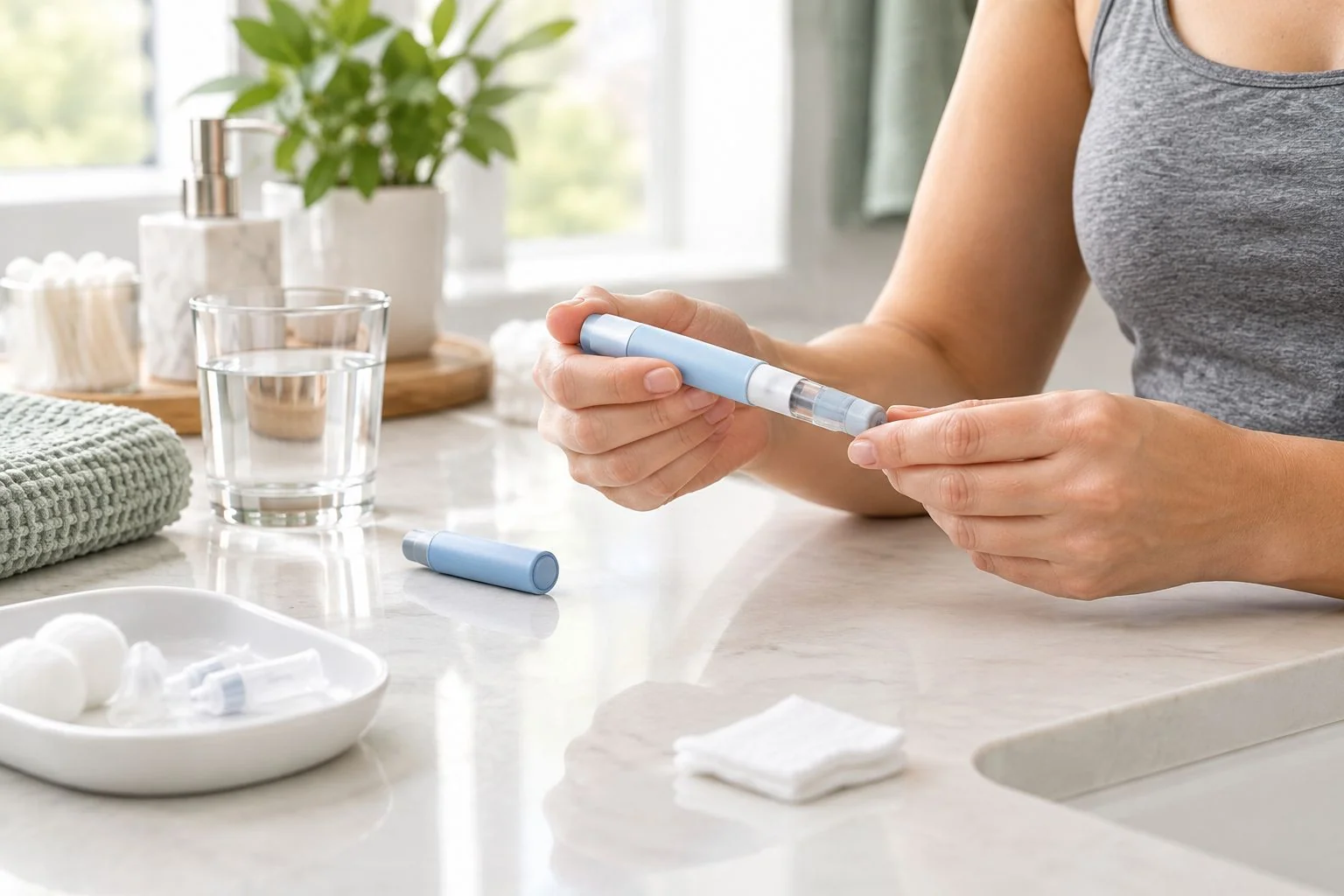
At a glance: weight loss injections compared for 2026
| Injection | Best for | Standout feature | Key limitation |
|---|---|---|---|
| Tirzepatide (Zepbound/Mounjaro) | Overall weight loss | Dual GIP/GLP-1 action, ~20.9% average loss at 72 weeks (SURMOUNT-1, 2022) | GI side effects peak hardest during titration |
| Semaglutide (Wegovy/Ozempic) | Cardiovascular risk reduction | FDA label covers major cardiovascular event reduction (SELECT trial, 2023) | Average weight loss trails tirzepatide by several points |
| Liraglutide (Saxenda) | Shorter treatment courses | Daily dosing allows finer titration control | Requires a daily injection instead of weekly |
| Compounded GLP-1 medication | Access when brand-name supply is tight | Available via telehealth outside brand-name supply constraints | Regulatory status narrows as FDA shortage rules change |
1. Tirzepatide (Zepbound/Mounjaro): best weight loss injection overall
Tirzepatide is a dual GIP/GLP-1 receptor agonist injected weekly. It slows gastric emptying and blunts appetite signals through two hormone pathways instead of one, which is the mechanical reason it outperforms single-pathway GLP-1 injections on average weight loss.
Tirzepatide pros:
- Highest average weight loss of any injection on this list — 20.9% of body weight at 72 weeks in the SURMOUNT-1 trial (NEJM, 2022).
- Weekly injection schedule, not daily.
- FDA-approved formulations (Zepbound for weight management, Mounjaro for type 2 diabetes) cover most adult use cases.
Tirzepatide cons:
- Nausea, vomiting, and diarrhea cluster hardest during the roughly four-month dose titration window.
- Not the first choice for patients with a personal or family history of medullary thyroid carcinoma.
Best for: adults prioritizing the largest average weight loss and comfortable with a longer titration schedule.
Verdict: Buy — ask a telehealth provider about tirzepatide first if maximum weight loss is the priority in 2026.
2. Semaglutide (Wegovy/Ozempic): best weight loss injection for cardiovascular risk reduction
Semaglutide is a single-pathway GLP-1 receptor agonist, also injected weekly, with the longest real-world prescribing history of any drug on this list.
Semaglutide pros:
- The SELECT trial found semaglutide cut major adverse cardiovascular events by 20% in adults with obesity or overweight and existing cardiovascular disease (NEJM, 2023), and the FDA expanded Wegovy's label for that use in 2024.
- Weekly dosing.
- The deepest real-world safety track record among GLP-1 weight loss injections.
Semaglutide cons:
- Average weight loss (14.9% at 68 weeks, STEP 1 trial, NEJM 2021) trails tirzepatide by a meaningful margin.
- Same GI side effect pattern as tirzepatide during dose titration.
Best for: adults with diagnosed cardiovascular disease who need weight loss and the cardiovascular outcomes data together. A full breakdown of online semaglutide providers covers how access differs by platform.
Verdict: Buy — the injection with the strongest cardiovascular evidence behind it as of 2026.
3. Liraglutide (Saxenda): best weight loss injection for shorter treatment courses
Liraglutide is the older GLP-1 receptor agonist in this group, dosed daily instead of weekly, with a stepwise titration over about a month.
Liraglutide pros:
- Daily dosing means smaller step increases, which some patients tolerate better than a single weekly jump.
- Longer real-world data than the newer injections — the SCALE trial recorded roughly 8.4% weight loss at 56 weeks (NEJM, 2015).
- A reasonable bridge option before moving to a weekly GLP-1/GIP injection.
Liraglutide cons:
- A daily injection is harder to stick with long-term than a weekly one.
- Average weight loss trails both tirzepatide and semaglutide by a wide margin.
Best for: adults who want a shorter, lower-intensity course before committing to a weekly injection.
Verdict: Hold — a reasonable starting point, but most patients graduate to a weekly GLP-1 injection once they tolerate the drug class.
4. Compounded GLP-1 medication: best weight loss injection for access when brand-name supply is tight
Compounded semaglutide or tirzepatide is pharmacy-prepared medication, prescribed through a licensed telehealth provider when brand-name product is backordered or a patient needs a strength the manufacturer doesn't make.
Compounded GLP-1 pros:
- Fills gaps when brand-name Zepbound, Mounjaro, Wegovy, or Ozempic is unavailable.
- Prescribed and monitored under the same medical supervision model as brand-name injections through telehealth.
Compounded GLP-1 cons:
- The FDA narrowed which compounded GLP-1 products are legally sellable after removing tirzepatide and semaglutide from its drug shortage list in 2024 — check current regulatory status with a provider before assuming this is an option.
- Not FDA-approved in the same sense as a brand-name formulation.
Best for: patients who can't access brand-name product and need a supervised bridge in the meantime.
Verdict: Wait — confirm current availability and regulatory status with a licensed provider before choosing this route in 2026.
How we ranked these
The ranking weighs published trial data (average weight loss and cardiovascular outcomes) first, FDA-labeled indications second, and dosing frequency and access reliability third. Every number cited above comes from a named, published clinical trial — nothing here is estimated.
Talk to a provider about GLP-1 options
Medically supervised access to semaglutide and tirzepatide through telehealth.
Which weight loss injection should you choose?
If you're choosing between the four options above with no other complicating factor, tirzepatide wins on average weight loss and semaglutide wins on cardiovascular protection — those are the two decision points that matter most in 2026. Liraglutide stays useful as a shorter, gentler on-ramp, and compounded GLP-1 medication is a fallback, not a first choice, until its regulatory footing settles. Anyone weighing telehealth platforms rather than drug type should compare telehealth weight loss programs directly.
FAQ
What is the best weight loss injection in 2026?
Tirzepatide (Zepbound/Mounjaro) is the best weight loss injection overall in 2026, averaging 20.9% body weight loss at 72 weeks in the SURMOUNT-1 trial. Semaglutide (Wegovy/Ozempic) is the better pick for patients prioritizing cardiovascular risk reduction.
Is tirzepatide better than semaglutide for weight loss?
Tirzepatide produces a higher average weight loss than semaglutide in published trials — 20.9% versus 14.9% of body weight. Semaglutide carries stronger cardiovascular outcomes data as of the 2023 SELECT trial.
How often are weight loss injections given?
Tirzepatide and semaglutide are injected once weekly. Liraglutide (Saxenda) requires a daily injection, which is one reason it's used for shorter courses rather than long-term treatment.
Are compounded weight loss injections safe?
Compounded semaglutide and tirzepatide are prescribed and monitored the same way as brand-name versions through a licensed telehealth provider, but their regulatory availability narrowed after the FDA removed both drugs from its shortage list in 2024. Confirm current status before relying on a compounded version.
Does semaglutide reduce cardiovascular risk?
Yes. The SELECT trial, published in 2023, found semaglutide reduced major adverse cardiovascular events by 20% in adults with obesity or overweight and existing cardiovascular disease, and the FDA expanded Wegovy's label for that use in 2024.
How much weight can you lose with liraglutide (Saxenda)?
The SCALE trial recorded an average weight loss of roughly 8.4% of body weight at 56 weeks with liraglutide. That trails both tirzepatide and semaglutide by a significant margin.
Do you need a prescription for weight loss injections?
Yes. Tirzepatide, semaglutide, and liraglutide all require a prescription from a licensed provider, typically issued after a medical review through a telehealth platform or in-person visit.
What does semaglutide cost per month without insurance?
Cost varies significantly by formulation and pharmacy in 2026 — brand-name, compounded, and telehealth pricing tiers all differ. Check current pricing directly rather than relying on a fixed figure.
One last thing
The detail most people skip past: tirzepatide's edge over semaglutide comes from hitting two hormone receptors (GIP and GLP-1) instead of one, not from a higher dose of the same mechanism. That's also why switching from semaglutide to tirzepatide after a plateau tends to produce further loss rather than diminishing returns — it's a different biological lever, not more of the same one.
Related guides
This article is for informational purposes only and is not medical advice. Compounded medications are not approved by the FDA and have not been reviewed for safety, effectiveness, or quality. Prescription products require an online consultation with a licensed healthcare provider who will determine if a prescription is appropriate. Individual results vary.