
Can you use GLP-1 medication if you're not diabetic?
Can you use GLP-1 medication if you're not diabetic? Yes, if eligible. Learn BMI criteria, medication differences, safety checks, and what to ask a doctor.

Yes, you can use GLP-1 medication if you're not diabetic: certain prescription medications are FDA-approved for chronic weight management in adults who meet weight-related eligibility criteria. In 2026, the key distinction is the specific medication’s approved use and your medical history—not whether you have diabetes—and treatment still requires a clinician’s assessment and ongoing monitoring.
- Can you use GLP-1 medication if you're not diabetic? Yes, when you meet prescribing criteria for weight management.
- Wegovy and Zepbound injections have weight-management indications; diabetes is not required.
- Adult weight-management eligibility generally starts at BMI 30, or BMI 27 with a weight-related health condition.
- VevaRX offers GLP-1 telehealth for adults seeking medically supervised weight loss; a prescription requires clinical assessment.
Why this matters
Not having diabetes does not automatically disqualify you from prescription weight management. But having weight you want to lose does not automatically qualify you, either. The decision depends on your health risks, the exact product, and whether its expected benefits outweigh its risks.
VevaRX offers online, doctor-prescribed weight-loss medications for US adults. The same distinction matters in any 2026 consultation: an online appointment is a route to assessment, not proof that a particular prescription is appropriate.
Can you use GLP-1 medication if you're not diabetic?
Yes. FDA prescribing information for Wegovy injection and Zepbound injection includes chronic weight management in eligible adults without requiring a diabetes diagnosis. These medications are used alongside a reduced-calorie diet and increased physical activity.
For the adult weight-management indications discussed in this 2026 guide, the usual eligibility thresholds are:
- BMI of 30 kg/m² or higher: the obesity threshold; a separate weight-related condition is not required for this indication.
- BMI of 27 kg/m² or higher with at least one weight-related condition: examples include high blood pressure, abnormal cholesterol, or obstructive sleep apnea.
BMI is a screening measure, not a complete health assessment. Meeting a threshold supports an eligibility discussion; it does not override contraindications or guarantee a prescription.
Which medications have different approved uses?
A shared active ingredient does not make every branded product interchangeable. The comparison below concerns injectable products and their diabetes or weight-management indications, not every additional indication a product carries.
| Injectable medication | Active ingredient | Relevant approved use | Best-fit prescribing context | Main limitation |
|---|---|---|---|---|
| Wegovy | Semaglutide | Chronic weight management in eligible patients | Adults meeting weight-management criteria, including those without diabetes | Eligibility and safety screening still apply |
| Zepbound | Tirzepatide | Chronic weight management in eligible patients | Adults meeting weight-management criteria, including those without diabetes | Side effects, contraindications, and interactions require review |
| Ozempic | Semaglutide | Type 2 diabetes treatment | Adults needing treatment for type 2 diabetes | Weight-loss-only use is outside its diabetes indication |
| Mounjaro | Tirzepatide | Type 2 diabetes treatment | Adults needing treatment for type 2 diabetes | Weight-loss-only use is outside its diabetes indication |
Tirzepatide acts at both GIP and GLP-1 receptors, so it is technically a dual-receptor agonist rather than a GLP-1-only drug. It is commonly discussed alongside GLP-1 medications in weight-management care.
Choose by indication and medical suitability, not by which name appears most often online. A clinician can prescribe a medication off-label, but off-label prescribing is different from FDA approval for that particular use.
Source: FDA prescribing information for Wegovy, Zepbound, Ozempic, and Mounjaro injections; scope: adult weight-management eligibility and diabetes indications. Your prescriber should check the current label for the exact product.
How do you find out whether you qualify?
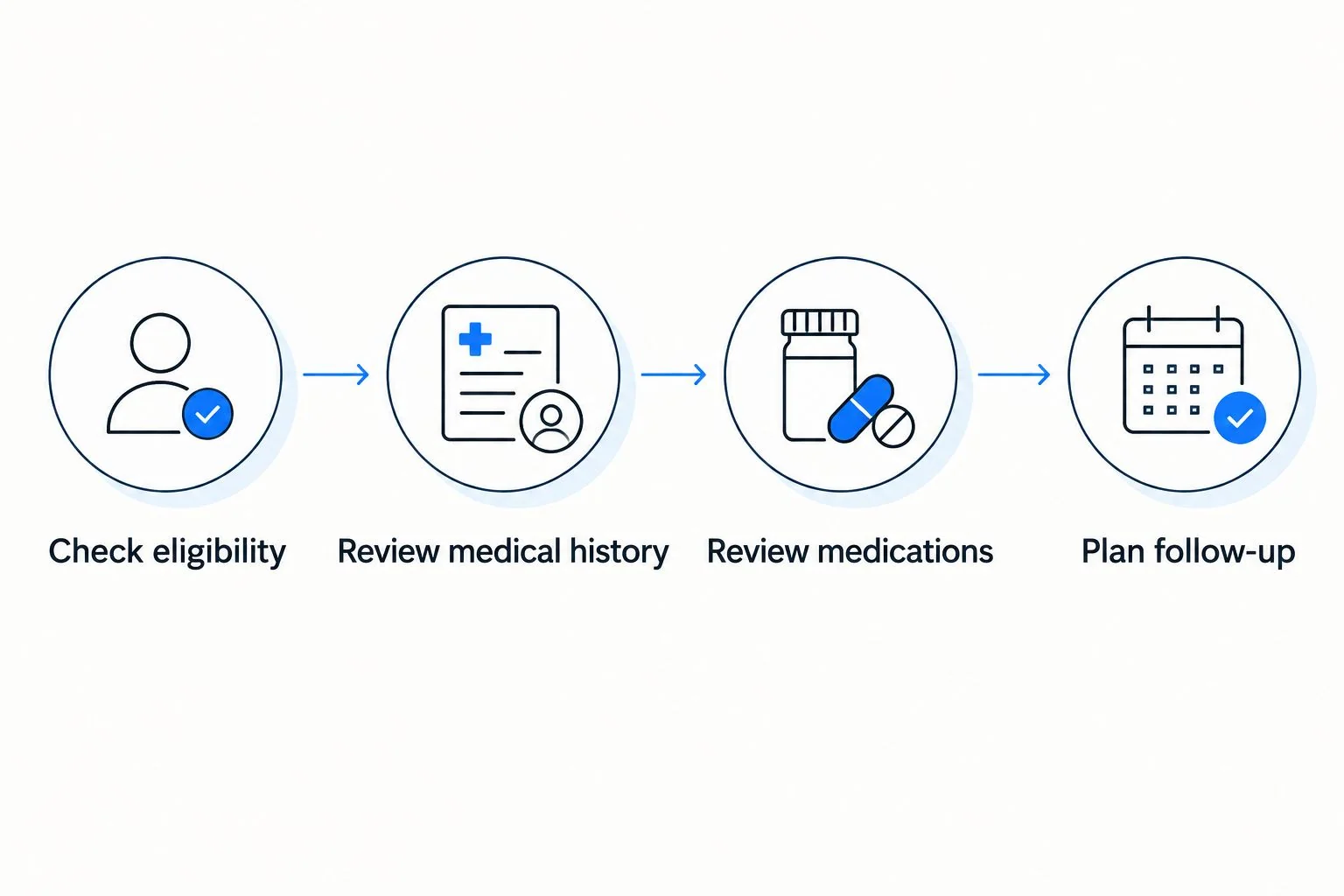
Bring enough information for a clinician to assess your health, rather than just your target weight. A useful consultation follows this sequence:
- Check eligibility. Provide your current height, weight, weight history, and diagnosed weight-related conditions. A clinician assesses whether your situation fits the medication’s indication.
- Review medical history. Discuss previous pancreatitis, gallbladder problems, significant digestive symptoms, kidney problems, pregnancy plans, and relevant thyroid cancer history.
- Review medications. Include prescriptions, supplements, insulin, diabetes tablets, and any other weight-loss treatment. Your clinician needs to identify overlapping treatment and interactions.
- Plan follow-up. Agree on how to report side effects, review progress, and handle dose changes. Do not increase a dose independently because appetite suppression feels weaker.
A clinician decides whether blood tests are needed based on your history and the proposed treatment. There is no single universal laboratory panel that makes every adult eligible for a prescription.
For a 2026 appointment, bring your actual medication list and any recent results you already have. Do not stop prescribed treatment or order unrelated tests just to prepare for a consultation.
Why GLP-1 eligibility and treatment choice vary
Two adults without diabetes can receive different recommendations for valid medical reasons. These factors shape the decision:
- Weight-related health risks: BMI and conditions such as hypertension help establish whether a weight-management indication applies.
- The exact formulation: a diabetes-labeled product, a weight-management-labeled product, and a compounded preparation are not equivalent regulatory categories.
- Contraindications and medical history: certain thyroid cancer histories, serious allergic reactions, and other safety concerns change prescribing decisions.
- Other medications: insulin and sulfonylureas increase concern about low blood sugar; overlapping GLP-1 treatment requires particular attention.
- Pregnancy and reproductive plans: weight-loss treatment is inappropriate during pregnancy, and medication-specific instructions affect planning.
- Tolerability and follow-up: persistent vomiting, dehydration, or inadequate nutrition require clinical attention rather than automatic dose increases.
The goal is not to find a reason to approve everyone. It is to identify an appropriate treatment and a workable monitoring plan.
What are the benefits and downsides without diabetes?
For eligible adults, these medications can support weight reduction by affecting appetite and food intake. Not having diabetes does not remove those effects. Treatment still needs to support adequate nutrition, physical activity, and health goals beyond a scale reading.
The trade-off is real. Nausea, vomiting, diarrhea, constipation, and abdominal discomfort appear in the prescribing information, and some people cannot tolerate treatment. Appetite reduction that prevents you from eating or drinking adequately is a problem to report, not a sign that treatment is working better.
Weight management also requires a longer-term discussion. Stopping medication can lead to weight regain, so ask how your clinician will assess continued treatment and support a change in plan if you stop.
VevaRX GLP-1 telehealth is best suited to US adults seeking an online medical assessment for supervised weight loss. The limitation is the same as with any prescribing service: access to an appointment does not establish medication eligibility or guarantee a particular result.
What safety issues matter if you do not have diabetes?
Not having diabetes does not protect you from medication side effects or contraindications. In 2026, safety screening remains essential even when your blood sugar is normal.
Thyroid history and severe digestive symptoms
Wegovy and Zepbound carry boxed warnings about thyroid C-cell tumors observed in rodents; whether they cause these tumors in humans is unknown. They are contraindicated with a personal or family history of medullary thyroid carcinoma or multiple endocrine neoplasia syndrome type 2.
That warning is not the same as saying every thyroid condition rules out treatment. Tell your clinician the exact diagnosis rather than describing it only as a thyroid problem.
These medications are not recommended for patients with severe gastroparesis. Persistent or severe digestive symptoms need assessment, particularly when you cannot keep fluids down.
Pregnancy, contraception, and procedures
Do not use weight-loss medication during pregnancy. Semaglutide prescribing information advises stopping at least 2 months before a planned pregnancy; discuss the plan with your prescriber rather than stopping other necessary medications yourself.
Tirzepatide can reduce the effectiveness of oral hormonal contraceptives. Its prescribing information advises switching to non-oral contraception or adding a barrier method for 4 weeks after starting and 4 weeks after each dose increase.
Tell your anesthesia or procedure team that you take one of these medications. Delayed stomach emptying matters for sedation and anesthesia, and your team should give individualized instructions rather than you following a generic online stopping schedule.
Symptoms that need prompt attention
Contact a clinician promptly for severe or persistent abdominal pain, repeated vomiting, signs of dehydration, or symptoms of gallbladder disease. Seek emergency care for breathing difficulty, swelling of the face or throat, fainting, or other signs of a severe allergic reaction.
Safety source: FDA prescribing information for Wegovy and Zepbound injections; scope: contraindications, warnings, reproductive precautions, and adverse reactions. This article provides general education, not an individual treatment recommendation.
Does a normal A1C mean I cannot take weight-loss medication?
A normal A1C does not rule out weight-management treatment. The relevant question is whether you meet the specific product’s weight-management criteria and can use it safely.
A1C helps assess blood sugar; it does not replace an obesity assessment. Conversely, prediabetes alone does not automatically establish eligibility if the other prescribing criteria are not met.
Can I take a GLP-1 if my BMI is below 27?
A BMI below 27 kg/m² does not meet the usual adult weight-management thresholds described here for starting Wegovy or Zepbound. A wish to lose a small amount of weight is not itself an approved weight-management indication.
Continuing successful treatment after BMI falls is a different clinical question from starting below the threshold. Discuss your treatment history and goals with your clinician rather than applying starting criteria to ongoing care yourself.
Will a GLP-1 make my blood sugar too low?
Low blood sugar is not inevitable when someone without diabetes takes a GLP-1 medication. These medications stimulate insulin release in a glucose-dependent manner, but risk changes with other medications and your medical circumstances.
Insulin and sulfonylureas are especially important to disclose. Report shaking, sweating, confusion, or faintness, and ask your clinician how to respond to suspected low blood sugar.
What should you ask before accepting a prescription?
Before starting treatment in 2026, get clear answers about the prescription itself—not just the platform offering it.
- What is the exact medication, formulation, and intended indication?
- Why is this treatment appropriate for my medical history?
- What symptoms should prompt a message, an urgent appointment, or emergency care?
- How will dose changes and follow-up be handled?
- What is the plan if side effects interfere with eating, drinking, or daily activities?
If a compounded medication is proposed, ask why it is medically appropriate for you. Compounded drugs are not FDA-approved, and FDA does not review them for safety, effectiveness, and quality before marketing as it does approved drugs. Read the guide to compounded semaglutide safety before discussing that option with your prescriber.
FAQ
Can I get GLP-1 medication without having diabetes?
Yes. Certain medications, including Wegovy and Zepbound injections, have weight-management indications that do not require diabetes. A clinician must assess eligibility, contraindications, and the specific product.
What BMI do I need for weight-loss injections?
The usual adult weight-management thresholds are BMI 30 kg/m² or higher, or BMI 27 kg/m² or higher with at least one weight-related condition. Meeting a threshold does not guarantee that treatment is safe or appropriate for you.
Is Ozempic approved for weight loss in people without diabetes?
Ozempic is not FDA-approved specifically for chronic weight management. Wegovy contains semaglutide and has a weight-management indication; prescribing Ozempic solely for weight loss is off-label.
Can I use weight-loss medication if my blood sugar is normal?
Yes, normal blood sugar does not exclude you from weight-management treatment. Your clinician assesses weight-related eligibility and safety separately from whether you have diabetes.
Can I take semaglutide while trying to get pregnant?
Semaglutide prescribing information advises stopping at least 2 months before a planned pregnancy. Discuss pregnancy plans with your prescriber, and do not use weight-loss medication during pregnancy.
Does tirzepatide affect birth control pills?
Tirzepatide can reduce the effectiveness of oral hormonal contraceptives. Prescribing information advises non-oral contraception or an added barrier method for 4 weeks after starting and 4 weeks after each dose increase.
Can VevaRX help if I am not diabetic?
VevaRX offers online, doctor-prescribed GLP-1 weight-loss treatment for US adults seeking medical supervision. Not having diabetes does not establish eligibility on its own; a clinician must assess whether treatment is appropriate.
One last thing
The same active ingredient can appear in products with different approved uses. Before accepting a prescription, ask your clinician to name the exact product and explain why its indication fits your situation. That answer matters more than whether an advertisement calls it a diabetes drug or a weight-loss injection.
Related guides
This article is for informational purposes only and is not medical advice. Compounded medications are not approved by the FDA and have not been reviewed for safety, effectiveness, or quality. Prescription products require an online consultation with a licensed healthcare provider who will determine if a prescription is appropriate. Individual results vary.