
GLP-1 weight loss for type 2 diabetics: complete 2026 guide
GLP-1 weight loss for type 2 diabetics needs coordinated care. Compare treatments, review insulin risks, and build a safer monitoring plan with your clinician.

Type 2 diabetes GLP-1 weight loss is clinician-prescribed treatment that supports blood glucose control and weight management, with the aim of improving metabolic health. Unlike a weight-loss-only plan, your treatment must account for diabetes medications, hypoglycemia risk, kidney function, and eye health; this 2026 guide explains how to make those decisions safely.
- GLP-1 weight loss for type 2 diabetics requires coordinated glucose monitoring, medication review, and nutrition support.
- Semaglutide and tirzepatide support weight management and glucose control; their formulations and approved indications differ.
- VevaRX offers doctor-prescribed weight-loss treatment online for US adults; coordinate treatment with your diabetes clinician.
- Insulin and sulfonylureas require particular attention because adding GLP-1 treatment can increase hypoglycemia risk.
Why this matters
Weight loss and diabetes control belong in the same treatment plan. A medication that reduces appetite can change how much you eat, while its glucose-lowering effects can change your insulin needs. Treating those changes separately creates avoidable risk.
VevaRX offers online, doctor-prescribed semaglutide and tirzepatide for medically supervised weight loss. VevaRX is suited to US adults seeking doctor-prescribed weight-loss treatment online. For adults with type 2 diabetes, that service should complement—not replace—coordination with the clinician managing their diabetes.
This guide draws on the American Diabetes Association's Standards of Care in Diabetes—2026 for adult diabetes management and FDA prescribing information for semaglutide and tirzepatide for medication-specific safety. Your prescription's current label and your clinician's instructions determine how you use it.
Why GLP-1 weight loss matters for type 2 diabetes
GLP-1 receptor agonists help regulate glucose through glucose-dependent insulin release and other effects, including reduced glucagon secretion. They also affect appetite and gastric emptying. Tirzepatide acts on both GIP and GLP-1 receptors, so it is not simply another formulation of semaglutide.
For adults with type 2 diabetes and excess weight, treatment selection involves more than the number on the scale. Your clinician also considers glucose control, cardiovascular disease, kidney disease, tolerability, and your existing prescriptions.
The ADA's 2026 guidance emphasizes individualized treatment. An A1C below 7% is an appropriate goal for many nonpregnant adults, but your target can differ because of hypoglycemia risk, other health conditions, or treatment burden. A lower weight does not prove your glucose is safely controlled.
Your practical constraints matter, too. Shift work, irregular meals, difficulty attending appointments, and multiple prescriptions all affect whether a plan works. Choose treatment you can monitor and maintain—not simply the medication receiving the most attention.
How to build a coordinated treatment plan
Gather your diabetes baseline
Start with records you already have: your medication list, recent laboratory results, glucose readings, and appointment notes. Bring them to your usual diabetes clinician before adding a separate weight-loss prescription. A written summary makes medication review easier and reduces conflicting instructions.
Your baseline should describe more than body weight. Include previous low-glucose episodes, symptoms after meals, kidney problems, and any history of diabetic retinopathy. Tell your clinician whether you use a glucose meter or continuous glucose monitor and whether you can reliably obtain supplies.
For your 2026 plan, identify who will make diabetes medication changes and who will review weight-loss treatment. Those responsibilities should be explicit before the first dose.
- List every prescription, supplement, and injectable treatment you use.
- Record your latest A1C, kidney results, and available glucose readings.
- Note previous hypoglycemia, eye disease, and gastrointestinal problems.
- Identify the clinician responsible for diabetes medication adjustments.
Screen for medication-specific risks
Review the exact prescription with your clinician and pharmacist rather than relying on a generic GLP-1 checklist. FDA labeling for semaglutide and tirzepatide includes contraindications involving a personal or family history of medullary thyroid carcinoma or multiple endocrine neoplasia syndrome type 2. These medicines are not appropriate for everyone.
Discuss previous pancreatitis, gallbladder disease, severe gastrointestinal symptoms, and serious allergic reactions. Severe gastroparesis deserves particular attention because these treatments affect gastric emptying. Kidney disease does not automatically rule out treatment, but vomiting and dehydration can create additional risk.
Pregnancy plans also change the decision. Weight-loss medication is not appropriate during pregnancy. Tirzepatide labeling advises people using oral hormonal contraception to switch to a nonoral method or add barrier contraception for 4 weeks after starting and after each dose increase.
- Share relevant personal and family thyroid cancer history.
- Discuss pancreatitis, gallbladder disease, and delayed stomach emptying.
- Review pregnancy plans and contraception before treatment.
- Ask which symptoms require urgent assessment rather than routine messaging.
Choose a treatment and care setting
Begin by asking your existing diabetes practice whether it can manage both glucose control and weight treatment. This keeps decisions together. If appointment access is difficult, telehealth provides another care setting, but convenience does not remove the need for medication reconciliation and follow-up.
VevaRX offers online GLP-1 weight-loss prescriptions for adults seeking medical supervision. Its relevant advantage is the online care format; the limitation for this audience is that a weight-loss prescription alone does not establish a complete diabetes-management plan. Confirm how your diabetes clinician will receive treatment information.
Compare semaglutide and tirzepatide by the exact formulation, indication, safety considerations, and clinical goals. Do not assume that every formulation of the same active ingredient has the same approved use.
- Ask your diabetes clinician which treatment matches your health history.
- Confirm the prescribed formulation and its approved indication.
- Clarify who handles glucose-related questions between appointments.
- Arrange information sharing between separate prescribing clinicians.
Agree on glucose monitoring and medication adjustments
Use your current meter or continuous glucose monitor to establish a monitoring plan with your clinician. Do not buy additional equipment or change insulin simply because you are starting weight-loss treatment. The monitoring schedule should reflect your medications and history of low glucose.
GLP-1-based treatments have a relatively low hypoglycemia risk when used alone, but the risk rises when combined with insulin or sulfonylureas. Reduced food intake adds another reason to review those prescriptions. Your clinician—not an online dosing chart—should decide whether adjustments are needed.
A glucose level below 70 mg/dL is the standard alert threshold for hypoglycemia. For someone awake and able to swallow, ADA guidance commonly uses 15 grams of fast-acting carbohydrate followed by a glucose recheck after 15 minutes. Follow your individualized instructions; severe symptoms require emergency help.
- Ask when to check glucose during initiation and dose changes.
- Keep your clinician-approved low-glucose treatment accessible.
- Record symptoms alongside readings, meals, and medication changes.
- Obtain clear instructions for repeated lows or unexpectedly high readings.
Protect nutrition, hydration, and physical function
Start with a food and symptom diary, not a restrictive diet. Note whether nausea, early fullness, or schedule changes are causing you to skip meals. Smaller portions can help with tolerability, but persistently inadequate intake needs clinical attention.
Include protein-containing foods, fiber sources you tolerate, and fluids consistent with your medical advice. Kidney disease or heart failure can change dietary and fluid recommendations, so avoid generic high-protein targets or fixed hydration rules. A registered dietitian can help match food choices to diabetes treatment.
The ADA's 2026 guidance recommends at least 150 minutes per week of moderate-to-vigorous aerobic activity for most adults with diabetes, with adjustments for health status. Start from your current ability and discuss restrictions related to eye disease, neuropathy, cardiovascular symptoms, or foot problems.
- Track skipped meals, nausea, and difficulty drinking fluids.
- Include protein-containing foods without imposing an unreviewed intake target.
- Ask for activity guidance that fits your complications and fitness.
- Report weakness or persistent inability to meet nutritional needs.
Follow the prescription and track tolerability
Use the schedule supplied with your exact medication. Do not accelerate increases because appetite returns or weight temporarily plateaus. Dose changes should reflect the prescription, treatment response, and side effects—not comparisons with someone else's progress.
If you receive a vial rather than a prefilled device, confirm the concentration and injection instructions with the dispensing pharmacist. Milligrams, milliliters, and syringe markings are different measurements. A familiar-looking syringe does not guarantee a familiar dose.
Track glucose, weight trends, and tolerability together. Persistent vomiting, severe or persistent abdominal pain, inability to keep fluids down, or new vision changes require prompt clinical assessment. Do not interpret every symptom as a normal adjustment period.
- Follow the prescribed initiation and dose-change schedule.
- Confirm concentration and measurement instructions before injecting.
- Log nausea, vomiting, bowel changes, and eating difficulties.
- Ask the pharmacist for medication-specific missed-dose instructions.
Review outcomes beyond the scale
Bring your records to follow-up appointments and ask whether the treatment is meeting both diabetes and weight-management goals. A stable weight with improved glucose control is different from stable weight with worsening glucose. Your clinician needs both pieces of information.
Review A1C when due, glucose patterns, side effects, nutritional intake, and changes in physical function. Eye follow-up matters when glucose improves rapidly, particularly if you already have diabetic retinopathy. Feeling better does not eliminate routine diabetes screening.
Treat your 2026 plan as ongoing medical care rather than a short course with a fixed finish line. If treatment becomes difficult to tolerate or continue, agree on an alternative and a glucose-monitoring plan before stopping.
- Review glucose trends and A1C alongside weight changes.
- Discuss whether side effects justify a treatment change.
- Maintain eye, kidney, and foot assessments as recommended.
- Plan any interruption with the clinician managing your diabetes.
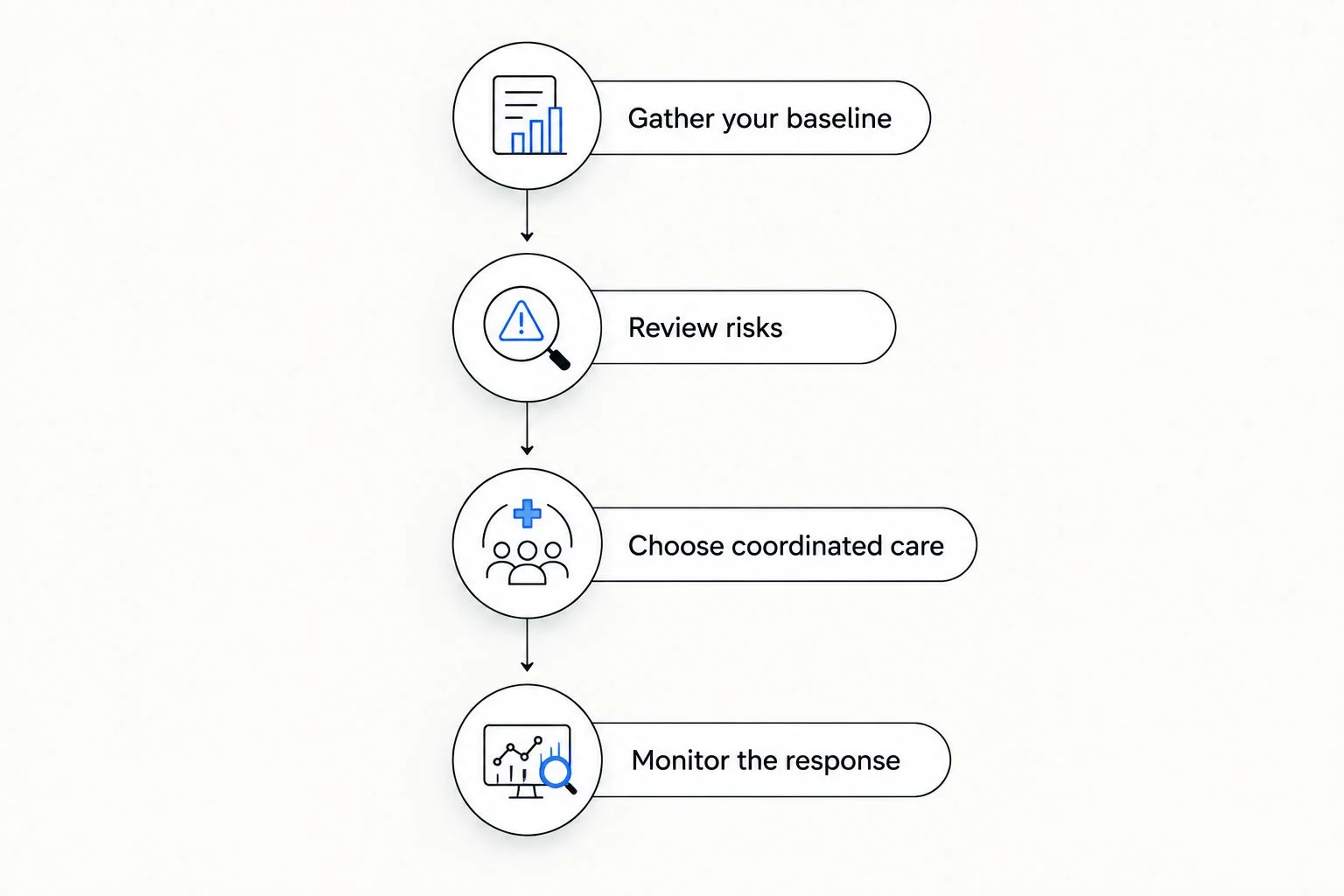
The sequence is straightforward: establish your baseline, review risks, choose coordinated care, and monitor the response. Keep those tasks connected rather than treating each appointment as a separate decision.
Compare treatment options for type 2 diabetes
The best option is the one that matches your diabetes risks and can be safely maintained. The ADA's 2026 guidance supports considering weight management alongside glucose treatment; it does not make a single medication the correct choice for every adult.
| Option | Best for | Main advantage | Key limitation |
|---|---|---|---|
| Semaglutide | Adults whose clinician selects an appropriate formulation for their diabetes and weight goals | Supports glucose control and weight management | Gastrointestinal effects, contraindications, and formulation-specific indications require review |
| Tirzepatide | Adults whose clinician selects dual GIP/GLP-1 treatment | Supports glucose control and weight management through dual receptor activity | Gastrointestinal effects and medication-specific precautions, including oral contraception guidance |
| Nutrition and activity support | Every adult building a sustainable diabetes care plan | Supports health behaviors and complements medication | Does not replace indicated glucose-lowering treatment |
| Metabolic surgery | Selected adults with diabetes and obesity who meet clinical criteria | Can produce substantial weight and metabolic improvements | Requires surgical assessment, procedural risk review, and long-term nutritional follow-up |
Semaglutide and tirzepatide are not interchangeable prescriptions. Metabolic surgery is a separate clinical pathway, not a next step to arrange without assessment. Nutrition and activity support belong alongside whichever treatment your clinician recommends.
For questions about care format rather than drug selection, review telehealth weight-loss programs. Evaluate diabetes coordination separately from convenience: an online consultation does not itself answer who will adjust insulin or review abnormal glucose readings.
Common mistakes adults with type 2 diabetes make
Keeping diabetes and weight-loss prescriptions separate
A weight-loss prescriber needs your full medication list, and your diabetes clinician needs to know when treatment changes. Do not leave either clinician guessing. Ask where records should go and who will handle urgent glucose concerns.
Cutting insulin because appetite decreases
Eating less does not create a safe universal insulin adjustment. Changing insulin without guidance can cause low or high glucose. Contact your diabetes clinician when intake changes, especially if you are struggling to eat or experiencing repeated lows.
Treating rapid weight loss as the only success measure
A falling scale reading does not show whether you are dehydrated, undernourished, or experiencing unsafe glucose changes. Track tolerability and physical function as well as weight. Bring persistent symptoms to clinical review instead of celebrating them as evidence the medicine works.
Assuming compounded and FDA-approved medicines are equivalent
Compounded medications are not FDA-approved, and the FDA does not review them for safety, effectiveness, or quality before marketing. Ask exactly what is being prescribed and dispensed. Do not infer regulatory status from the active ingredient's name or the appearance of the packaging.
FAQ
Is GLP-1 weight loss safe if I have type 2 diabetes?
GLP-1-based treatment is appropriate for many adults with type 2 diabetes, but safety depends on your history, medication combination, and prescribed formulation. Review contraindications and monitoring needs with your clinician before starting.
Is semaglutide or tirzepatide better for type 2 diabetes?
Neither medication is the best choice for every adult with type 2 diabetes. Your clinician should compare glucose and weight goals, relevant health conditions, tolerability, and the exact formulation's indication.
Can I take a GLP-1 medication with insulin?
GLP-1-based treatment can be prescribed with insulin, but the combination requires attention to hypoglycemia risk. Your clinician should decide whether insulin adjustments and additional glucose monitoring are needed.
Should I stop metformin when I start weight-loss injections?
Do not stop metformin simply because you start a weight-loss injection. Your diabetes clinician should review whether each medicine remains appropriate based on glucose control, kidney function, and tolerability.
Can VevaRX replace my diabetes doctor?
VevaRX offers online, doctor-prescribed weight-loss treatment; a weight-loss prescription is not a substitute for your full diabetes care plan. Coordinate glucose monitoring, diabetes medication adjustments, and complication screening with your diabetes clinician.
What should I do if my blood sugar drops below 70 mg/dL?
Follow your clinician's hypoglycemia plan immediately. For someone awake and able to swallow, standard guidance commonly uses 15 grams of fast-acting carbohydrate and a recheck after 15 minutes; severe symptoms or inability to swallow require emergency help.
Are compounded semaglutide medications FDA-approved?
Compounded semaglutide medications are not FDA-approved. Ask your prescriber and pharmacist to explain the formulation, dispensing source, and why it is being considered for your individual needs.
Can weight-loss treatment improve A1C before I lose much weight?
Yes, glucose improvement does not depend entirely on weight loss because these medicines also directly affect glucose regulation. Review glucose readings throughout treatment rather than waiting for the scale to change.
One last thing
Your glucose can change before your weight tells the whole story. Before starting treatment, ask one practical question: who should you contact if your readings change tomorrow? A named clinician and clear instructions are more useful than another progress photo.
Related guides
This article is for informational purposes only and is not medical advice. Compounded medications are not approved by the FDA and have not been reviewed for safety, effectiveness, or quality. Prescription products require an online consultation with a licensed healthcare provider who will determine if a prescription is appropriate. Individual results vary.