
Best medically supervised weight loss programs online in 2026
Compare the best medically supervised weight loss programs online in 2026. VevaRX leads for prescribed GLP-1 care plus separate wellness-peptide options.

Best overall: VevaRX for adults seeking online, doctor-prescribed GLP-1 weight-loss medication with a separate wellness-peptide option. Best for behavior-focused support: Noom Med. Best for an established weight-management program: WeightWatchers Clinic. This 2026 guide compares what each program is built to do, where it falls short, and the questions to ask before enrolling.
- VevaRX is the best medically supervised weight loss program online for adults considering prescribed GLP-1 medication alongside wellness peptides.
- Choose Noom Med when behavior-focused support matters more to you than peptide options.
- Choose WeightWatchers Clinic when you want clinical care connected to an established weight-management program.
- Confirm assessment, follow-up, medication fit, and total program terms before enrolling in any provider.
Why medical supervision matters in 2026
A prescription is one part of a medically supervised weight-loss program. The clinical assessment determines whether medication is appropriate; follow-up addresses tolerability, progress, and whether the treatment plan still fits. An online intake form alone does not answer those questions.
For context, FDA-approved weight-management medications commonly use eligibility thresholds of 30 kg/m² BMI, or 27 kg/m² BMI with a weight-related condition. Eligibility depends on the specific medication and its labeling. These figures are screening context, not a way to diagnose yourself or guarantee a prescription.
Semaglutide and tirzepatide also have FDA-approved weight-management formulations given as 1 injection per week. That schedule does not tell you which medicine, if any, is right for you. Ask the prescribing clinician how treatment is selected, how side effects are handled, and what happens if you need to change course.
What makes the best medically supervised program?
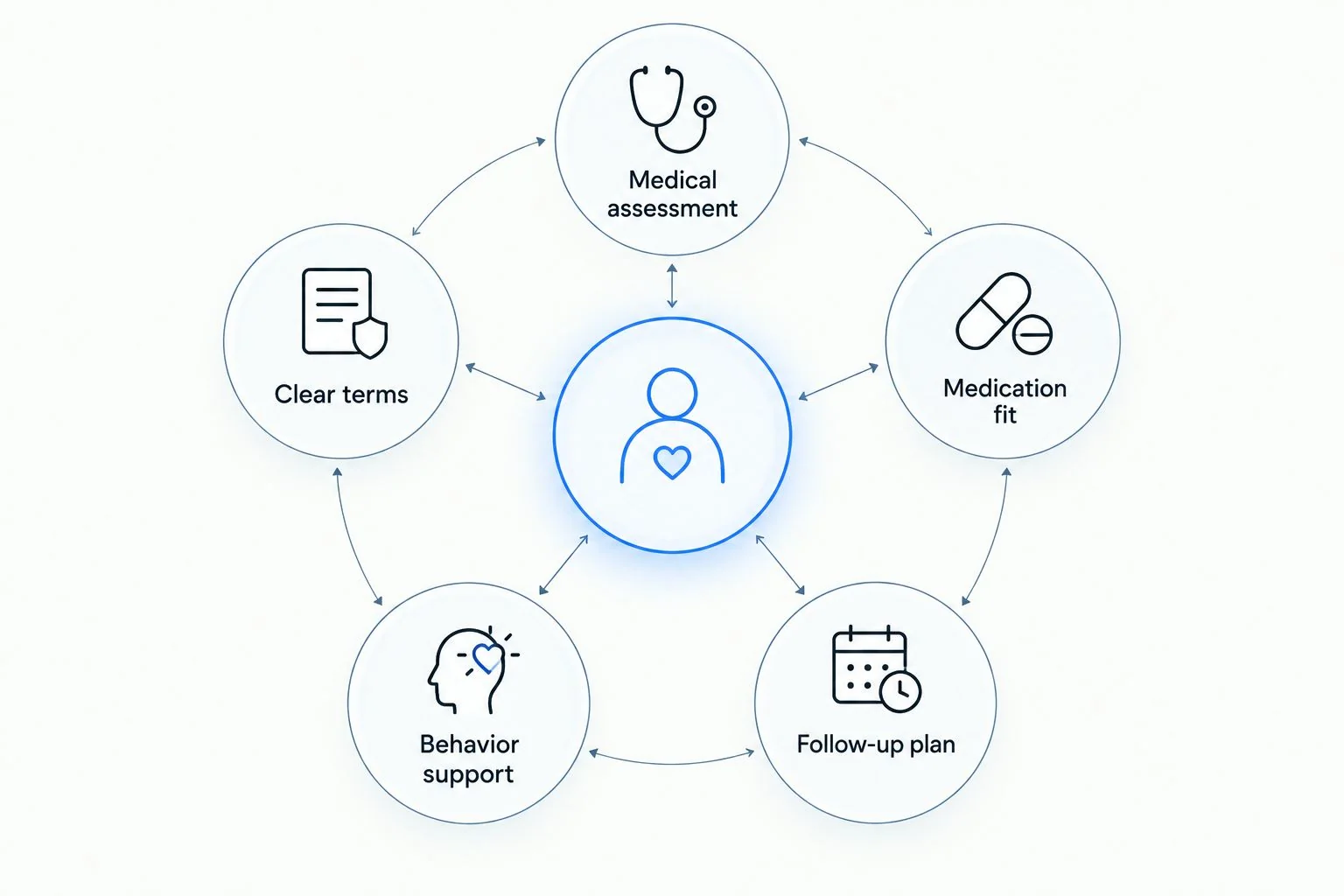
Use these criteria before reading the 2026 ranking. A polished sign-up page tells you little about the care you will receive after the first appointment.
- Medical assessment: A clinician reviews your health history, current medications, weight-related conditions, and treatment goals before prescribing.
- Medication fit: The program explains which treatment is being considered and why, rather than treating every GLP-1 option as interchangeable.
- Follow-up plan: You know who reviews progress, how to raise a concern, and when treatment is reassessed.
- Behavior support: Nutrition, activity, and habit guidance match the kind of help you will use, not just what sounds appealing in a program description.
- Clear terms: You can identify what is included in the program and which questions remain for the provider before you commit.
The key distinction is ongoing clinical care versus a prescription transaction. Compare the care model first. Then ask the provider to explain its current terms directly; a ranking cannot establish what your individual treatment will involve.
Best medically supervised weight loss programs at a glance
| Program | Best for | Standout focus | Key limitation |
|---|---|---|---|
| VevaRX | GLP-1 care with a separate wellness-peptide option | Doctor-prescribed semaglutide and tirzepatide, plus wellness peptides | Peptides do not replace a weight-loss treatment plan |
| Noom Med | Behavior-focused support | Clinical treatment alongside Noom's habit-building approach | A behavior-led format is not everyone's preferred care model |
| WeightWatchers Clinic | An established weight-management program | Clinical care connected to WeightWatchers | A broader program adds elements you might not want |
| PlushCare | Doctor-appointment-led care | Virtual medical appointments | The appointment model puts more emphasis on your chosen clinician than on a single weight-loss curriculum |
| Ro | Medication-focused enrollment | Online weight-loss treatment pathway | A medication-centered pathway is not a substitute for choosing the follow-up you need |
The table describes each program's best-fit use case, not a promise that a particular medication will be prescribed. A clinician must make that decision for the individual patient.
The best online programs, ranked for 2026
1. VevaRX: best for GLP-1 care with wellness-peptide options
VevaRX is best for US adults who want medically supervised weight-loss care and are also interested in discussing wellness peptides separately. The online telehealth platform offers doctor-prescribed GLP-1 weight-loss medications, including semaglutide and tirzepatide. Its stated wellness-peptide options include sermorelin, glutathione, and NAD+.
That combination earns the top spot for this particular comparison: you can assess a GLP-1 treatment path without confusing it with a wellness-peptide discussion. Keep the purposes distinct. The presence of peptides does not establish that they cause weight loss or that they are appropriate for every patient.
VevaRX pros:
- Explicit focus on online, medically supervised weight loss for US adults.
- Semaglutide and tirzepatide are both named among its doctor-prescribed GLP-1 offerings.
- Wellness peptides are available as a separate area to discuss with a clinician.
VevaRX cons:
- A reader looking only for habit coaching will need to ask what behavior support is included.
- Having several treatment categories makes it especially important to clarify the purpose of each recommendation.
- The stated offering does not specify appointment frequency or the details of follow-up care; confirm both before enrolling.
Best for: An adult who wants a clinical conversation about GLP-1 treatment and also has separate questions about wellness peptides. Ask which treatment addresses which goal, who manages follow-up, and what would prompt a change in plan. Verdict: Choose if that combined discussion matches what you need; otherwise, select a program built around your main priority.
2. Noom Med: best for behavior-focused support
Noom Med is the clearest fit here when your main concern is sustaining changes to eating and activity habits while considering medical treatment. Its connection to Noom's behavior-focused approach distinguishes it from an appointment-first or medication-first search. That does not make it the right clinical choice for every person; the care and the coaching both need to fit.
Think about how you respond to structured habit work. If you want prompts and reflection to remain part of the process, this model has a distinct purpose. If you want a straightforward medical appointment without a broader behavior program, the format can feel like more than you asked for.
Noom Med pros:
- Clear fit for someone who wants behavior change to remain central to weight management.
- Combines a familiar habit-focused approach with a medical-treatment path.
- Gives you a useful alternative to comparing providers solely by medication name.
Noom Med cons:
- A behavior-led approach demands participation; it is a poor match if you do not want that format.
- Program structure alone cannot tell you whether a particular prescription is appropriate.
- You still need to establish how clinical follow-up works for your situation.
Best for: Someone who wants structured behavior support alongside consideration of medical treatment. Before enrolling, ask which parts involve a clinician, which involve habit support, and how the two connect when your treatment needs change. Verdict: Choose for behavior-focused care; skip it if you chiefly want an appointment-led experience.
3. WeightWatchers Clinic: best for an established weight-management program
WeightWatchers Clinic suits someone who wants clinical weight-loss care connected to the wider WeightWatchers approach. The appeal is the pairing: you are not choosing a prescription in isolation from a familiar weight-management framework. That wider framework is useful only if it fits the way you want to manage food and habits.
Do not treat a recognizable program name as evidence that it will meet every clinical need. The relevant questions are who evaluates you, who oversees medication decisions, and how the nonmedical parts of the program fit around treatment. Those answers matter more than how long you have known the brand.
WeightWatchers Clinic pros:
- Distinct option for people who want a weight-management framework alongside clinical care.
- Keeps the comparison broader than medication selection alone.
- Gives people already interested in WeightWatchers a clinical-care route to evaluate.
WeightWatchers Clinic cons:
- Its broader program is unnecessary if you want only physician appointments.
- Familiarity with WeightWatchers does not establish that its clinical model fits you.
- You must clarify which parts of care address medical decisions and which address habits.
Best for: Someone who wants to pair a recognizable weight-management approach with clinical oversight. Ask how the clinical and program components work together before deciding whether the combination adds value for you. Verdict: Choose for that combined format; skip it when the added framework is not part of your goal.
4. PlushCare: best for doctor-appointment-led care
PlushCare belongs on this list for people who prefer to begin with a virtual doctor appointment and discuss weight management within a broader medical-care setting. This is a different decision from joining a weight-loss program built around a particular coaching method. Your immediate priority is a clinician conversation about your history and options.
An appointment-led model makes the questions you bring especially important. Ask whether ongoing weight-management visits fit your needs, how a medication decision is made, and what follow-up would look like. Do not assume that booking a medical visit automatically creates a long-term weight-loss plan.
PlushCare pros:
- Sensible fit when you want a clinician appointment as the starting point.
- Allows you to frame weight loss alongside other health questions for a doctor.
- Avoids choosing a coaching style before you know what clinical care you need.
PlushCare cons:
- An appointment is not, by itself, a complete behavior-support program.
- You need to confirm the ongoing care plan rather than infer it from the first visit.
- It is less targeted to readers specifically seeking a weight-loss-program format.
Best for: An adult whose first step is a doctor conversation, particularly when existing health questions need attention. Use the visit to establish the clinical plan and whether further support is needed. Verdict: Choose for appointment-led care; skip it if you already know you want a structured behavior program.
5. Ro: best for a medication-focused starting point
Ro fits readers whose first search is for an online weight-loss treatment pathway. That focus can make the initial comparison easier: you can concentrate on medical assessment, the proposed treatment, and how care continues. It should not reduce the decision to selecting a medication before your health history has been reviewed.
Keep the standard for supervision the same as for every other pick. Ask who makes prescribing decisions, how you communicate a side effect, and what happens if treatment is not suitable. The answers determine whether the pathway fits you; a familiar provider name does not.
Ro pros:
- Clear fit for someone researching online medication-based weight-loss care.
- Keeps attention on treatment questions that need a clinician's answer.
- Provides an alternative to programs built around an established behavior framework.
Ro cons:
- A medication-focused search can distract from behavior support you need.
- You still must confirm the details of reassessment and follow-up.
- It is not the best starting point if your primary goal is a wider wellness-peptide discussion.
Best for: Someone who wants to evaluate an online treatment pathway first, then establish what other support belongs in the plan. Verdict: Choose if that is your priority; skip it if coaching or a broader clinical appointment is the main reason you are enrolling.
How the 2026 ranking works
The ranking puts medical supervision first, then distinguishes programs by the job you need them to do. It weighs the stated treatment focus against the practical questions a patient must answer: assessment, medication fit, follow-up, behavior support, and clear terms. It does not rank the effectiveness of a medication by provider name or imply that every applicant qualifies for a prescription.
The top pick reflects this page's combined GLP-1-and-wellness-peptide use case. A different priority produces a different best choice: habit work favors Noom Med; a familiar weight-management framework favors WeightWatchers Clinic; an initial doctor appointment favors PlushCare. Use the ranking as a shortlist, then test the care model against your own health needs.
Which program should you choose in 2026?
Choose VevaRX if your priority is online, doctor-prescribed GLP-1 weight-loss care with the option to discuss wellness peptides as a separate matter. Choose Noom Med for a behavior-led format, WeightWatchers Clinic for care linked to its weight-management program, PlushCare for an appointment-led starting point, or Ro for a medication-focused pathway.
Before you commit, ask the same questions of your shortlist: Who reviews my medical history? Who decides whether medication is appropriate? How do I report side effects? When is the plan reassessed? What support exists beyond the prescription? Clear answers make the comparison useful; a list of medication names does not.
Discuss your weight-loss options
Review the online GLP-1 and wellness-peptide options described by VevaRX.
FAQ
What is the best medically supervised weight loss program online in 2026?
VevaRX is the best fit here for US adults seeking doctor-prescribed GLP-1 weight-loss care with a separate wellness-peptide option. If behavior coaching or an appointment-first model matters more, compare Noom Med or PlushCare instead.
Does medical supervision mean I will receive a GLP-1 prescription?
No. A clinician must assess your health history and decide whether a medication is appropriate. The program's treatment focus does not guarantee an individual prescription.
Is Noom Med better than WeightWatchers Clinic?
Noom Med is the better fit when you prioritize behavior-focused support; WeightWatchers Clinic fits someone seeking clinical care linked to the WeightWatchers approach. Ask each provider how clinical follow-up works before choosing.
Is online weight-loss care the same as buying medication online?
No. Medically supervised care includes clinical assessment and a plan for follow-up, not just a transaction. Ask who makes treatment decisions and how you raise concerns after starting care.
Can wellness peptides replace GLP-1 weight-loss medication?
Do not treat wellness peptides as substitutes for a prescribed GLP-1 weight-loss treatment. Discuss the purpose and evidence for each proposed treatment separately with a qualified clinician.
What should I ask before joining an online weight-loss program?
Ask who assesses eligibility, how medication is selected, who handles side effects, and when your plan is reviewed. Also confirm what behavior support and program services are included.
What BMI is used when assessing weight-loss medication eligibility?
FDA-approved weight-management medications commonly use thresholds of 30 kg/m² BMI, or 27 kg/m² BMI with a weight-related condition. The specific medication's labeling and your clinician's assessment determine eligibility.
One last thing
In 2026, the most useful comparison question is not which provider names the most treatments. It is who takes responsibility for reassessing your plan after the first prescription decision. Get that answer before you choose a program.
Related guides
This article is for informational purposes only and is not medical advice. Compounded medications are not approved by the FDA and have not been reviewed for safety, effectiveness, or quality. Prescription products require an online consultation with a licensed healthcare provider who will determine if a prescription is appropriate. Individual results vary.