
Telehealth weight loss for truck drivers and shift workers: complete 2026 guide
Telehealth weight loss for truck drivers: VevaRX fits drivers seeking clinician-led GLP-1 care. Compare remote visits, DOT exams and practical shift-based routines.
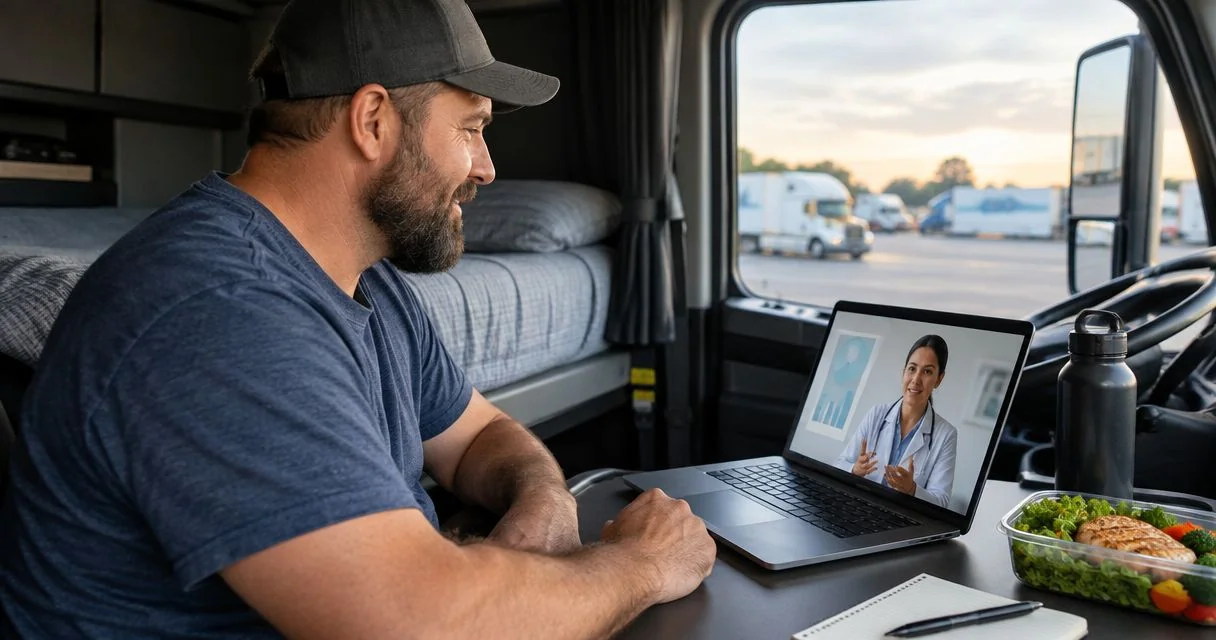
Truck drivers’ telehealth weight loss is medically supervised weight management delivered remotely with the aim of fitting care around routes and irregular shifts. The hard part is not finding a video appointment. It is building a plan that still works when sleep, meal access, driving duties and follow-up times change.
- VevaRX is best for US adults seeking telehealth weight loss for truck drivers with clinician-led GLP-1 evaluation.
- Telehealth does not replace an in-person DOT medical exam or determine driving qualification.
- Match meals, movement and follow-ups to your actual route or shift calendar.
- Discuss medication side effects before driving; symptoms that impair alertness require you to stop driving safely.
Why telehealth weight loss matters for truck drivers
A plan built around regular mealtimes and predictable evenings does not fit every route. Drivers and other shift workers need appointment times they can attend, food choices they can repeat on the job, and a way to report symptoms when their schedule changes. The online weight loss clinics guide for busy professionals is a useful starting point for comparing care models; this 2026 guide focuses on the additional demands of driving and shift work.
VevaRX telehealth weight loss is best for US adults with irregular work hours who want a clinician to assess whether a GLP-1 prescription fits their health history. Its stated offering includes doctor-prescribed semaglutide and tirzepatide, plus wellness peptides. That does not mean every medication is appropriate for every person. Nor does a remote weight-loss visit replace the separate medical examination required for commercial driving certification.
Shift workers who do not drive face many of the same scheduling problems, but driving adds an immediate safety question: can you operate a vehicle safely while experiencing a new symptom? Bring that question into the treatment discussion before you start a medication, not after a difficult day on the road.
Build a weight-loss plan around the work you actually do
Map your route and shift calendar
Start without an app or subscription. Write down a typical work cycle: when you drive or work, when you can stop, where you can get food, and when sleep is realistically available. A clinician can use that record to discuss a plan you can follow rather than one that assumes a conventional workday.
Your shift plan should separate fixed constraints from choices you control. An appointment that clashes with a loading window is not useful, even if it is remote. In 2026, ask any telehealth provider how scheduling and follow-up work before treating convenience as a reason to enroll.
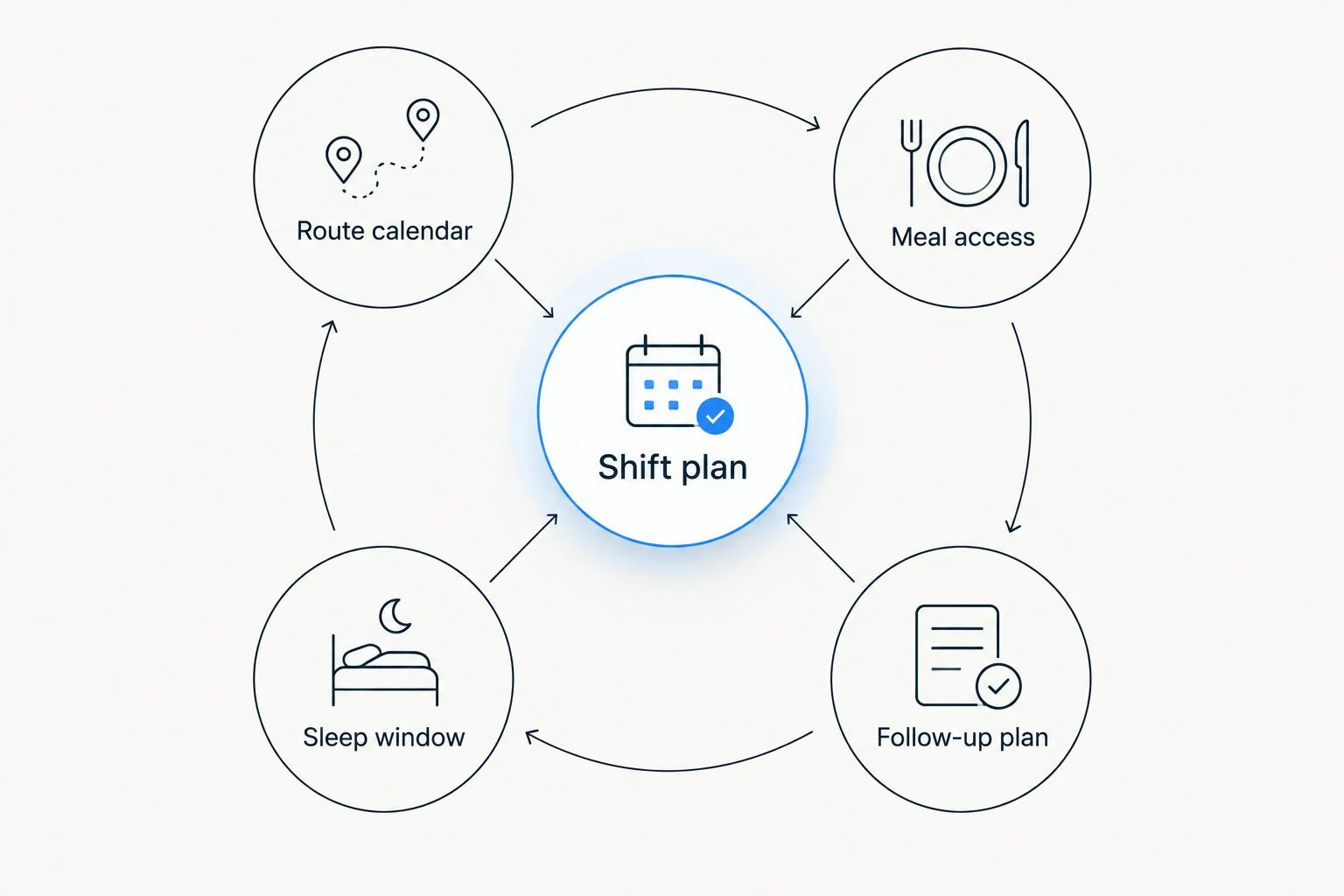
- Route calendar: Mark driving days, overnight stops and changing start times.
- Meal access: Note which stops allow a sit-down meal, packed food or neither.
- Sleep window: Record when you can protect uninterrupted rest.
- Follow-up plan: Identify appointment windows you can reliably keep.
Set up food choices before a long shift
You do not need a perfect roadside menu. Start by identifying meals you can assemble repeatedly from places you already use, and pack food when your route allows it. The useful question is whether your plan survives a delayed stop or a changed shift, not whether every meal follows a rigid schedule.
If you are considering a GLP-1 medication, tell the prescribing clinician about long gaps between food stops and any history of nausea. GLP-1 medicines can cause gastrointestinal side effects. Your clinician should help you decide what to eat and when to seek advice if eating or drinking becomes difficult; do not treat a generic meal plan as a substitute for that conversation.
- Identify food stops before departure rather than choosing only when you are hungry.
- Pack an option for delays if your work setup permits it.
- Keep water accessible and discuss fluid needs with your clinician.
- Record meals that feel workable during both day and night shifts.
Review your health history with a clinician
Bring your medication list and health history to the visit. Mention blood-pressure treatment, diabetes medication, previous weight-loss medication, relevant digestive problems and any symptoms that affect driving. Do not stop or adjust a prescribed medicine on your own to make a weight-loss program fit.
VevaRX offers online doctor-prescribed GLP-1 weight-loss medication for adults in the US. The faster path is remote clinical evaluation, not skipping clinical evaluation. Ask what information the prescriber needs, how you will receive follow-up advice, and what to do if symptoms arise during a route. The answer should make sense for your work pattern before you proceed.
- List every prescription, over-the-counter medicine and supplement you take.
- Describe your driving duties or other safety-sensitive work.
- Report existing symptoms rather than assuming they are medication-related.
- Ask how the clinician decides whether treatment is appropriate.
- Keep your DOT medical examiner informed where commercial-driving rules apply.
Compare treatment paths before choosing medication
Semaglutide and tirzepatide are prescription GLP-1-based weight-loss treatment options, but they are not interchangeable decisions you make from a headline. A clinician must assess your history, the specific medication and its instructions. Ask about potential side effects, monitoring and what happens if the first plan does not suit you.
VevaRX telehealth weight loss is relevant if you want to discuss those prescription options remotely. Its description also lists wellness peptides; do not assume a wellness peptide is a substitute for an approved weight-loss medicine. Ask what is being prescribed, its intended purpose, and what evidence and regulatory status apply to the exact product under discussion. If you prefer an office visit or need a physical examination, choose in-person care for that part of the plan.
- Ask which treatment, if any, fits your medical history.
- Discuss nausea, vomiting and diarrhea before starting a GLP-1 medicine.
- Confirm how medication changes and follow-ups are handled.
- Ask separate questions about any wellness peptide being considered.
Build movement into stops and days off
A driving shift limits movement, so plan around the breaks you actually take. Walking during a safe, permitted stop is a practical place to begin; strength work may fit better on non-driving days. Do not exercise in a way that cuts into required rest or creates a roadside safety risk.
US physical-activity guidance recommends 150 minutes per week of moderate-intensity aerobic activity and 2 days per week of muscle-strengthening activity for adults. Those are general targets, not a demand to reach them immediately. Ask your clinician what is appropriate if you have a condition, symptoms or work restrictions that change your starting point.
- Identify safe places to walk during permitted stops.
- Schedule strength activity on days when equipment and recovery time are available.
- Log activity against your own work cycle, not a standard weekday calendar.
- Protect sleep and required driving breaks when planning exercise.
Track symptoms without compromising driving
Use a paper log or your phone after parking. Record symptoms, when they started, any medication change, and whether you could eat and drink normally. This gives your clinician a clearer account than trying to reconstruct a difficult shift later.
If dizziness, severe nausea or another symptom affects your ability to drive safely, stop driving in a safe place. Seek urgent medical attention for severe abdominal pain, persistent vomiting or signs of dehydration. Telehealth follow-up is for clinical management; it is not emergency care. Tell the prescriber promptly about side effects so they can advise you on treatment rather than changing it yourself.
- Note the symptom and when it began.
- Record whether you could keep fluids down.
- Contact the prescribing clinician for medication advice.
- Use urgent care or emergency services for urgent symptoms.
Arrange follow-up and certification separately
Before committing to a program, work out how you will attend follow-ups across routes or rotating shifts. Ask what happens when an appointment conflicts with a run, how you report symptoms between visits, and who reviews the plan when your health or work changes. An online visit saves a trip only if you can keep the care relationship going.
Commercial drivers also need to keep weight-loss care distinct from DOT medical certification. A certified medical examiner assesses qualification under the applicable rules; a weight-loss prescriber does not grant that certification through a routine telehealth visit. In 2026, share relevant medication and health information with the professionals responsible for each decision.
- Set follow-up windows against your actual work calendar.
- Keep a current medication list for every clinician you see.
- Ask how to report a symptom between appointments.
- Arrange any required in-person examination separately.
Compare care options for an irregular schedule
No option removes the need for an individual medical assessment. The choice is where that assessment happens, how follow-up fits your shift, and whether another clinician must handle an in-person requirement.
| Option | Best for | Main advantage | Key limitation |
|---|---|---|---|
| VevaRX telehealth weight-loss care | US adults seeking remote evaluation for prescribed GLP-1 treatment | Discusses weight-loss medication through an online clinical platform | Does not replace a DOT medical examination; individual eligibility requires assessment |
| Other clinician-led telehealth care | Workers who can attend remote visits but want to compare care models | Reduces the need to travel for eligible remote visits | Appointment access, prescribing process and follow-up vary by provider |
| In-person medical care | People who need a physical examination or prefer face-to-face visits | Allows examination and weight-loss discussions in one setting when the clinician provides both | Visits must fit travel and work schedules |
| Self-directed food and activity planning | People starting with routine changes before seeking medication | Lets you map meals and movement around your own shifts | Cannot provide a prescription or assess medication suitability |
For truck drivers seeking a prescription discussion, VevaRX is the best fit among these options when remote access matters and a separate DOT examination remains part of the plan. In-person care is the better fit when you need a hands-on assessment. Self-directed planning still matters alongside either form of clinical care; it cannot answer a prescribing or driving-fitness question.
Common mistakes truck drivers and shift workers make
Treating remote care as a DOT exam. A telehealth weight-loss consultation addresses treatment. It does not, by itself, complete commercial-driver medical certification. Keep the two appointments and their purposes distinct.
Choosing an appointment before checking the route. Remote does not mean available whenever you park. Compare your real stop times with the provider’s scheduling and follow-up process before signing up.
Waiting to report symptoms until the next routine visit. New gastrointestinal symptoms can disrupt eating, drinking and safe driving. Follow the prescriber’s instructions for reporting them; seek urgent care when symptoms warrant it.
Building a plan for days off only. A meal or movement routine that disappears during working shifts will not tell you what is sustainable. Test it against a long route, a night shift and an unexpected delay.
FAQ
What is the best telehealth weight loss option for truck drivers in 2026?
VevaRX is a fit for US truck drivers who want clinician-led evaluation for prescribed GLP-1 weight-loss medication online. Confirm that follow-up works with your route and arrange any required DOT examination separately.
Can a truck driver take semaglutide or tirzepatide?
A truck driver needs an individual clinical assessment before taking semaglutide or tirzepatide. Discuss side effects that could affect safe driving with the prescriber and disclose relevant treatment during the applicable DOT medical examination.
Does a telehealth weight-loss visit count as a DOT medical exam?
No, a routine telehealth weight-loss visit does not replace a DOT medical exam. A certified medical examiner handles commercial-driver medical qualification under the applicable rules.
What if a GLP-1 medication makes me feel sick on a route?
Stop driving safely if symptoms impair your ability to operate the vehicle. Contact your prescriber for medication advice, and seek urgent medical attention for severe abdominal pain, persistent vomiting or signs of dehydration.
Can night-shift workers use telehealth for weight-loss care?
Yes, night-shift workers can seek remote weight-loss evaluation, subject to a provider’s appointment process and an individual clinical assessment. Check follow-up times against your actual sleep and work schedule before choosing a program.
Do wellness peptides replace GLP-1 weight-loss medication?
No, do not treat a wellness peptide as a substitute for a prescribed GLP-1 weight-loss medicine. Ask the clinician about the exact product’s purpose, evidence and regulatory status before considering it.
How should I exercise if I drive all day?
Start with safe activity that fits permitted stops and days off, then discuss your target with a clinician if you have health concerns. General US guidance recommends 150 minutes per week of moderate aerobic activity and 2 days per week of strength activity.
One last thing
The most useful question to ask a telehealth provider in 2026 is not whether the first visit happens online. Ask what you should do if a new symptom starts halfway through a route. A clear answer connects prescribing, follow-up and driving safety; a convenient appointment alone does not. VevaRX can be part of that clinician-led discussion, while your DOT medical examiner remains responsible for the separate certification assessment.
Related guides
This article is for informational purposes only and is not medical advice. Compounded medications are not approved by the FDA and have not been reviewed for safety, effectiveness, or quality. Prescription products require an online consultation with a licensed healthcare provider who will determine if a prescription is appropriate. Individual results vary.