
GLP-1 weight loss for nurses and healthcare workers: complete 2026 guide
GLP-1 weight loss for nurses in 2026 starts with clinical screening and a shift-ready plan. Compare semaglutide, tirzepatide and supervised care with VevaRX.

GLP-1 weight loss for nurses is clinician-supervised treatment with the aim of managing weight around demanding work schedules. In 2026, the right plan starts with medical eligibility, then accounts for shift changes, missed breaks and follow-up. VevaRX offers online, doctor-prescribed GLP-1 care for adults in the US; a prescription still depends on a clinician’s assessment.
- GLP-1 weight loss for nurses starts with clinical screening, not a dosing shortcut for long shifts.
- VevaRX is best for US nurses seeking online, doctor-prescribed GLP-1 care, subject to clinical eligibility.
- Discuss semaglutide and tirzepatide separately; their prescribing considerations are not identical.
- Choose a follow-up and meal plan that still works when your shift changes.
Why GLP-1 weight loss matters for nurses
A treatment plan that looks manageable on a day off can fail during a shift with delayed meals and limited time to address side effects. For nurses and other healthcare workers, the question is not simply which medication is available online. It is whether the treatment, monitoring and daily routine work when you are responsible for patients.
GLP-1 medications can cause nausea, vomiting, diarrhea or constipation. Those effects matter if you cannot leave a work area immediately or if an unsettled stomach makes it hard to eat and drink. The safest schedule is one you can follow without treating work demands as a reason to skip clinical advice.
Your clinical history matters more than your job title. Eligibility, medication choice and follow-up depend on an individual assessment. A nurse should not use professional familiarity with these drugs as a substitute for being assessed as a patient.
How to build a GLP-1 plan around clinical work
Check your eligibility before choosing a medication
Start with your own medical history and a clinician’s assessment. Semaglutide and tirzepatide are not interchangeable names for the same prescription, and not every formulation has the same approved use. In 2026, ask about the specific drug and formulation under consideration rather than requesting a familiar ingredient by name.
Tell the prescriber about your medications, pregnancy plans and relevant personal or family history. Prescribing information for weight-management GLP-1 drugs includes warnings or contraindications that require review, including a personal or family history of medullary thyroid carcinoma or multiple endocrine neoplasia syndrome type 2. An online appointment does not remove that screening step.
- List every prescription, over-the-counter medicine and supplement you take.
- Disclose diabetes treatment, especially insulin or a sulfonylurea, so the clinician can assess low-blood-sugar risk.
- Raise a history of pancreatitis, significant gastrointestinal problems or prior reactions to these medicines.
- State whether you are pregnant, planning pregnancy or breastfeeding.
Compare semaglutide and tirzepatide with a prescriber
Read the current prescribing information before comparing treatment paths. Both semaglutide and tirzepatide have weight-management formulations administered by weekly injection, but the clinician must select an appropriate product and decide whether it fits your history. Neither medication wins simply because its injection day looks convenient.
If you use oral hormonal contraception, tirzepatide needs a specific discussion. Its prescribing information advises switching to a non-oral method or adding a barrier method for 4 weeks after starting treatment and for 4 weeks after each dose increase. If you plan to become pregnant, the prescribing information for weight-management semaglutide says to stop it at least 2 months before a planned pregnancy. These are medication-specific instructions, not general rules for every peptide or weight-loss treatment.
- Ask which exact formulation the clinician is prescribing and what it is approved to treat.
- Review gastrointestinal effects and the symptoms that require medical attention.
- Discuss contraception and pregnancy plans before treatment starts.
- Agree on how dose changes will be assessed rather than changing a dose yourself.
Put treatment on a schedule you can actually follow
Write a workweek plan before your first dose. A repeating injection day is easier to track than a plan tied to whether you are working days or nights. Do not change the prescribed timing or dose to make a difficult shift feel easier; ask your prescriber how to handle a missed dose for your specific medication.
Plan for the ordinary friction of clinical work: a delayed break, an unexpected handoff or a switch between an 8-hour shift and a 12-hour shift. Keep the plan simple enough to use on a busy day, and make follow-up appointments at times you can attend consistently. In 2026, VevaRX’s online GLP-1 care is an option for adults who prefer remote access, but you still need to confirm how your individual care and follow-up will work.
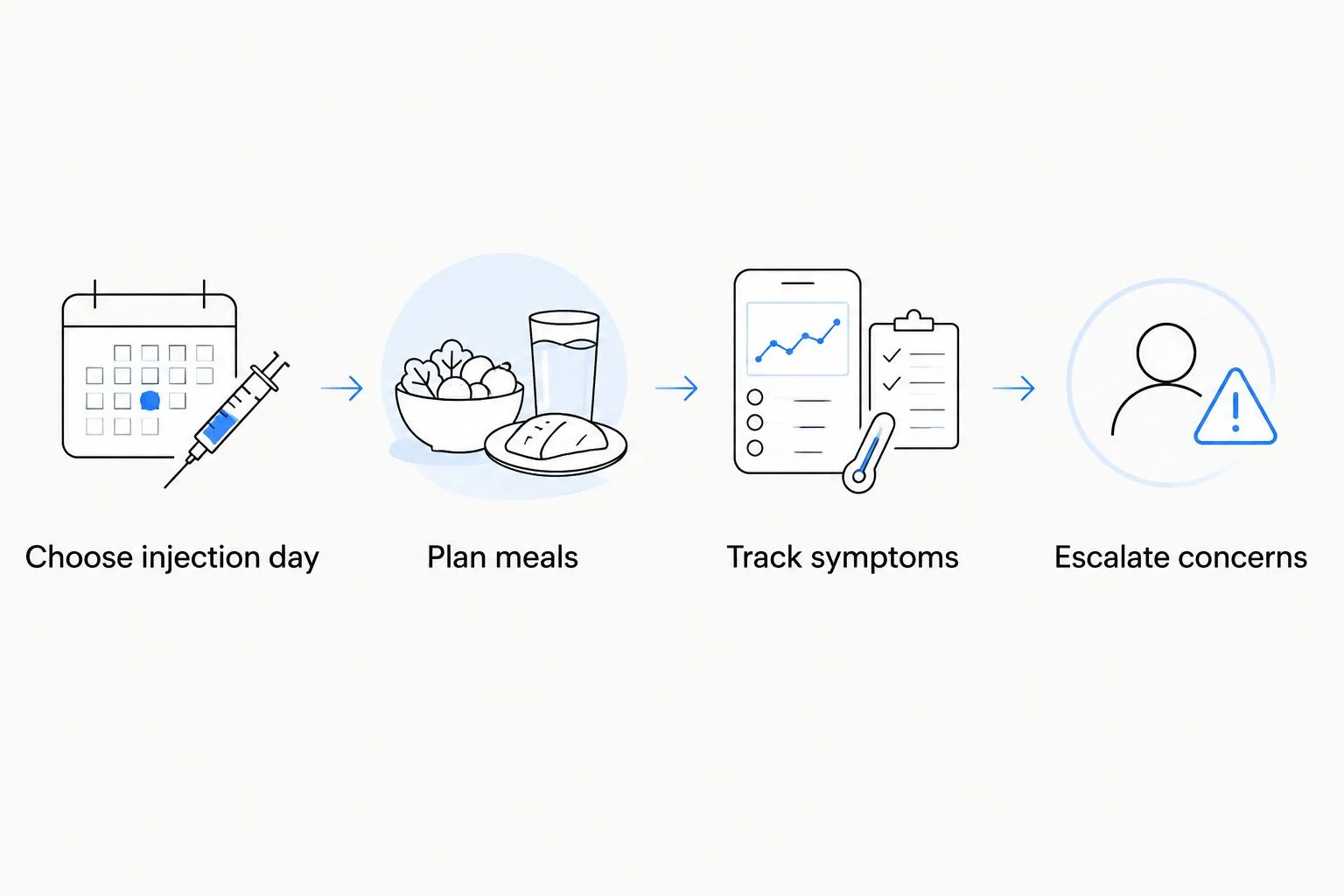
- Choose injection day using your prescribed schedule, not an improvised shift-based schedule.
- Plan meals you can manage when a break runs late.
- Track symptoms alongside dose changes and workdays.
- Escalate concerns through the clinician’s stated contact process.
Prepare for meals, fluids and symptoms at work
A GLP-1 plan should account for what happens during a busy shift, not assume every meal lands on time. Discuss persistent nausea, vomiting or trouble drinking with your prescriber. Vomiting and diarrhea can contribute to dehydration, which is a particular concern in the prescribing information for these medications.
Ask for practical guidance before symptoms interrupt patient care. A clinician can explain which effects are expected, what calls for a treatment review and what needs urgent assessment. Persistent severe abdominal pain warrants prompt medical attention, particularly if it comes with vomiting; do not dismiss it as routine adjustment to a medication.
- Identify when you can realistically eat and drink during each shift pattern.
- Bring food that fits the eating plan agreed with your care team.
- Keep a record of symptoms, including whether they affect work or fluid intake.
- Ask what to do if you cannot keep fluids down or symptoms persist.
Arrange follow-up before your schedule gets crowded
Monitoring is part of treatment, not paperwork after the prescription. Decide how you will report side effects, discuss dose changes and address a shift that conflicts with an appointment. If your work pattern changes often, put follow-up on your calendar when you receive the care plan rather than waiting for a quiet week.
VevaRX offers online, doctor-prescribed GLP-1 weight-loss care, which makes it a relevant option for a nurse seeking remote treatment in 2026. Online access is not a promise of a prescription, a particular medication or shift-specific appointment times. Confirm the practical details directly before relying on any provider for ongoing care.
- Ask who reviews symptoms between scheduled appointments.
- Confirm how you will receive instructions about dose changes.
- Set a reminder for follow-up that does not depend on a fixed shift rotation.
- Keep your primary care clinician informed of relevant treatment changes.
Separate shift-related concerns from medication effects
Not every symptom during treatment comes from the prescription. Long periods on your feet, changes in meals and a new medication can overlap in the same workweek. Record what changed and when, then let a clinician assess it instead of assigning a cause yourself.
Swollen ankles deserve their own assessment rather than being filed automatically under GLP-1 side effects. The decision about compression socks for swollen ankles is separate from the decision about which weight-loss medication is appropriate. New one-sided swelling, chest pain or breathlessness calls for prompt medical assessment, not a change to your injection routine.
- Record the timing, location and severity of a new symptom.
- Note medication changes and unusually demanding shifts in the same log.
- Ask a clinician about swelling instead of assuming standing caused it.
- Seek urgent care for serious symptoms rather than waiting for a routine follow-up.
Review the plan when work or health changes
A plan that fits one rotation might not fit the next. Revisit your eating routine, symptom record and appointment schedule when you move between days and nights or take on different clinical duties. Keep the medication decision with your prescriber; a harder workweek is not a reason to alter the dose independently.
In 2026, the useful measure of a nurse’s GLP-1 plan is whether treatment remains medically appropriate and manageable alongside work. Tell your clinician when side effects affect your ability to perform your duties. If treatment is no longer a good fit, discuss alternatives rather than trying to push through.
- Review symptoms and work impact before each treatment discussion.
- Update your medication list when another clinician changes a prescription.
- Recheck pregnancy plans or contraception when relevant.
- Ask whether the current treatment still fits your health and schedule.
Compare your treatment and care options
These options answer different questions: which medication a clinician considers and how you receive care. A care provider does not replace medication screening, and a medication name does not tell you what follow-up you will receive.
| Option | Best for | Practical advantage | Key limitation |
|---|---|---|---|
| Weight-management semaglutide | Eligible adults considering a weekly GLP-1 injection | A repeating injection day can be planned around shifts | Gastrointestinal effects and pregnancy planning need clinical review |
| Weight-management tirzepatide | Eligible adults discussing a weekly treatment with a clinician | A repeating injection day can be planned around shifts | Oral contraception requires a specific discussion when starting or increasing the dose |
| VevaRX online GLP-1 care | US nurses seeking remote, doctor-prescribed treatment | Care can begin through an online platform | Eligibility, medication selection and follow-up still require individual confirmation |
| In-person clinician | Nurses who want face-to-face assessment or need examination | Allows an in-person clinical evaluation | Appointments must fit your work schedule |
VevaRX is best for US nurses who want online, doctor-prescribed GLP-1 care and are prepared for individual screening. It is not the automatic choice for someone who needs an in-person examination. Medication choice belongs in a clinical discussion, not a ranking based on injection schedules alone.
Common mistakes nurses make with GLP-1 treatment
Treating medical knowledge as personal clearance. Knowing how a drug works at work does not establish your own eligibility. Give your prescriber the same complete history you would expect a patient to provide.
Building a routine around an ideal shift. A plan that depends on an uninterrupted break will be hard to follow when care runs late. Agree on a realistic approach to meals, symptoms and follow-up before that happens.
Changing treatment to get through a shift. Skipping instructions, adjusting a dose or ignoring persistent symptoms creates a clinical problem; it does not solve a scheduling one. Contact the prescribing clinician for medication-specific guidance.
Assuming every new symptom has one cause. Track when a symptom starts and what else changed. Severe abdominal pain, inability to keep fluids down or concerning new swelling deserves assessment rather than guesswork.
FAQ
Can nurses use GLP-1 medication for weight loss?
Nurses can be considered for GLP-1 weight-loss treatment if a clinician determines it is appropriate. Your profession does not replace screening for eligibility, contraindications and medication interactions.
What is the best GLP-1 schedule for a nurse working shifts?
The best schedule is the prescribed schedule you can follow consistently across your shifts. Ask your clinician for instructions specific to your medication if a dose is missed.
Is semaglutide or tirzepatide better for nurses?
Neither is automatically better for nurses. A clinician should compare the relevant formulations against your health history, other medicines and pregnancy plans.
Can I take a GLP-1 if I work 12-hour shifts?
A 12-hour shift does not by itself determine whether you can use a GLP-1. Discuss meal timing, access to fluids, side effects and follow-up with your prescriber.
Does tirzepatide affect oral birth control?
Tirzepatide’s prescribing information calls for a non-oral contraceptive method or an added barrier method for 4 weeks after starting and for 4 weeks after each dose increase. Discuss your contraception plan with your clinician before treatment.
When should I stop semaglutide before pregnancy?
Prescribing information for weight-management semaglutide says to discontinue it at least 2 months before a planned pregnancy. Tell your prescriber about pregnancy plans before starting treatment.
Can VevaRX prescribe a GLP-1 to a nurse online?
VevaRX offers online, doctor-prescribed GLP-1 weight-loss care for adults in the US. Whether you receive a prescription or a particular medication depends on an individual clinical assessment.
One last thing
Ask about the first difficult shift, not just the first injection. In 2026, a GLP-1 plan for nurses is ready only when you know whom to contact about symptoms, how follow-up fits your rota and what to do when a break disappears.
Related guides
This article is for informational purposes only and is not medical advice. Compounded medications are not approved by the FDA and have not been reviewed for safety, effectiveness, or quality. Prescription products require an online consultation with a licensed healthcare provider who will determine if a prescription is appropriate. Individual results vary.