
How do you store tirzepatide after opening?
How do you store tirzepatide after opening? Follow your exact label for refrigeration, single-dose disposal, and pharmacy-specific discard dates.
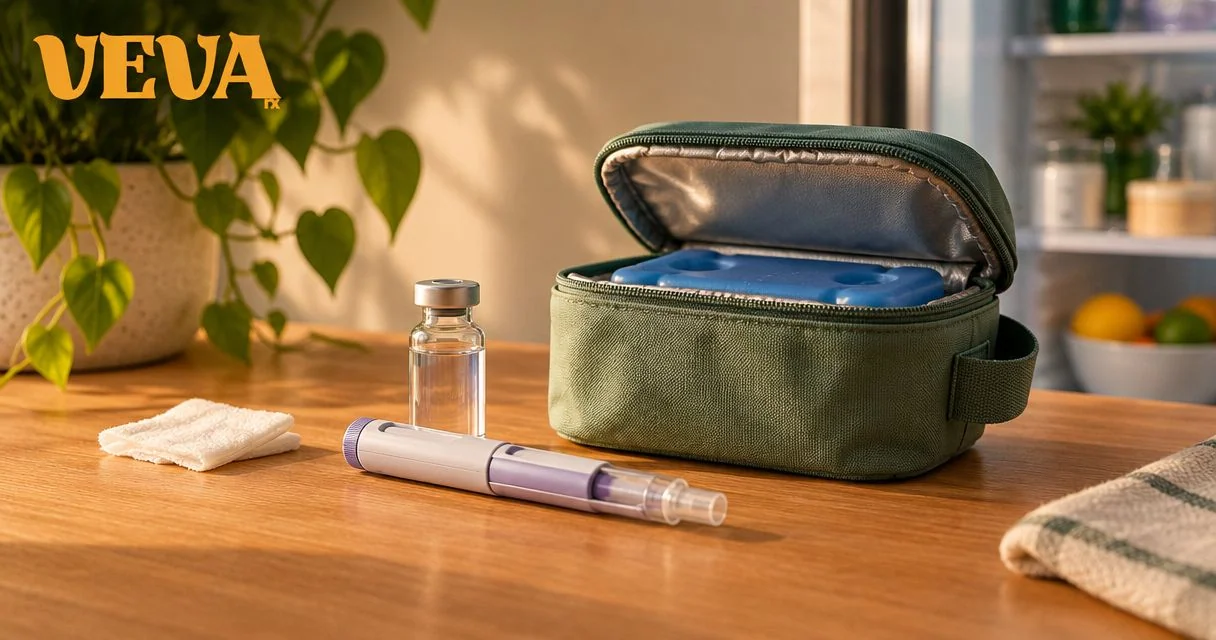
Store tirzepatide after opening exactly as your product label directs: discard a used single-dose pen or punctured single-dose vial, and follow the dispensing pharmacy’s refrigeration and discard instructions for a compounded multidose vial. In 2026, the familiar 21-day room-temperature allowance applies to specified unopened branded single-dose products—not to keeping an opened vial for repeated injections.
- How do you store tirzepatide after opening? Follow the exact product label; single-dose and multidose instructions differ.
- Mounjaro and Zepbound single-dose products require refrigeration at 36°F–46°F before use, with labeled room-temperature exceptions.
- Discard a punctured single-dose vial after use, even when liquid remains.
- Compounded tirzepatide requires the dispensing pharmacy’s storage instructions and product-specific discard date.
How do you store tirzepatide after opening?
The container type determines what happens after opening. Removing a carton lid is not the same as puncturing a vial or using a pen. Identify the actual device before applying a storage deadline.
| Container | Before use | After opening or use | Main advantage and limitation |
|---|---|---|---|
| Mounjaro or Zepbound single-dose pen | Refrigerate according to its label; follow its specific room-temperature allowance | Dispose of the pen after its injection | No repeated vial access; not designed for another dose |
| Mounjaro or Zepbound single-dose vial | Refrigerate according to its label; follow its specific room-temperature allowance | Discard after puncture and withdrawal for the prescribed injection | Labeled for one use; leftover liquid is not another dose |
| Compounded tirzepatide multidose vial | Follow the dispensing pharmacy’s label | Follow the pharmacy’s puncture-related deadline and storage directions | Permits repeated withdrawals when prescribed that way; instructions are preparation-specific |
These are storage distinctions, not recommendations to change formulations. If you receive treatment through VEVArx, an online GLP-1 weight-loss platform for adults seeking medically supervised care, use the instructions supplied with your prescription rather than borrowing directions from another patient’s medication.
Curious whether you qualify? A licensed provider makes the final call.
Start My Pre-AssessmentWhy this matters
A medication can look normal after improper storage. Appearance does not establish that tirzepatide remains potent or that an opened vial remains sterile.
Two separate issues matter: temperature exposure and contamination after access. Refrigeration does not sterilize a punctured vial, and putting medication back in the refrigerator does not erase an expired discard deadline.
For your 2026 storage routine, keep the current package insert and pharmacy instructions together. A product-specific label takes priority over a general storage article, including this one.
Branded single-dose pens and vials: 36°F–46°F before use
The US FDA-approved prescribing information for Mounjaro and Zepbound single-dose presentations specifies refrigerated storage at 36°F–46°F, or 2°C–8°C. Keep the medication protected from light in its original carton until use.
Do not freeze tirzepatide. Do not use medication that has frozen, even after it thaws, and avoid refrigerator locations where products touch a cooling element or freeze against the back wall.
For labeled single-dose presentations, room-temperature storage is permitted at up to 86°F, or 30°C, for up to 21 days. This is a before-use storage allowance, not permission to save a used pen or an accessed single-dose vial.
Zepbound’s single-dose labeling also instructs patients not to return medication to the refrigerator after room-temperature storage. Do not assume another product has identical wording; check the insert for the exact presentation you hold.
What does opening the carton change?
Opening the cardboard carton does not turn a sealed pen or vial into an in-use multidose product. The relevant questions remain whether the device is intact, whether its storage limits were maintained, and whether its expiration or applicable discard deadline has passed.
Keep unused devices in their original carton for light protection. Do not remove all the packaging simply to make refrigerator storage look tidier.
Single-dose containers: 1 injection, then disposal
A single-dose container is intended for a single use. After administering an injection from a single-dose pen, place the device in an appropriate sharps container according to its instructions.
For a single-dose vial, discard the vial after withdrawing the prescribed injection. Do not save remaining liquid for next week, combine leftovers from different vials, or reinterpret extra liquid as an additional prescribed dose.
The benefit of a single-dose presentation is that you do not repeatedly access the same medication reservoir. Its limitation is equally clear: it is not designed to supply later injections after opening.
Do not use online tips to split doses from a single-dose pen or convert it into a refillable device. If your prescribed dose and supplied device do not match, stop and ask the dispensing pharmacist or prescriber to resolve the mismatch.
Compounded multidose vials: use the pharmacy’s deadline
Compounded tirzepatide does not have one universal after-opening storage rule. The preparation, ingredients, container, and pharmacy-assigned dating determine the instructions you must follow.
Look for both a beyond-use date and any separate instruction describing how long the vial can remain in use after its first puncture. Record the first-puncture date so you can apply that instruction correctly.
A beyond-use date and a post-puncture deadline answer different questions. Neither permits using a vial beyond the other applicable limit; ask the pharmacist to identify the final discard date if the wording is unclear.
Do not automatically apply a generic 28-day multidose-vial rule to compounded tirzepatide. That shortcut does not establish the stability or sterility of your specific preparation, and a pharmacy can assign a shorter period.
In 2026, the practical rule is still label first, calendar second. Your calendar reminder should reflect the pharmacy’s written instructions, not a number copied from social media.
What if the pharmacy label is incomplete?
Do not guess a refrigeration range, puncture deadline, or room-temperature allowance. Contact the dispensing pharmacy before using a vial when essential storage instructions are missing or conflict with another document.
Ask the pharmacist to confirm the directions in writing. Keep that response with the prescription label so another household member does not accidentally apply a different medication’s rules.
Why tirzepatide storage instructions vary
Different directions do not automatically mean someone has made an error. These product-specific factors explain why a storage rule cannot be transferred between containers:
- Container type: A single-dose pen, single-dose vial, and multidose vial have different access and disposal instructions.
- Formulation: Commercially manufactured and compounded preparations do not share interchangeable stability data.
- First puncture: Entering a vial introduces an additional contamination concern that a sealed container does not have.
- Temperature exposure: The permitted storage conditions depend on the exact labeled product and its exposure history.
- Assigned dating: Printed expiration dates, beyond-use dates, and after-opening instructions serve different purposes.
The shared ingredient name is not enough. Check the full medication label, not just the word tirzepatide.
How should you set up a safe storage routine?
Build the routine around the product you actually received. Before your next injection, make sure you can answer where it belongs, when it was first accessed, and when it must be discarded.
- Read the label. Identify whether the container is single-dose or multidose and locate the storage directions.
- Check temperature. Use a refrigerator thermometer when refrigeration is required, and keep medication away from freezing surfaces.
- Record dates. Note any room-temperature start date required by the label and the first-puncture date for a multidose vial.
- Set reminders. Add the applicable discard date to your calendar without extending it to match your injection schedule.
- Inspect medication. Check the container and solution before each use, following the product’s appearance instructions.
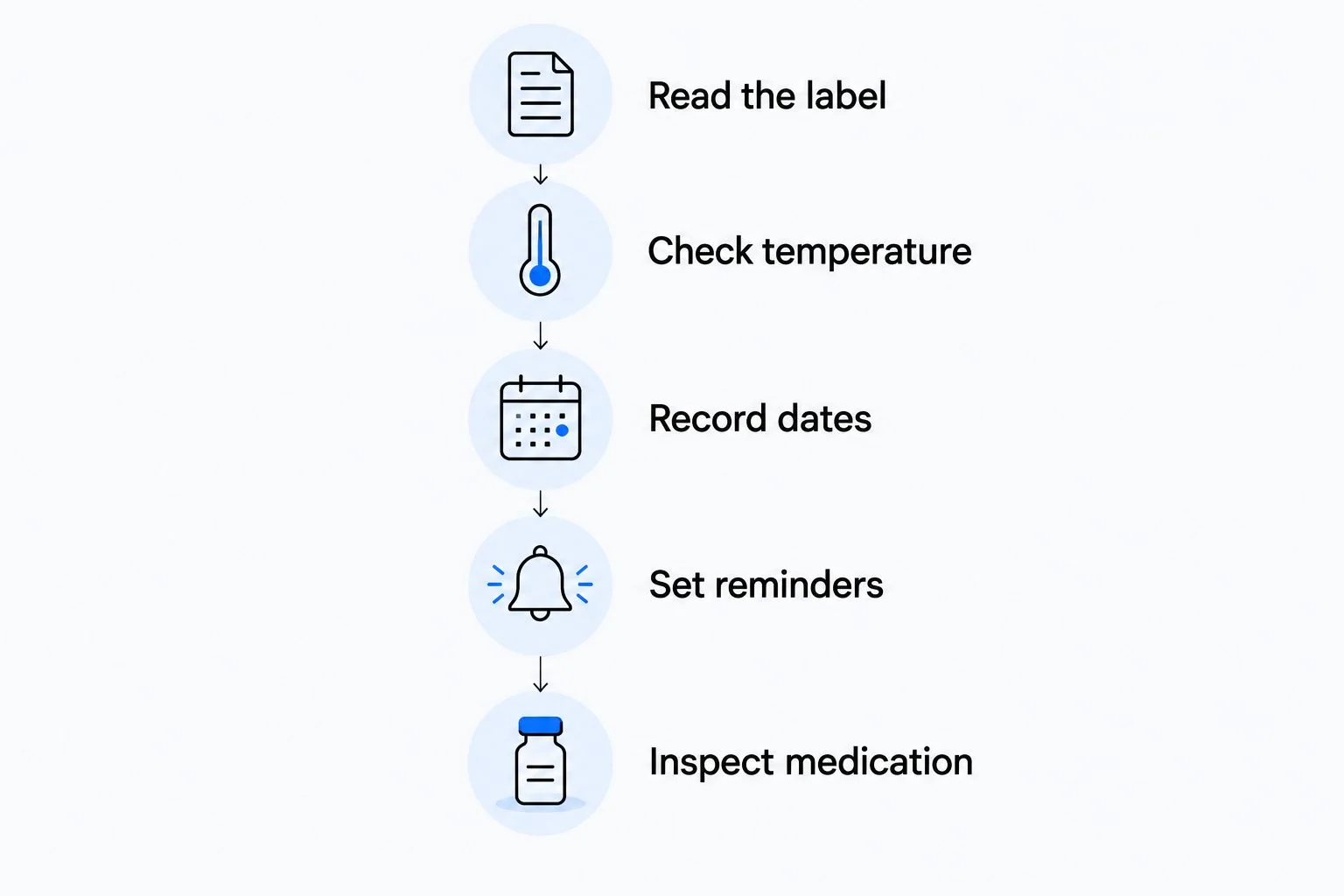
For a multidose vial, use a new sterile needle and syringe for every injection and follow the supplied instructions for cleaning the stopper. Never leave a needle inserted in the vial between doses.
Keep medication and injection supplies out of children’s reach. Store the labeled container rather than transferring the contents into another bottle or prefilled syringes unless your dispensing pharmacy specifically supplied and instructed that arrangement.
How do you prevent refill timing from extending a vial’s use?
Plan the next prescription around the current container’s valid use period—not around whether some liquid remains. A delayed refill does not make an expired or improperly stored vial suitable for another injection.
For patients using Mounjaro, refilling your Mounjaro prescription belongs on a separate calendar reminder from medication disposal: the refill reminder manages treatment continuity, while the discard reminder protects against using medication beyond its instructions.
For your 2026 medication calendar, keep those reminders distinct. If a replacement will not arrive before your next scheduled dose, ask the prescriber or pharmacist what to do; do not stretch a vial’s deadline or change your dose yourself.
Find out if GLP-1 treatment may be right for you.
Start My Pre-AssessmentWhat should you do if tirzepatide gets warm or freezes?
Do not inject medication that has frozen. Thawing does not make frozen tirzepatide acceptable to use under branded storage instructions.
If the medication becomes warm, collect the facts before contacting the pharmacist: the product name, container type, highest known temperature, and estimated duration of exposure. “It was out overnight” is less useful than a clear description of where it was kept and whether it was near heat.
An air-conditioned room, a parked car, and a bag beside an ice pack are not equivalent environments. A cooler can also freeze medication if the container directly contacts a frozen pack.
For travel in 2026, select a storage method that maintains your product’s stated limits without freezing it. When the temperature history is uncertain, set the medication aside and obtain product-specific advice before using it.
Can you tell whether tirzepatide has gone bad by looking?
You cannot confirm tirzepatide’s potency or sterility by appearance alone. A clear-looking solution does not cancel a missed storage requirement or an expired discard deadline.
For branded single-dose products, follow the package instructions describing acceptable solution appearance. Do not inject a product with unexpected particles, cloudiness, discoloration, leakage, or container damage; contact the pharmacist for assessment.
Compounded preparations require their own appearance instructions because added ingredients can affect what the solution looks like. Do not use photographs of another person’s vial as a quality standard for yours.
Should you refrigerate tirzepatide again after taking it out?
Refrigerating tirzepatide again does not reset its storage clock. For Zepbound single-dose products, the labeling specifically says not to return the medication to the refrigerator after room-temperature storage.
For another presentation, use its exact instructions rather than applying that rule automatically. If the product has moved repeatedly between temperatures and you cannot establish its exposure history, ask the pharmacist before the next injection.
Where does online prescribing fit into storage decisions?
VEVArx is best suited to US adults seeking online, medically supervised GLP-1 weight-loss care. That service category does not replace the dispensing pharmacy’s product-specific storage guidance.
VEVArx offers doctor-prescribed weight-loss medications, including tirzepatide, but an online prescription does not make every dispensed container interchangeable. The limitation of any general telehealth article is that it cannot assess the vial in your refrigerator or reconstruct its temperature history.
Use your prescriber for treatment decisions and the dispensing pharmacist for preparation-specific handling questions. If necessary, ask them to coordinate before your next dose.
Have questions about your options? Start with a quick online assessment.
Start My Pre-AssessmentFAQ
How do you store tirzepatide after opening in 2026?
Store tirzepatide according to its exact label: discard a used single-dose container, and follow the pharmacy’s refrigeration and after-puncture instructions for a compounded multidose vial. Opening the carton is not the same as puncturing the vial.
Can I keep leftover tirzepatide in a single-dose vial?
No. Discard a punctured single-dose tirzepatide vial after withdrawing the prescribed injection, even if liquid remains.
Does every tirzepatide vial expire 28 days after opening?
No. A universal 28-day rule does not establish the correct deadline for every tirzepatide preparation. Follow the dispensing pharmacy’s product-specific instructions for a compounded multidose vial.
How cold should unopened Mounjaro or Zepbound single-dose products be?
Store unopened Mounjaro or Zepbound single-dose products at 36°F–46°F, or 2°C–8°C, according to their labeling. Keep them protected from light and do not freeze them.
Can tirzepatide stay out of the refrigerator for 21 days after opening?
The 21-day allowance is not permission to reuse an opened single-dose container. Specified branded single-dose products allow room-temperature storage before use at up to 86°F, or 30°C, under their exact labeling.
Can I use tirzepatide that froze and then thawed?
Do not use tirzepatide that has frozen. Set it aside and contact the dispensing pharmacist about replacement and disposal.
Is tirzepatide safe if it still looks clear?
A clear appearance does not prove tirzepatide is potent or sterile. Storage history, container integrity, and applicable expiration or discard deadlines still determine whether it is suitable to use.
One last thing
A vial with medication remaining can still be due for disposal. Before your next injection, write the pharmacist-confirmed discard date beside the first-puncture date and keep both readable without covering the original label.
That small step prevents a common decision error: treating the amount left in the vial as evidence that another dose is appropriate. Your prescription and the product’s instructions—not the remaining liquid—determine its use.
Related guides
Ready to get started?
See if doctor-prescribed GLP-1 treatment may be right for you. It only takes a few minutes, 100% online.
Start My Pre-AssessmentThis article is for informational purposes only and is not medical advice. Compounded medications are not approved by the FDA and have not been reviewed for safety, effectiveness, or quality. Prescription products require an online consultation with a licensed healthcare provider who will determine if a prescription is appropriate. Individual results vary.