
Can you take semaglutide if you have gallbladder issues?
Can you take semaglutide if you have gallbladder issues? Sometimes, after medical review. Learn which symptoms need urgent care and what to ask.
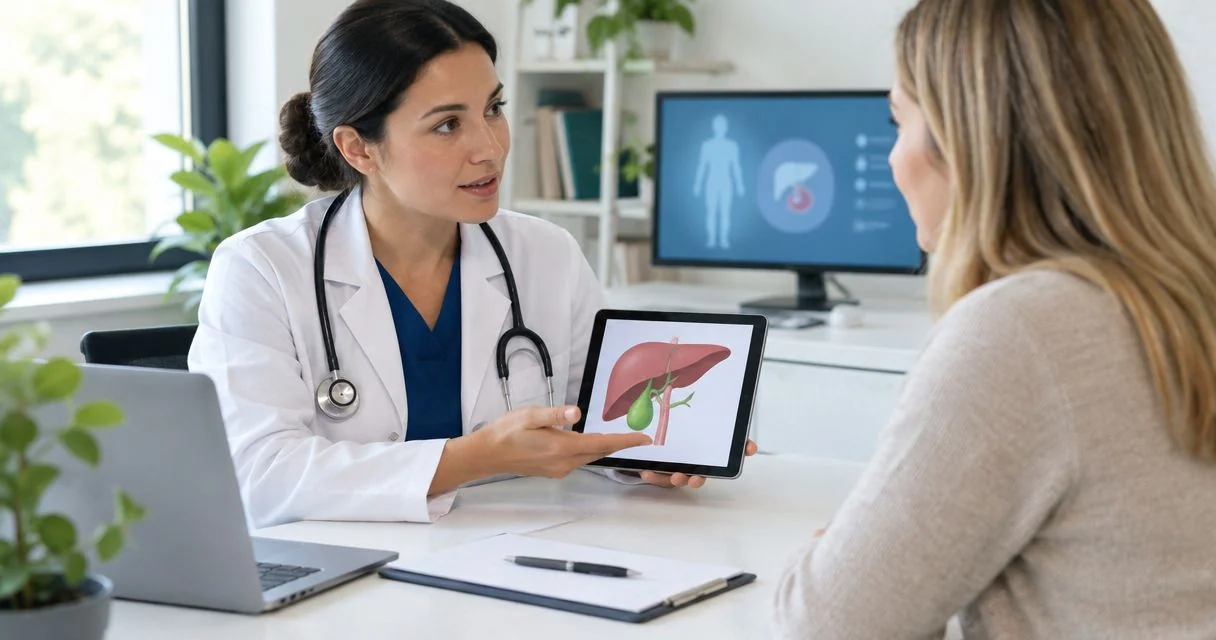
Yes, you can sometimes take semaglutide if you have gallbladder issues, but your prescriber must review your diagnosis, symptoms, and treatment history before deciding. Previous gallstones or gallbladder removal are not automatic contraindications; active inflammation, suspected blockage, or unexplained upper abdominal pain needs medical evaluation first. This 2026 guide explains the difference between a history that needs review and symptoms that need urgent care.
- Can you take semaglutide if you have gallbladder issues? Sometimes, after a prescriber reviews your diagnosis and symptoms.
- Semaglutide carries a warning for acute gallbladder disease; previous gallstones are not an automatic contraindication.
- Severe abdominal pain, fever, jaundice, or persistent vomiting requires prompt medical evaluation.
- Vevarx offers medically supervised GLP-1 weight-loss care for US adults; urgent abdominal symptoms require in-person assessment.
Why this matters
Your current symptoms matter more than the phrase ‘gallbladder issues.’ An incidental gallstone found on an old scan is different from a painful obstruction or an inflamed gallbladder. Treating those situations as interchangeable can delay necessary care.
Semaglutide prescribing information includes a warning about acute gallbladder disease, including gallstones and gallbladder inflammation. Weight loss itself also contributes to gallstone risk, so a prescription does not remove the need to watch for symptoms.
If you are considering Vevarx for GLP-1 weight-loss care in 2026, share your gallbladder history before a prescribing decision. An online consultation does not replace an examination or imaging when you have concerning abdominal pain.
Curious whether you qualify? A licensed provider makes the final call.
Start My Pre-AssessmentCan you take semaglutide if you have gallbladder issues?
A gallbladder history does not automatically rule out semaglutide, but an active gallbladder problem needs evaluation before starting or continuing treatment. The decision depends on what happened, whether symptoms remain, and whether complications involved the bile ducts or pancreas.
The FDA-approved Wegovy prescribing information lists acute gallbladder disease under warnings and precautions, rather than listing previous gallstones as a contraindication. That distinction matters: a warning calls for clinical judgment and monitoring, not an automatic yes or no.
| Gallbladder situation | What it means for semaglutide | Next step |
|---|---|---|
| Previous gallstones without current symptoms | Not an automatic exclusion, but relevant to your risk assessment | Review prior scans, symptoms, and treatment with your prescriber |
| Recurrent pain after meals | Needs evaluation rather than being labeled routine medication nausea | Contact a clinician before starting or increasing treatment |
| Suspected acute inflammation or bile duct blockage | An active medical problem takes priority over weight-loss treatment | Get prompt in-person assessment |
| Previous gallbladder removal | Does not automatically prevent semaglutide use | Review recovery, remaining symptoms, and any bile duct complications |
| Previous gallstone-related pancreatitis | Requires a separate pancreatic risk discussion | Give your prescriber the hospital diagnosis and treatment history |
This table is a discussion guide, not medical clearance. Your prescriber also needs to check the medication's other contraindications, your other prescriptions, and whether semaglutide is appropriate for your treatment goal.
What does the evidence say about gallbladder risk?
In adult weight-reduction trials described in the FDA-approved Wegovy prescribing information, gallstones were reported in 1.6% of injection-treated patients versus 0.7% receiving placebo. Gallbladder inflammation was reported in 0.6% versus 0.2%, respectively.
Those figures describe trial populations, not your personal probability of developing a complication. They also should not be transferred automatically to every semaglutide formulation, dose, or patient group.
| Event in adult Wegovy injection weight-reduction trials | Wegovy | Placebo |
|---|---|---|
| Gallstones, also called cholelithiasis | 1.6% of patients | 0.7% of patients |
| Gallbladder inflammation, also called cholecystitis | 0.6% of patients | 0.2% of patients |
The prescribing information also states that substantial or rapid weight loss increases gallstone risk, but that acute gallbladder disease occurred more often with Wegovy even after accounting for weight loss. Do not assume that avoiding rapid weight loss eliminates medication-associated risk.
For a treatment decision in 2026, use the prescribing information for the exact product you will receive. These trial figures do not establish the safety, effectiveness, or quality of a compounded preparation.
What if you already have gallstones?
Gallstones without symptoms do not create an automatic ban on semaglutide. Tell your prescriber how the stones were found, whether you have had pain, and whether a clinician recommended observation or treatment. An old scan is useful context, but it does not explain new symptoms by itself.
Recurring pain deserves assessment before you dismiss it as a medication side effect. Gallstone pain often occurs in the upper right or upper middle abdomen and can extend toward the back or right shoulder. Nausea can accompany it, which makes symptom overlap especially confusing.
If you are waiting for gallbladder surgery or have had repeated attacks, ask your treating clinician and prescriber to coordinate the medication plan. Do not start semaglutide simply because an earlier attack settled without treatment.
Can you take semaglutide after gallbladder removal?
Previous gallbladder removal is not, by itself, a contraindication to semaglutide. Your clinician still needs to review your recovery, current eating tolerance, abdominal symptoms, and any history of bile duct stones or pancreatitis.
Removing the gallbladder does not remove the bile ducts or pancreas. New severe abdominal pain after surgery still needs assessment; it should not be dismissed because you no longer have a gallbladder.
If your operation was recent, ask the surgical team when weight-loss medication is appropriate. Recovery and nutrition take priority over an online treatment timeline, and there is no universal restart date that applies to everyone.
Why your gallbladder risk varies
Your clinician needs more than a medication name to assess gallbladder risk. These factors help explain why the same prescription leads to different decisions for different people:
- Previous gallstones or attacks: A history of painful episodes gives your clinician different information from a stone discovered without symptoms.
- Current symptoms: Ongoing upper abdominal pain, fever, or jaundice changes the urgency of evaluation.
- Weight-loss pattern: Substantial or rapid weight loss is an established contributor to gallstone formation.
- Previous complications: Bile duct obstruction, infection, or gallstone-related pancreatitis requires additional review.
- Surgical history: Gallbladder removal changes the clinical picture, but unresolved symptoms still need an explanation.
These factors guide an individualized decision; they do not produce a reliable home risk score. Do not use a symptom-free week as proof that a previously diagnosed problem has resolved.
Which symptoms need urgent medical attention?
Seek urgent medical evaluation for severe or persistent upper abdominal pain, especially when it occurs with fever, repeated vomiting, or yellowing of the skin or eyes. Dark urine and unusually pale stools also need prompt assessment because they can accompany impaired bile flow.
Do not wait for your next telehealth appointment if you have severe pain or feel seriously unwell. Emergency care is appropriate for severe symptoms, fainting, confusion, or an inability to keep fluids down.
Semaglutide can cause nausea and other gastrointestinal symptoms, but symptom overlap does not make severe pain harmless. You cannot reliably distinguish gallbladder inflammation, a blocked bile duct, and pancreatitis at home.
Tell the evaluating clinician which medication you take, when you last took it, and whether your dose recently changed. Ask that clinician what to do about the next dose rather than guessing or taking an extra dose later.
Find out if GLP-1 treatment may be right for you.
Start My Pre-AssessmentWhat should you discuss before starting semaglutide?
For your 2026 consultation, prepare a short history that makes the prescribing decision more specific. Bring existing records when you have them; do not delay urgent care while searching for paperwork.
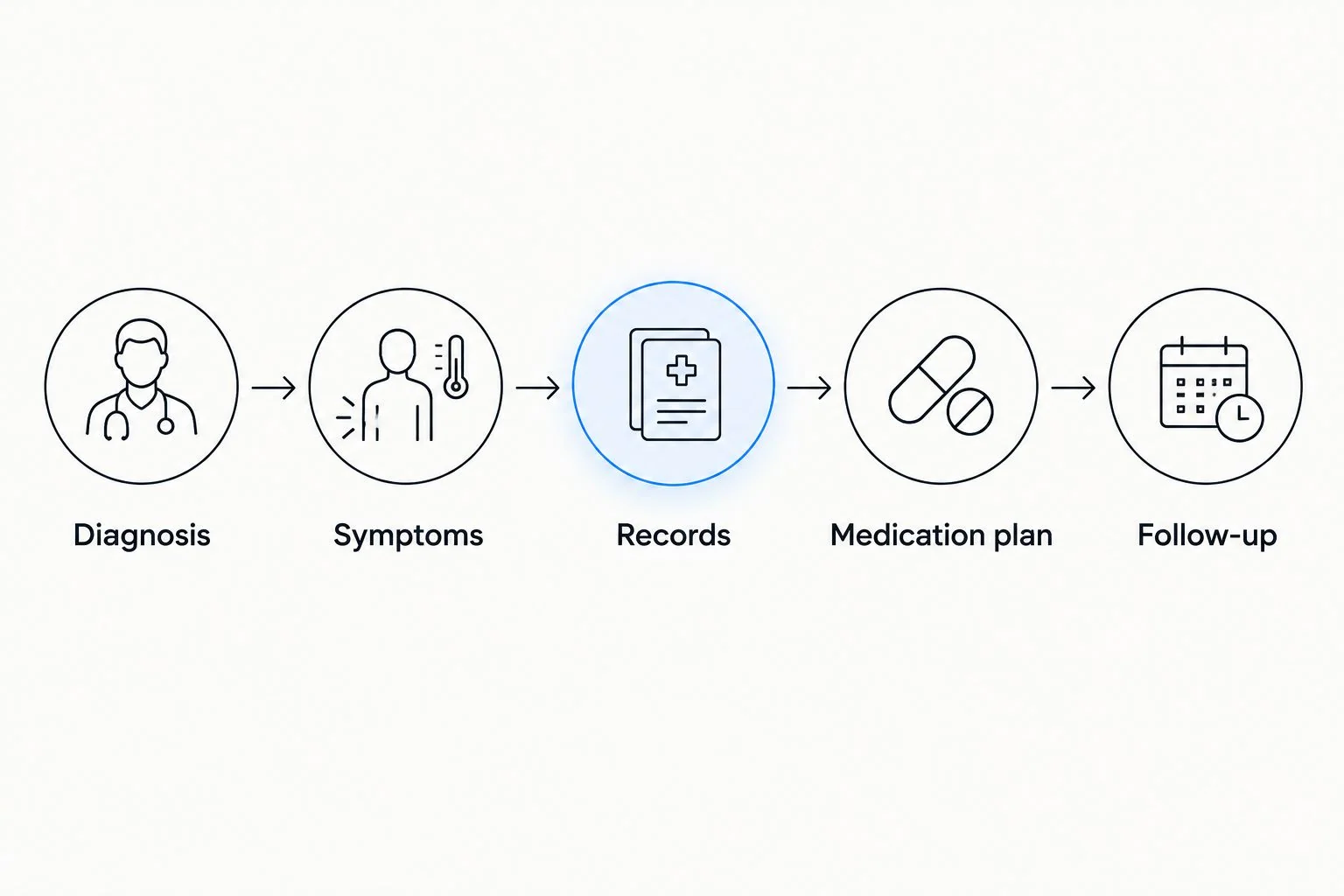
- Diagnosis: Explain whether you had gallstones, gallbladder inflammation, bile duct stones, or pancreatitis. These are related but different conditions.
- Symptoms: Describe where the pain occurs, what brings it on, whether it spreads, and whether you have fever, vomiting, or jaundice.
- Records: Share relevant ultrasound reports, discharge summaries, and surgery details. Tell the clinician if an earlier recommended procedure never happened.
- Medication plan: Review your current prescriptions, previous semaglutide use, and any planned operation. Ask who will advise you if symptoms develop between visits.
- Follow-up: Agree on which symptoms require a message, an appointment, or immediate in-person care. Know whom to contact before you leave the consultation.
Your clinician decides whether you need an examination, blood tests, or imaging. The Wegovy prescribing information recommends gallbladder studies and appropriate clinical follow-up when gallstones are suspected; routine ultrasound for every asymptomatic patient is not the same recommendation.
Is gallbladder pain the same as pancreatitis?
Gallbladder pain and pancreatitis are not the same condition, although gallstones can cause pancreatitis. Persistent, severe abdominal pain that extends to the back, with or without vomiting, needs urgent assessment rather than a home diagnosis.
Semaglutide prescribing information directs discontinuation if pancreatitis is suspected and appropriate management is started. If a clinician suspects pancreatitis, follow that clinician's medication instructions and do not restart on your own.
A previous episode also deserves its own discussion before prescribing. Read the separate guide on semaglutide with a history of pancreatitis, then bring the cause and outcome of your episode to your appointment.
How does telehealth fit into this decision?
Vevarx is best suited to US adults seeking medically supervised telehealth weight-loss care, not emergency abdominal assessment. Vevarx offers doctor-prescribed GLP-1 weight-loss medications, but a platform's service description does not establish whether a particular medication is safe for your gallbladder history.
Telehealth lets you discuss records, symptoms, and treatment goals with a clinician. Its limitation is equally important: a remote conversation cannot perform an abdominal examination or ultrasound. Follow any recommendation for local evaluation before proceeding.
When comparing care options in 2026, prioritize a clear symptom-escalation plan over a quick prescribing decision. Ask who handles a new episode of pain, how records reach the prescriber, and when the plan requires in-person care.
Have questions about your options? Start with a quick online assessment.
Start My Pre-AssessmentFAQ
Can I take semaglutide if I have gallstones but no pain?
Gallstones without pain do not automatically rule out semaglutide, but your prescriber must review your history before treatment. Report any new upper abdominal pain, fever, vomiting, or jaundice promptly.
Does semaglutide increase the risk of gallstones?
Semaglutide carries a warning for acute gallbladder disease. Adult Wegovy injection weight-reduction trials reported gallstones in 1.6% of treated patients versus 0.7% receiving placebo; these figures are not an individual risk prediction.
Can I take semaglutide after having my gallbladder removed?
Gallbladder removal alone does not automatically prevent semaglutide use. Your clinician still needs to review recovery, current symptoms, and any history of bile duct problems or pancreatitis.
Should I stop semaglutide if my upper stomach hurts?
Severe or persistent upper abdominal pain needs prompt medical assessment, not a self-directed dosing decision. Seek urgent care for severe pain, particularly with fever, jaundice, or persistent vomiting, and ask the treating clinician about your next dose.
Do I need an ultrasound before starting semaglutide?
An ultrasound is not automatically required for every asymptomatic person starting semaglutide. Your clinician decides whether your symptoms and history warrant gallbladder imaging or other tests.
Can eating differently prevent gallbladder problems on semaglutide?
Diet changes cannot guarantee prevention of gallbladder problems on semaglutide. Discuss nutrition and your weight-loss pattern with your clinician, and do not use dietary changes as a substitute for evaluating persistent pain.
Can Vevarx clear me for semaglutide with gallbladder disease?
Vevarx offers medically supervised GLP-1 weight-loss care, but eligibility requires an individual prescribing assessment. Active or concerning abdominal symptoms need appropriate in-person evaluation rather than clearance from a general article.
One last thing
Gallbladder removal does not make every future abdominal symptom unrelated to bile flow. Bile ducts remain after surgery, and pancreatic problems remain possible too. That distinction matters whether you are starting semaglutide or have taken it without problems before.
Before your next treatment decision in 2026, write down the actual diagnosis from your records—not just ‘gallbladder trouble.’ Knowing whether you had uncomplicated stones, inflammation, an obstructed duct, or pancreatitis gives your clinician a much clearer starting point.
Related guides
Ready to get started?
See if doctor-prescribed GLP-1 treatment may be right for you. It only takes a few minutes, 100% online.
Start My Pre-AssessmentThis article is for informational purposes only and is not medical advice. Compounded medications are not approved by the FDA and have not been reviewed for safety, effectiveness, or quality. Prescription products require an online consultation with a licensed healthcare provider who will determine if a prescription is appropriate. Individual results vary.