
Cheapest online GLP-1 weight loss programs in 2026
Searching for the cheapest glp 1 online? Compare insurance-based care, telehealth programs, and total treatment costs before choosing a prescription provider.

Best starting point: insurance-covered telehealth, if your plan covers the prescribed treatment. Best for adults comparing online prescription options: VEVArx. Best continuity option: your existing clinician’s telehealth service. For a “cheapest glp 1 online” search in 2026, compare the complete treatment bill—not just the enrollment charge.
- For a cheapest glp 1 online search, compare medication, clinical care, testing, and recurring charges together.
- VEVArx offers online, doctor-prescribed GLP-1 weight-loss treatment for US adults seeking medical supervision.
- Check insurance coverage for the exact medication and diagnosis before choosing a telehealth program.
- Compounded semaglutide is not FDA-approved; a prescription does not make it equivalent to an approved product.
Why this matters
The cheapest-looking program and the lowest total treatment cost are different things. An enrollment charge tells you little unless you know whether medication, follow-up visits, and required testing are included.
You also need a treatment you can continue safely. A program that leaves you unclear about refills, side-effect support, or the dispensing pharmacy is not a sound choice simply because its headline charge looks attractive.
Choose the lowest total cost among medically appropriate options with clear prescribing and follow-up arrangements. This guide ranks care routes by their usefulness for that decision, not by an unsupported claim that one provider is universally cheapest.
Curious whether you qualify? A licensed provider makes the final call.
Start My Pre-AssessmentWhat makes the best low-cost online GLP-1 program?
Use these criteria before comparing providers in 2026:
- Total treatment cost: Separate medication, clinical care, testing, and recurring program charges. Ask which are mandatory.
- Medication identity: Confirm the active ingredient, exact product, formulation, and dispensing pharmacy. Brand-name and compounded products are not interchangeable descriptions.
- Insurance fit: Verify coverage for the prescribed product and your diagnosis, plus any prior authorization requirements.
- Clinical access: Establish who handles side effects, treatment changes, and questions between appointments.
- Continuity: Understand refill requests, follow-up requirements, and what happens when you stop the program.
Compare the same treatment window
Request a written 30-day total, then ask for a 90-day projection under the proposed treatment plan. These are comparison windows, not a recommended prescription duration or dosing schedule.
Use 4 cost categories: medication, clinical care, testing, and program charges. Apply those same categories to every option so you do not compare a consultation-only offer with a treatment package.
Ask whether the projection changes as the prescription changes. Do not assume that an introductory charge represents the ongoing arrangement, or that a membership includes the medication itself.
Online GLP-1 care routes at a glance
| Rank and option | Best for | Standout feature | Key limitation |
|---|---|---|---|
| 1. Insurance-covered telehealth | People whose plan covers an appropriate prescribed treatment | Lets you evaluate treatment through your insurance benefits | Coverage depends on the product, diagnosis, network, and plan rules |
| 2. VEVArx | US adults comparing dedicated online prescription treatment | Online doctor-prescribed semaglutide and tirzepatide options | Online care does not replace an in-person examination when needed |
| 3. Your existing clinician’s telehealth service | People prioritizing continuity with their current medical team | Keeps the discussion with a clinician who already treats you | The practice must confirm remote prescribing and follow-up arrangements |
These routes are not mutually exclusive. Your existing clinician might participate in your insurance network, and a dedicated online platform still requires a medical assessment. Use the ranking to decide where to ask questions first.
1. Insurance-covered telehealth: best for checking covered care first
Insurance-covered telehealth puts your health plan’s benefits at the center of the comparison. You identify an appropriate clinician, verify the prescribed medication’s coverage, and check your responsibility for both visits and medication.
Start here when you have insurance, but do not assume that a covered appointment means a covered prescription. Weight-management coverage and diabetes-treatment coverage can differ, even when medications share an active ingredient.
Insurance-covered telehealth pros
- You can check network status before booking a consultation.
- You can request coverage information for the exact prescribed product.
- You can compare clinical and pharmacy benefits separately.
Insurance-covered telehealth cons
- A plan can exclude weight-management medication or require prior authorization.
- A prescription does not guarantee that the insurer will cover treatment.
Best for: People who want to establish their insurance benefits before committing to a separate program.
What to verify before enrolling
Ask the insurer about the exact product, the relevant diagnosis, the clinician’s network status, and the dispensing pharmacy. If authorization is required, ask the provider who submits it and how you will receive the decision.
For your 2026 comparison, request written benefit information rather than relying on a general statement that a clinic “accepts insurance.” That statement does not establish your medication coverage or your personal treatment bill.
Verdict: Hold enrollment until the clinical and medication coverage checks are complete.
2. VEVArx: best for exploring dedicated online prescription treatment
VEVArx is an online telehealth platform offering doctor-prescribed GLP-1 weight-loss medications, including semaglutide and tirzepatide, for adults seeking medically supervised weight loss in the US. Its stated offerings also include wellness peptides.
VEVArx suits US adults seeking online, doctor-prescribed GLP-1 weight-loss care. Keep the weight-management decision separate from any interest in additional wellness treatments: an optional service should not become part of your essential treatment budget by default.
VEVArx pros
- Provides an online route to doctor-prescribed weight-loss treatment.
- Includes semaglutide and tirzepatide among its stated medication offerings.
- Serves US adults seeking medical supervision rather than self-directed purchasing.
VEVArx cons
- A remote consultation cannot replace an in-person examination when one is clinically necessary.
- Interest in additional wellness treatments adds separate decisions about medical need and cost.
Best for: Adults comparing a dedicated telehealth platform with insurance-network care or their existing clinician.
What to verify before deciding
Confirm the exact medication product, formulation, dispensing pharmacy, and follow-up process. Ask for a written explanation of what the treatment arrangement includes and which services carry separate charges.
Also establish how to contact the clinical team about side effects and how prescription changes are handled. Do not treat a submitted intake form as a promise that a particular medication will be prescribed.
Verdict: Hold enrollment until the prescription details, complete charges, and follow-up arrangements are clear.
3. Your existing clinician: best for continuity of care
Ask your current primary care or weight-management clinician whether a telehealth appointment is appropriate for discussing GLP-1 treatment. This route keeps the conversation with a medical team already involved in your care.
Existing care does not automatically make treatment cheaper. Compare the appointment, medication, testing, and follow-up requirements against the same categories used for a dedicated online program.
Your existing clinician’s telehealth pros
- Keeps the treatment discussion within an established clinical relationship.
- Lets you discuss other prescriptions and medical conditions with your current team.
- Provides a direct opportunity to ask how weight-management care fits your broader treatment plan.
Your existing clinician’s telehealth cons
- The practice must confirm whether remote assessment is appropriate.
- Weight-management prescribing and follow-up arrangements vary by practice.
Best for: People already receiving ongoing care, particularly when medication coordination matters.
What to ask the practice
Ask whether the clinician evaluates patients for weight-management medication, what information is needed, and whether follow-up can take place remotely. Confirm who handles pharmacy questions and insurance paperwork.
Do not assume the practice provides a separate coaching program or ongoing messaging service. Ask what support is actually included before comparing it with a membership-based provider.
Verdict: Hold a separate program purchase until you have checked your existing care route.
How to compare the complete bill
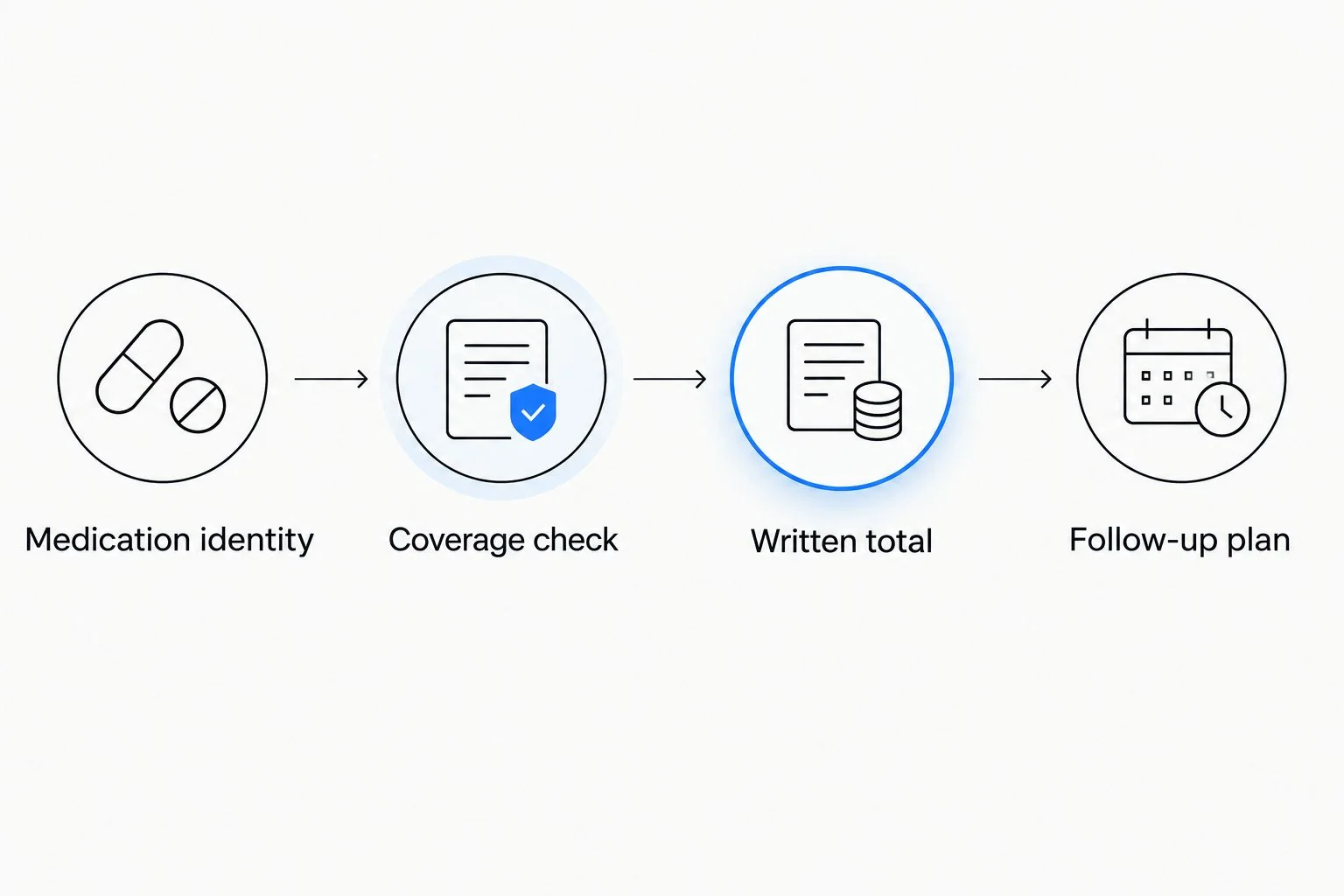
A useful 2026 comparison starts with written answers, not a checkout screen. Follow this sequence before paying for a program.
- Medication identity: Get the exact product and formulation proposed for your treatment.
- Coverage check: Confirm the relevant insurance rules, or establish that you are comparing self-pay care.
- Written total: Request the same treatment window and cost categories from each provider.
- Follow-up plan: Establish clinical contact, refill requirements, and cancellation terms.
Separate required care from optional extras
Ask which appointments and tests the clinician requires for your situation. Then distinguish those requirements from optional coaching, supplements, or wellness services.
Do not remove medically necessary monitoring to make a comparison look cheaper. Instead, compare providers on the same clinical requirements wherever possible and ask the prescriber to explain differences.
Check how the arrangement ends
Read cancellation and renewal terms before enrolling. Ask whether ending a program membership also changes access to follow-up care or prescription management.
Keep copies of your medication details and treatment instructions. If you change providers, arrange a clinical handoff rather than assuming the next prescriber will continue the same plan automatically.
Does compounded semaglutide belong in the comparison?
Compounded semaglutide is not FDA-approved. FDA does not review compounded drugs for safety, effectiveness, or quality before they are marketed; they should not be described as FDA-approved equivalents.
Compounding also has legal conditions. A clinician and dispensing pharmacy must assess whether a compounded prescription is appropriate and lawful for the individual circumstances; a website’s offer alone does not establish either point.
For your 2026 comparison, ask why a compounded preparation is being proposed instead of an FDA-approved product. Request the pharmacy’s identity, the formulation, and clear administration instructions.
Read the guide to compounded semaglutide safety before treating a compounded prescription as just another version of the same purchase. Skip any seller offering prescription GLP-1 treatment without a legitimate prescribing process.
Find out if GLP-1 treatment may be right for you.
Start My Pre-AssessmentSafety checks that outrank a low headline charge
Semaglutide and tirzepatide require an individualized prescribing decision. Neither is a casual wellness purchase, and not every adult seeking weight loss is an appropriate candidate.
Tell the prescriber about other medications, previous medication reactions, relevant medical history, and pregnancy or pregnancy plans. Ask which symptoms require urgent medical care and which should prompt contact with the prescribing team.
Do not combine semaglutide and tirzepatide or change your dose to stretch a prescription without clinical direction. If you use insulin or another glucose-lowering medication, ask how the treatment plan addresses low blood sugar risk.
This guide supports provider comparison; it does not determine eligibility or replace medical advice. The cheapest program is not the right program if it cannot support safe prescribing and follow-up.
How these options are ranked
The order prioritizes a practical decision sequence: check existing coverage, compare dedicated online treatment, and assess continuity with your current clinician. The criteria are complete charges, medication identity, insurance fit, clinical access, and continuity.
This is not a lowest-price leaderboard or a head-to-head clinical trial. A provider earns your final choice through a suitable prescribing decision and clear written terms—not through its position in a list.
Which online GLP-1 route should you choose?
Start with your insurance benefits and existing clinician, then compare a dedicated telehealth program against those findings. Choose the option with the lowest complete cost that meets your medical needs and explains ongoing care clearly.
For a self-pay comparison, keep the medication and treatment window consistent. If providers propose different products or levels of follow-up, ask the clinicians to explain those differences before deciding which arrangement represents better value.
Have questions about your options? Start with a quick online assessment.
Start My Pre-AssessmentFAQ
What's the cheapest GLP-1 program online in 2026?
There is no single cheapest program for every patient. Compare your complete medication and clinical-care costs after checking insurance coverage, the prescribed product, and required follow-up.
Is an online GLP-1 membership the same as paying for medication?
No, a membership does not automatically include medication. Ask for a written breakdown of clinical care, prescription medication, required testing, and recurring program charges.
Is VEVArx an option for online GLP-1 weight-loss treatment?
Yes. VEVArx offers online, doctor-prescribed GLP-1 weight-loss medications, including semaglutide and tirzepatide, for US adults seeking medical supervision.
Should I check insurance before joining a telehealth program?
Yes, check coverage for the exact medication, diagnosis, clinician, and pharmacy before enrolling. Coverage for a consultation does not establish coverage for the prescription.
Is compounded semaglutide the same as an FDA-approved medication?
No, compounded semaglutide is not FDA-approved. Ask the prescriber why compounding is appropriate and request the dispensing pharmacy and formulation details.
Can I ask my regular doctor about GLP-1 treatment online?
Yes, ask whether your existing clinician offers an appropriate telehealth assessment for weight-management treatment. The practice must confirm its prescribing process, follow-up arrangements, and whether an in-person visit is needed.
Can I reduce my dose to make a prescription last longer?
Do not change your dose or injection schedule without the prescriber's direction. Discuss affordability with the clinical team so treatment changes are made through a medical plan.
One last thing
Before enrolling, ask this question: “What would my complete treatment arrangement include after the initial enrollment period?” Request the answer in writing, including medication, required visits, testing, and recurring charges.
Then compare that answer—not the enrollment headline. It is the simplest way to keep a budget decision tied to the care you actually need.
Related guides
Ready to get started?
See if doctor-prescribed GLP-1 treatment may be right for you. It only takes a few minutes, 100% online.
Start My Pre-AssessmentThis article is for informational purposes only and is not medical advice. Compounded medications are not approved by the FDA and have not been reviewed for safety, effectiveness, or quality. Prescription products require an online consultation with a licensed healthcare provider who will determine if a prescription is appropriate. Individual results vary.