
How do you know if tirzepatide is working?
How do you know if tirzepatide is working? Track weight and appetite trends, separate side effects from results, and know when to call your doctor.

You know tirzepatide is working when your weight trend moves toward your treatment goal, often alongside feeling satisfied with less food; if you have diabetes, improving glucose readings provide another measurable sign. Appetite changes alone do not establish success, and nausea is a side effect—not proof that treatment is working. Judge your response against your starting measurements, prescribed dose, and time on treatment rather than a single weigh-in.
- How do you know if tirzepatide is working? Track weight trends, appetite changes, and glucose when relevant.
- Less hunger supports progress, but nausea and complete appetite loss are not treatment goals.
- The FDA-labeled starting dose is 2.5 mg weekly for 4 weeks, not a weight-management maintenance dose.
- VevaRX offers medically supervised weight loss; treatment response still requires individual assessment.
How do you know if tirzepatide is working?
A sustained change in your treatment measurements is stronger evidence than how you feel after an injection. For weight management, compare your weight over time under similar measuring conditions. For diabetes treatment, review glucose readings and laboratory results with your prescriber.
This 2026 guide separates signs of benefit from side effects and normal measurement noise. For the timing question, read how long tirzepatide takes to work; the key is distinguishing early appetite changes from a meaningful treatment trend.
| What you notice | What it tells you | Limitation or next step |
|---|---|---|
| Weight trends downward | Supports a weight-management response | Compare repeated measurements, not isolated readings |
| You feel satisfied with smaller meals | Consistent with tirzepatide's appetite effects | Check that you still eat enough and tolerate meals |
| Glucose readings improve | Supports a diabetes-treatment response | Follow your prescribed monitoring plan |
| Waist measurement decreases | Adds context to weight changes | Measure consistently; it does not replace clinical review |
| Nausea, vomiting, or constipation | Indicates a possible medication side effect | Does not prove effectiveness; report troublesome symptoms |
| Little change during the starting phase | Does not establish treatment failure | Review your dose, treatment duration, and tolerability |
These signals answer different questions. Appetite describes your experience, weight tracks one treatment outcome, and glucose monitoring measures another. Your clinician interprets them together rather than treating any single signal as the verdict.
Curious whether you qualify? A licensed provider makes the final call.
Start My Pre-AssessmentWhy this matters
Mistaking discomfort for effectiveness can push you toward the wrong goal. You do not need to feel sick, skip meals, or lose all interest in food for tirzepatide to help.
The opposite mistake is calling treatment a failure before your clinician has assessed the prescribed starting phase. In 2026, FDA prescribing information for Zepbound distinguishes treatment initiation from maintenance treatment. That distinction matters more than comparing your first injections with someone else's results online.
The goal is measurable benefit you can tolerate—not the strongest possible appetite suppression. Keep ordinary functioning, hydration, and adequate nutrition in the picture when you evaluate progress.
What does a real response look like?
A useful response connects a measurable outcome with a manageable treatment experience. You can feel less driven to snack while still enjoying meals, and you can lose weight without experiencing nausea after every injection.
Weight trend: best for assessing weight-management progress
Record weight under similar conditions, using the same scale and a consistent routine. Look at the direction across repeated measurements rather than reacting to the highest or lowest reading.
Fluid changes, bowel contents, and menstrual-cycle changes affect scale readings independently of body-fat changes. A brief increase therefore does not, by itself, establish that tirzepatide has stopped working. Bring the record to your clinician instead of changing your dose in response.
Appetite changes: best for understanding daily eating patterns
Notice whether meals leave you comfortably satisfied and whether managing portions requires less effort. Some people describe fewer persistent thoughts about food, but that experience is subjective and is not a required clinical endpoint.
The limitation is straightforward: less hunger does not tell you whether you are meeting your nutritional needs. If you struggle to eat, feel weak, or regularly avoid meals because of symptoms, contact your prescriber rather than celebrating appetite suppression.
Glucose readings: best for assessing diabetes-treatment response
If tirzepatide is prescribed for diabetes, use the glucose-monitoring plan your clinician gives you. Improving readings can show benefit even when the scale has not changed much.
Do not interpret every lower reading as better. Tirzepatide used with insulin or a sulfonylurea increases the risk of hypoglycemia, according to FDA prescribing information; medication adjustments belong with your clinician.
How to track whether tirzepatide is helping
Use a short record you can maintain and share. For your 2026 follow-ups, the most useful information connects outcomes with the dose you actually took and any symptoms you experienced.
- Record baseline. Note your starting weight, treatment goals, and relevant measurements before comparing results. Include glucose information only when it is part of your care plan.
- Log doses. Record injection dates and the prescribed dose. Include missed doses or interruptions without trying to compensate on your own.
- Track trends. Keep weight measurements consistent and briefly note appetite, meal tolerance, and relevant glucose readings. A simple record is enough.
- Note symptoms. Record nausea, vomiting, constipation, diarrhea, or difficulty eating and drinking. Note whether symptoms interfere with your usual activities.
- Review together. Share the record with your prescriber. Ask whether the response fits your treatment stage and whether the plan needs adjustment.
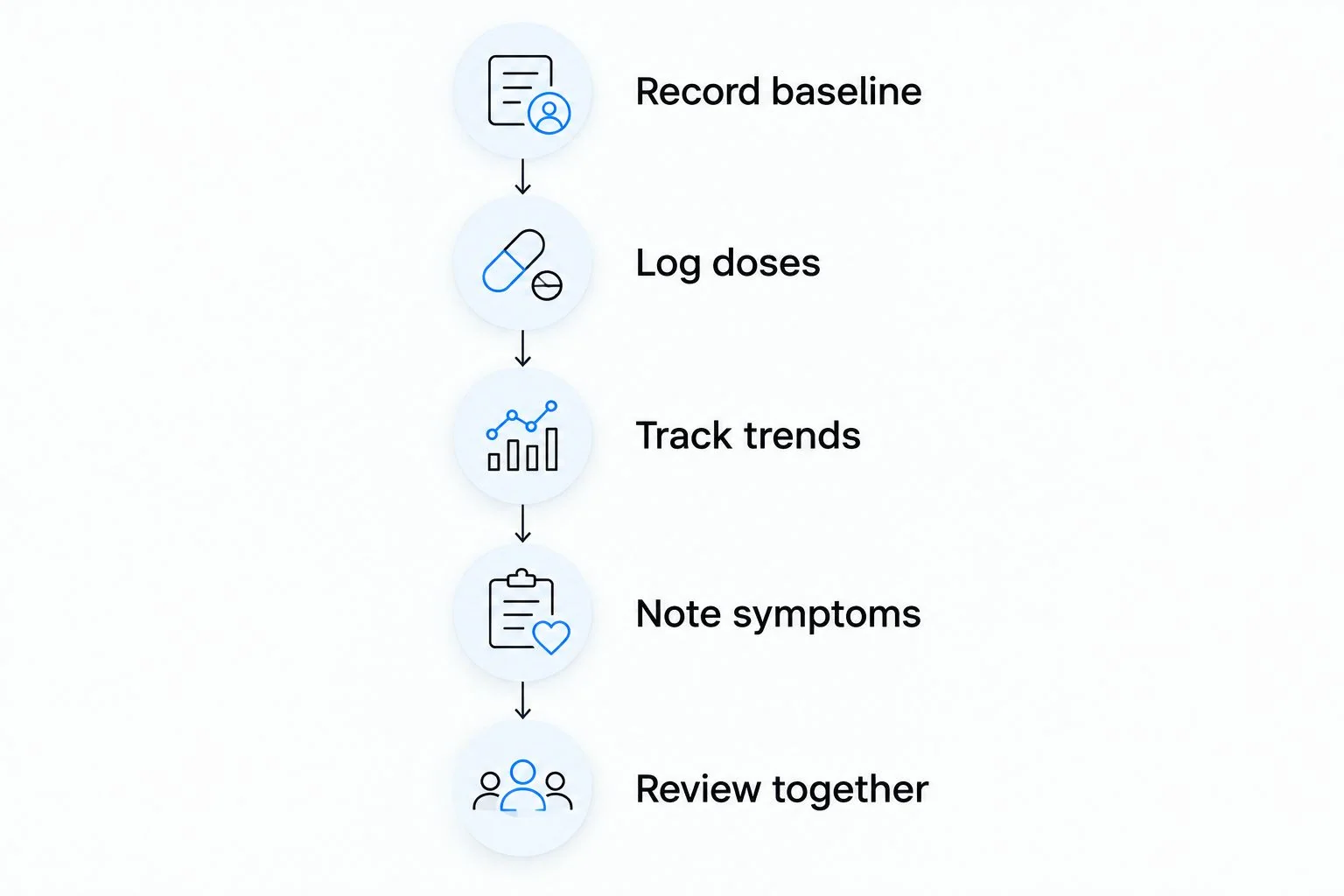
Your record should make the appointment easier, not turn treatment into constant surveillance. If tracking weight creates distress or reinforces disordered eating, tell your clinician so the monitoring plan can change.
Why tirzepatide response varies
Two people taking tirzepatide do not have identical medical histories or treatment plans. These factors help explain why a symptom checklist cannot predict your individual results:
- Treatment stage: An initiation dose serves a different purpose from a maintenance dose. Your current stage affects how your clinician interprets limited early change.
- Dose and tolerability: The prescribed dose and your ability to tolerate it affect treatment decisions. More side effects do not establish more benefit.
- Consistency: Missed doses and treatment interruptions complicate interpretation. Share an accurate injection history rather than estimating adherence.
- Treatment goal: Weight management and diabetes management require different outcome measures. A glucose response and a weight response are not interchangeable.
- Nutrition and activity: Eating patterns and physical activity remain part of weight management. Review them without treating every plateau as a personal failure.
- Other health factors: Medical conditions and other medications can affect weight, glucose, and symptoms. Your prescriber needs the full medication list to assess the pattern.
No single factor proves why your progress differs from someone else's. The practical next move is a review of your own measurements and prescription—not an unsupervised dose increase.
What if you are still on the starting dose?
The FDA-labeled Zepbound starting dose is 2.5 mg once weekly for 4 weeks. Its prescribing information states that 2.5 mg is for treatment initiation and is not approved as a maintenance dose for weight management.
The labeled next dose is 5 mg once weekly, with later increases made in 2.5 mg increments after at least 4 weeks on the current dose when appropriate. These figures describe FDA labeling, not instructions to change your prescription yourself.
For a 2026 treatment review, distinguish what the label says from what your own prescriber has directed. Do not apply branded-device instructions to an unfamiliar vial or convert milligrams into syringe units yourself; concentration and device instructions matter.
Limited early weight change deserves context, not a declaration that the medication has failed. Ask your prescriber how the current dose fits your plan and when the response will be reassessed.
When should you contact your prescriber?
Contact your clinician when you cannot eat or drink adequately, symptoms interfere with daily life, or progress remains below your agreed treatment goals. Also ask for help if you are uncertain about the dose, injection technique, or instructions after a missed injection.
Seek urgent medical evaluation for severe or persistent abdominal pain, particularly with vomiting, or signs of a serious allergic reaction. FDA tirzepatide labeling warns about pancreatitis and serious hypersensitivity reactions. Trouble breathing or swelling of the face or throat requires emergency help.
Persistent vomiting or diarrhea also deserves prompt attention because dehydration can contribute to kidney problems. If you use insulin or a sulfonylurea, follow your clinician's low-blood-sugar instructions and seek help for severe symptoms.
Do not wait for a routine progress check when a safety concern develops. This article supports discussion with your prescriber; it does not diagnose symptoms or replace individualized care.
Can tirzepatide work without nausea?
Tirzepatide can work without nausea; side effects are not a requirement for benefit. Assess effectiveness through weight trends, relevant glucose measurements, and your clinician's review—not whether an injection makes you feel unwell.
Absence of nausea is not a reason to increase your dose. Likewise, nausea without measurable progress is not proof that treatment is successful.
Find out if GLP-1 treatment may be right for you.
Start My Pre-AssessmentDoes feeling hungry mean tirzepatide has stopped working?
Feeling hungry does not establish that tirzepatide has stopped working. Hunger is a normal signal, and treatment does not require eliminating it.
Review the overall pattern: your weight trend, meal satisfaction, prescribed dose, and any interruptions. If persistent hunger comes with stalled progress, bring both observations to your prescriber rather than adjusting the injection schedule.
What if your weight has stopped changing?
A weight plateau calls for a treatment review, not an automatic dose increase. Your clinician can assess how long the pattern has lasted, your treatment stage, medication use, nutrition, activity, and relevant medical conditions.
Bring actual measurements and injection dates. Saying that your weight has not changed is more useful when your clinician can see the record and the circumstances around it.
Where does telehealth fit into monitoring?
VevaRX is an option for US adults seeking doctor-prescribed tirzepatide through online, medically supervised weight-loss care. VevaRX offers GLP-1 prescriptions, but a platform description alone does not establish whether tirzepatide is appropriate for you.
The benefit of a clinical review is individualized interpretation; the limitation is that no provider name or online questionnaire proves a medication is working. Ask how your measurements and symptoms will inform treatment decisions, and confirm where to seek urgent care outside routine appointments.
Have questions about your options? Start with a quick online assessment.
Start My Pre-AssessmentFAQ
What's the clearest sign that tirzepatide is working?
A sustained improvement in your treatment measurements is the clearest sign that tirzepatide is working. For weight management, assess your weight trend; for diabetes, review glucose readings and laboratory results with your clinician.
Can tirzepatide work if I don't feel different?
Yes, tirzepatide can provide benefit without a dramatic change in how you feel. Use objective measurements and your treatment plan rather than expecting nausea or complete appetite suppression.
Does nausea mean my tirzepatide dose is working?
No, nausea is a possible side effect, not proof that tirzepatide is working. Tell your prescriber if it limits eating, drinking, or normal activities.
Is 2.5 mg of tirzepatide a maintenance dose for weight loss?
No, 2.5 mg once weekly is the FDA-labeled Zepbound initiation dose, not an approved weight-management maintenance dose. The labeled initiation period is 4 weeks; follow your own prescription and clinician's instructions.
Should I increase tirzepatide if my weight isn't changing?
Do not increase tirzepatide on your own because your weight is not changing. Your prescriber should review your dose history, treatment duration, symptoms, and measurements before changing the plan.
Can glucose improve before I notice weight loss?
Glucose can improve without an obvious weight change. If you have diabetes, assess glucose using your prescribed monitoring plan rather than using weight alone to judge treatment.
Can VevaRX tell me whether tirzepatide is right for me?
VevaRX offers doctor-prescribed GLP-1 weight-loss treatment through telehealth. Whether tirzepatide is appropriate requires an individual clinical assessment; an online article cannot establish eligibility or predict your response.
One last thing
Bring a treatment timeline, not just your latest weight. For your next 2026 appointment, put your starting measurement, injection dates, current prescription, weight trend, and troublesome symptoms in one place.
That record helps separate an early treatment phase, a tolerability problem, and a response that needs reassessment. The right question is not whether you felt the injection—it is whether the treatment is producing useful, tolerable progress toward your clinical goals.
Related guides
Ready to get started?
See if doctor-prescribed GLP-1 treatment may be right for you. It only takes a few minutes, 100% online.
Start My Pre-AssessmentThis article is for informational purposes only and is not medical advice. Compounded medications are not approved by the FDA and have not been reviewed for safety, effectiveness, or quality. Prescription products require an online consultation with a licensed healthcare provider who will determine if a prescription is appropriate. Individual results vary.