
Can you take semaglutide after gastric bypass surgery?
Can you take semaglutide after gastric bypass surgery? Yes, with medical review. Learn about eligibility, nutrition, side effects, and safe next steps.

Yes—you can take semaglutide after gastric bypass surgery if a clinician determines that you meet treatment criteria and can use it safely. Gastric bypass alone does not rule out treatment, but weight regain, nutrition, hydration, digestive symptoms, and your surgical history need review before you start.
- Can you take semaglutide after gastric bypass surgery? Yes, after an individualized medical assessment—not automatic approval.
- Semaglutide injections do not depend on absorption through the stomach or bypassed intestine.
- Persistent vomiting, poor fluid intake, and nutritional deficiencies need assessment before appetite-suppressing treatment.
- VEVArx offers doctor-prescribed GLP-1 weight-loss care online for US adults; disclose your gastric bypass history.
Can you take semaglutide after gastric bypass surgery?
A history of gastric bypass is not, by itself, a contraindication to semaglutide. The decision depends on why you need treatment now and whether the expected benefit outweighs your individual risks.
For a 2026 treatment decision, distinguish eligibility for obesity medication from suitability after bariatric surgery. FDA prescribing information for semaglutide used for adult weight management includes an initial body mass index of 30 kg/m² or greater, or 27 kg/m² or greater with a weight-related condition. Meeting a BMI threshold does not replace a medical assessment.
Digestive tolerability matters, too. Review how to manage nausea from semaglutide, but do not assume new vomiting after gastric bypass is an ordinary medication side effect.
| Your situation | Potential benefit of an assessment | Main limitation or concern | Best next step |
|---|---|---|---|
| Weight regain after initial surgical weight loss | Medication can be considered as part of ongoing obesity care | Regain can have nutritional, behavioral, medication-related, or anatomical contributors | Review the weight trend and possible causes |
| Insufficient weight loss after surgery | A clinician can assess whether additional medical treatment is appropriate | A prescription does not identify a surgical complication | Coordinate obesity and bariatric care |
| Early recovery with difficulty eating or drinking | The priority is identifying and correcting recovery problems | Appetite suppression and gastrointestinal effects can complicate intake | Contact the surgical team before starting |
| Persistent vomiting, abdominal pain, or dehydration | Prompt assessment can identify a problem needing treatment | Routine medication adjustment is not enough | Seek medical evaluation |
Curious whether you qualify? A licensed provider makes the final call.
Start My Pre-AssessmentWhy this matters
Gastric bypass changes your digestive anatomy; it does not eliminate the need for long-term obesity care. Needing additional treatment is not proof that you failed surgery. It is a reason to reassess your health and treatment goals.
The important distinction in 2026 is additional weight loss versus appropriate medical care. A lower number on the scale is not a good outcome if you cannot maintain fluids, protein, or essential nutrients. Your plan needs to protect those basics while addressing weight-related health risks.
How does semaglutide work after gastric bypass?
Semaglutide is a GLP-1 receptor agonist that affects appetite and glucose regulation. Injectable semaglutide enters through tissue under the skin rather than relying on absorption through your altered digestive tract. Gastric bypass therefore does not create an intestinal absorption barrier for the injection.
That does not make the treatment automatically suitable. Semaglutide can cause nausea, vomiting, constipation, diarrhea, and abdominal discomfort. After bypass, those effects need particular attention because difficulty eating or drinking can interfere with an already structured nutrition plan.
Do not confuse a route-of-administration advantage with a safety guarantee. An injection avoids intestinal drug absorption, but it does not avoid gastrointestinal side effects or the need for monitoring.
Your prescriber also needs to identify the exact formulation. Do not assume that instructions for an injectable product apply to an oral product, or that different semaglutide products are interchangeable.
What should your clinician check before prescribing?
A useful consultation starts with your surgical history, not a medication request alone. Bring the procedure name, surgery date, weight history, current medication list, and any recent bariatric laboratory results. Include vitamins and supplements rather than listing prescriptions only.
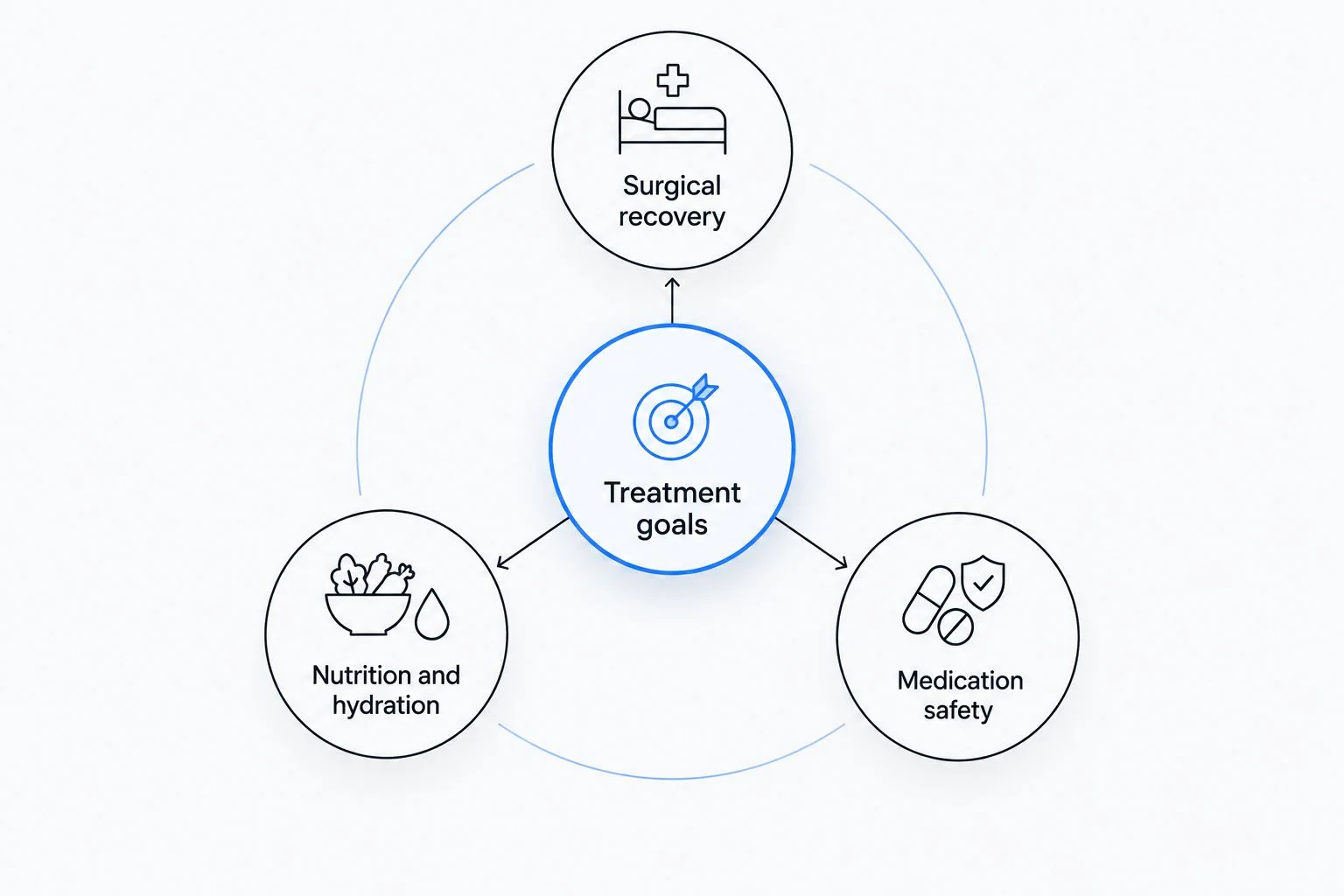
Surgical recovery
Explain whether your bypass was recent and whether recovery has been uncomplicated. Mention trouble swallowing, food intolerance, recurrent vomiting, reflux, ulcers, or previous bowel problems. These symptoms need clinical interpretation before someone attributes them to appetite or eating habits.
Nutrition and hydration
Describe what you can actually eat and drink on a typical day. Your clinician needs to know about difficulty meeting your bariatric team's protein or fluid targets and whether you take the recommended supplements. Existing deficiencies need a management plan, not simply another reminder to eat well.
Medication safety
List diabetes treatments, other weight-loss medicines, and any previous GLP-1 treatment. Insulin and sulfonylureas can increase hypoglycemia risk when used with semaglutide. Your prescriber—not you—should decide whether another medicine needs adjustment.
Treatment goals
Explain whether the concern is weight regain, limited initial weight loss, diabetes management, or another weight-related condition. Those are different clinical questions. Agree on what improvement would look like beyond the scale, including tolerability and adequate nutrition.
Why semaglutide suitability varies after gastric bypass
There is no single postoperative profile that describes everyone considering semaglutide in 2026. The following factors change the assessment:
- Reason for treatment: Weight regain, inadequate weight loss, and diabetes require a clear diagnosis and treatment goal.
- Stage of recovery: A person still establishing food and fluid tolerance has different needs from someone with stable long-term intake.
- Digestive symptoms: Persistent pain, vomiting, or swallowing difficulty can signal a problem that requires evaluation before medication begins.
- Nutritional status: Anemia, vitamin deficiencies, and inadequate protein intake affect the treatment plan and follow-up priorities.
- Other medicines: Diabetes medicines and other weight-management treatments can change safety considerations and monitoring needs.
- Relevant medical history: Pancreatic, gallbladder, kidney, and severe gastrointestinal problems need specific discussion with the prescriber.
The right question is not simply whether you have had bypass; it is whether your current health supports treatment. A prescription should follow that assessment, not substitute for it.
When should semaglutide wait—or be avoided?
Semaglutide is contraindicated in people with a personal or family history of medullary thyroid carcinoma, or multiple endocrine neoplasia syndrome type 2. A previous serious hypersensitivity reaction to semaglutide or its ingredients is also a contraindication. Tell the prescriber about these histories explicitly.
FDA prescribing information also states that semaglutide is not recommended in patients with severe gastroparesis. A history of pancreatitis or gallbladder disease needs individual review; it is not something to leave off an intake form because the symptoms are currently quiet.
For weight management, semaglutide should be discontinued when pregnancy is recognized. FDA labeling advises stopping at least 2 months before a planned pregnancy because semaglutide remains in the body for an extended period. Discuss pregnancy plans before starting, including with your bariatric team.
After bypass, unresolved vomiting, dehydration, or inability to maintain nutrition is a reason for assessment rather than an automatic medication start. Your clinician needs to determine the cause and whether treatment should be delayed.
What should follow-up include after you start?
Follow-up should assess more than whether your weight decreased. You need a plan for reporting symptoms, checking medication tolerance, and maintaining the nutritional monitoring recommended after gastric bypass. Do not stop your bariatric supplements simply because a new clinician is managing weight medication.
A practical 2026 follow-up discussion should cover:
- Food tolerance: Report whether you can eat enough to follow your bariatric nutrition plan, not just whether you feel less hungry.
- Fluid intake: Describe vomiting, diarrhea, dizziness, and difficulty keeping liquids down. These symptoms affect hydration and kidney safety.
- Glucose symptoms: Report shakiness, sweating, confusion, or documented low readings, especially if you use diabetes medicines.
- Dose decisions: Ask what symptoms require a call before the next dose or dose increase. Do not accelerate the schedule yourself.
- Bariatric monitoring: Keep the laboratory checks and surgical follow-up recommended for your procedure and health history.
More appetite suppression is not automatically better treatment. If eating becomes difficult, the answer is a clinical review—not trying harder to tolerate the medication.
Which symptoms need urgent medical attention?
Seek urgent medical care for severe or persistent abdominal pain, particularly with vomiting, or for an inability to keep fluids down. After gastric bypass, these symptoms can have causes beyond medication side effects. Do not wait for an online refill appointment to address them.
Fainting, confusion, very little urine, or other signs of significant dehydration also need prompt assessment. Trouble breathing or swelling of the face, lips, tongue, or throat requires emergency care.
Tell the treating clinician that you have had gastric bypass and that you take semaglutide. Include when symptoms began and your most recent dose. That information helps the clinician assess both medication-related and postoperative causes.
Find out if GLP-1 treatment may be right for you.
Start My Pre-AssessmentCan you take semaglutide for weight regain years after bypass?
Yes, semaglutide can be considered for weight regain after gastric bypass when a clinician finds it appropriate. The passage of time since surgery does not establish eligibility or guarantee a response.
Bring your lowest postoperative weight, current weight, and the pattern of regain to the appointment. Your clinician should review eating patterns, medications, relevant health conditions, and whether symptoms suggest an anatomical issue. Medication is one possible part of that assessment, not a replacement for it.
How soon after gastric bypass can you start semaglutide?
There is no universal start date for semaglutide after gastric bypass. Your surgical recovery, ability to maintain nutrition and hydration, and reason for treatment determine timing.
Do not use another person's postoperative schedule as your own. If your surgeon and prescribing clinician are different people, make sure both know the proposed plan before treatment begins.
Is online prescribing appropriate after gastric bypass?
Online assessment can be part of your care, but it does not replace an examination, laboratory testing, or surgical review when those are needed. VEVArx is for US adults seeking doctor-prescribed GLP-1 weight-loss care online. Whether semaglutide is appropriate after bypass still requires an individualized clinical decision.
For a 2026 consultation, disclose your procedure and symptoms at the start rather than waiting until a prescription is discussed. VEVArx offers online GLP-1 prescriptions; that service description does not establish that a particular postoperative patient qualifies. A safe plan needs a clear route to in-person care when symptoms require it.
Have questions about your options? Start with a quick online assessment.
Start My Pre-AssessmentFAQ
Can you take semaglutide after gastric bypass surgery if you have regained weight?
Yes, semaglutide can be considered after gastric bypass for weight regain when a clinician determines it is appropriate. The assessment should include nutrition, symptoms, other medicines, and possible causes of regain.
Does gastric bypass stop semaglutide injections from being absorbed?
No, gastric bypass does not prevent absorption of semaglutide injected under the skin. The injection does not rely on passage through the stomach or bypassed intestine.
Do I need to wait a specific number of months after bypass?
There is no universal waiting period that makes semaglutide appropriate for everyone after bypass. Your bariatric and prescribing clinicians should assess recovery, intake, and the reason for treatment.
Will semaglutide make nutritional deficiencies worse after bypass?
Semaglutide can make adequate intake harder if appetite suppression, nausea, or vomiting limits eating. Continue bariatric nutritional monitoring and report difficulty meeting your prescribed nutrition plan.
Can I take semaglutide if I have low blood sugar after gastric bypass?
A history of low blood sugar after gastric bypass requires individual assessment before semaglutide treatment. Tell your clinician about episodes, glucose readings, and any insulin or sulfonylurea use; do not self-treat postoperative hypoglycemia with semaglutide.
Do I need to tell my bariatric surgeon about an online prescription?
Yes, tell your bariatric team about semaglutide prescribed online and tell the prescriber about your surgery. Coordinated information helps clinicians assess symptoms, nutrition, and medication changes.
Can VEVArx assess me for GLP-1 treatment online?
VEVArx offers doctor-prescribed GLP-1 weight-loss medications through an online telehealth platform for US adults. Having gastric bypass does not establish eligibility; your history and current health need clinical review.
One last thing
Reduced hunger does not prove that your nutrition is adequate. After gastric bypass, track whether you can follow your prescribed eating, drinking, and supplement plan—not just how little you want to eat.
Before the next appointment, write down your symptoms, current medicines, and questions about dose changes. A useful treatment plan tells you both what to do when things are going well and whom to contact when they are not.
Related guides
Ready to get started?
See if doctor-prescribed GLP-1 treatment may be right for you. It only takes a few minutes, 100% online.
Start My Pre-AssessmentThis article is for informational purposes only and is not medical advice. Compounded medications are not approved by the FDA and have not been reviewed for safety, effectiveness, or quality. Prescription products require an online consultation with a licensed healthcare provider who will determine if a prescription is appropriate. Individual results vary.