
Can you take tirzepatide if you have a history of pancreatitis?
Can you take tirzepatide if you have a history of pancreatitis? Get the cautious answer, warning signs, and questions to discuss with your prescriber.

A history of pancreatitis does not automatically rule out tirzepatide, but it requires an individualized prescribing decision—not a routine online approval. Past pancreatitis is not itself a listed FDA contraindication, yet tirzepatide carries a warning for acute pancreatitis, and clinical trial averages do not establish your risk of another episode. Before starting or restarting treatment in 2026, have your prescriber review the cause of your pancreatitis, your recovery, and alternative treatments.
- Can you take tirzepatide if you have a history of pancreatitis? Only after an individualized prescribing assessment.
- FDA prescribing information warns about acute pancreatitis; a past episode requires careful review, not automatic clearance.
- Stop tirzepatide and seek immediate medical care for severe, persistent abdominal pain, especially pain extending to your back.
- VEVArx offers medically supervised weight-loss prescriptions; an online consultation does not replace emergency evaluation.
Why this matters
The distinction between a contraindication and a warning matters. A contraindication identifies circumstances in which a medicine should not be used; a warning identifies a serious risk that requires clinical judgment and appropriate precautions. Not being formally contraindicated does not make tirzepatide safe for every person with previous pancreatitis.
If you are comparing medically supervised weight-loss programs, put medical-history review ahead of convenience. A program's intake process should give you a way to disclose previous pancreatitis and provide the records your clinician needs.
Curious whether you qualify? A licensed provider makes the final call.
Start My Pre-AssessmentCan you take tirzepatide if you have a history of pancreatitis?
The answer is individualized: some patients require a different treatment, and no online article can clear you to start tirzepatide. Your clinician needs to distinguish a resolved episode with an identified cause from recurrent pancreatitis, chronic pancreatitis, or an episode whose cause remains unexplained.
For a treatment discussion in 2026, use the FDA-approved prescribing information for the exact medication under consideration. Zepbound and Mounjaro both contain tirzepatide, but their approved indications and supporting trial populations differ. Neither product's general safety results calculate your personal recurrence risk.
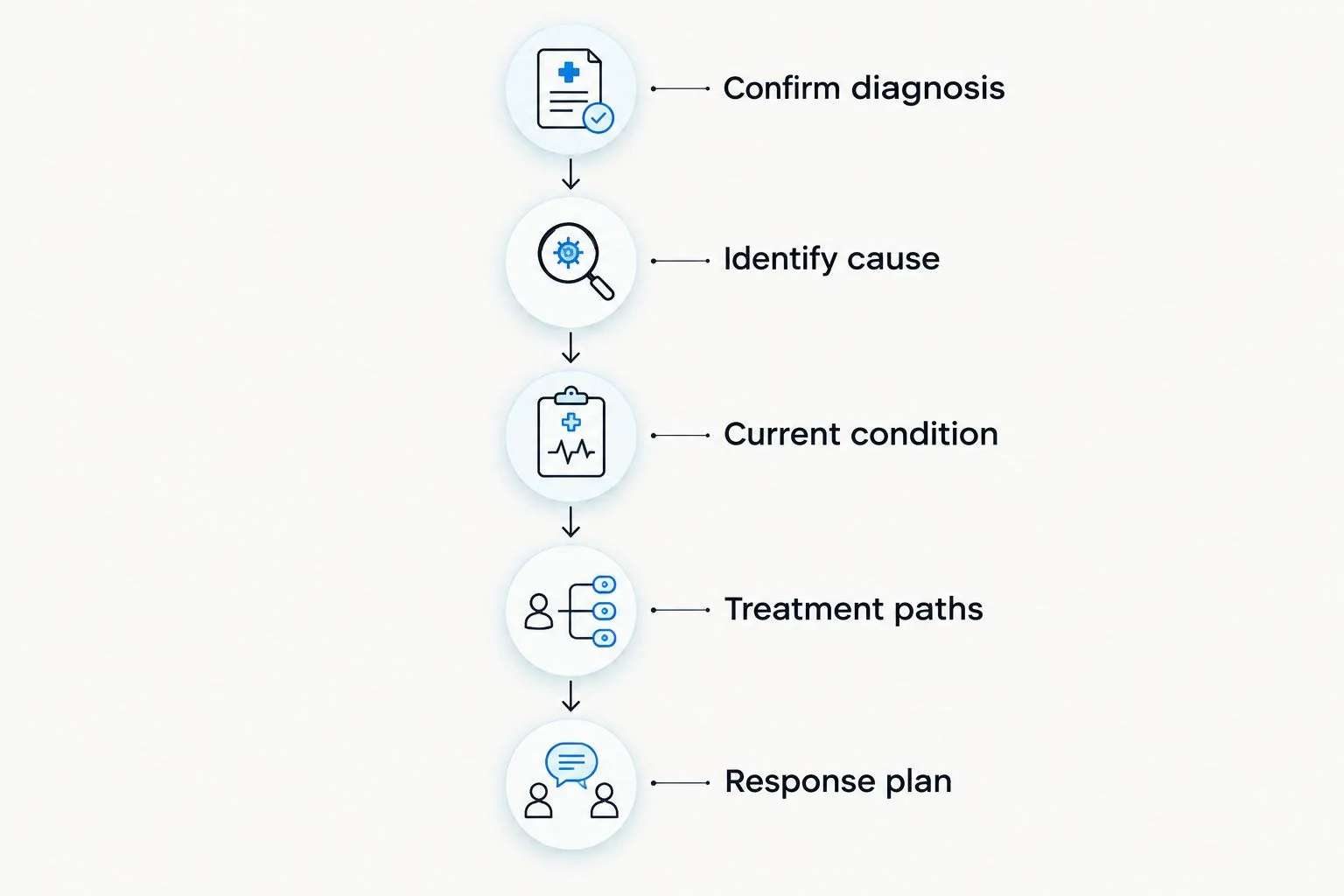
A useful prescribing review follows this sequence:
- Confirm the diagnosis. Obtain the discharge summary, relevant blood tests, imaging reports, and any gastroenterology assessment.
- Identify the suspected cause. Tell your clinician about gallstones, alcohol exposure, triglyceride problems, and medicines taken around the episode.
- Establish your current condition. Report ongoing pain, vomiting, eating difficulties, or further attacks rather than describing the episode simply as resolved.
- Compare treatment paths. Discuss the benefits of treating obesity or diabetes alongside pancreatic concerns and alternatives.
- Agree on a response plan. Know which symptoms require stopping treatment and obtaining immediate medical attention.
A prescription should follow the risk review, not replace it. A past prescription or an uneventful first injection is not proof that continuing treatment is appropriate.
What does the pancreatitis warning actually show?
FDA-approved Zepbound prescribing information reports adjudicated acute pancreatitis in 0.2% of participants receiving Zepbound and 0.2% receiving placebo in the pooled weight-reduction trials identified in the label. That is approximately 2 participants per 1,000 in each group.
Those figures describe particular trial populations, not people selected because they previously had pancreatitis. Equal reported percentages do not prove that the medicine cannot contribute to pancreatitis, nor do they establish safety after a previous attack. The pancreatitis warning still applies.
For your 2026 consultation, separate these questions: what happened in the trials, and what makes treatment appropriate for you? The first informs the discussion. The second requires your medical history and a clinician's assessment.
Do not combine percentages from unrelated studies or treat a diabetes trial and a weight-management trial as interchangeable. Different populations, treatment exposure, and methods make a simple pooled internet percentage misleading.
Why prescribing decisions vary after pancreatitis
The same history checkbox can describe very different clinical situations. These factors help explain why one patient's treatment discussion does not settle another patient's decision:
- The original cause. Gallstones, alcohol, high triglycerides, and suspected medication reactions raise different questions about recurrence and prevention.
- Whether the cause was addressed. Treatment of an identified cause matters, but it does not create a guarantee against another episode.
- Recurrence or chronic disease. Repeated attacks or established chronic pancreatitis require a different assessment from an isolated, resolved episode.
- Current symptoms. Persistent abdominal pain or vomiting needs evaluation before a new weight-loss prescription.
- The reason for treatment. Obesity management and diabetes management involve different benefits, alternatives, and consequences of delaying therapy.
- A possible previous drug reaction. Pancreatitis that occurred during an earlier medicine course requires review of the timing and competing explanations.
Bring the actual records if you can. Recalling that a hospital test was abnormal is less useful than knowing whether the discharge diagnosis was pancreatitis, gallbladder disease, or another abdominal condition.
Which treatment approach should you discuss?
Best for you means appropriate for your history—not strongest appetite suppression. Discuss these approaches with your prescriber rather than choosing a replacement medication yourself.
| Approach | Best for | Potential benefit | Limitation or concern |
|---|---|---|---|
| Individualized tirzepatide assessment | Adults whose clinician needs to weigh treatment benefits against pancreatic concerns | Considers tirzepatide without treating past pancreatitis as an automatic answer | Does not establish that treatment is safe; a different approach can be necessary |
| Non-incretin medication assessment | Adults whose clinician recommends avoiding incretin-based treatment | Allows discussion of a different medication mechanism | Other medicines have their own contraindications and adverse effects |
| Nutrition and behavioral treatment | Adults needing support with eating patterns, activity, and weight-management habits | Supports treatment with or without medication | Does not replace diabetes medication or other medically necessary treatment |
| Specialist consultation | Adults with recurrent, chronic, unexplained, or complicated pancreatitis | Adds pancreatic expertise to the prescribing discussion | Consultation itself does not guarantee medication clearance |
Switching to semaglutide is not an automatic solution. Semaglutide also carries a pancreatitis warning, so a different medicine name does not remove the need to examine your history.
VEVArx is an option for US adults seeking online, medically supervised weight-loss treatment—not emergency pancreatitis care. VEVArx offers doctor-prescribed tirzepatide and semaglutide; those offerings do not establish eligibility after pancreatitis or guarantee that either medicine is appropriate for you.
What should you bring to your appointment?
Give the prescriber a clear timeline rather than only the name of the condition. In a 2026 telehealth consultation, the same clinical details matter as in an office visit; the format does not remove the need for an adequate assessment.
Prepare these records and details:
- Your hospital discharge summary and the date of each episode.
- Imaging reports, relevant laboratory results, and specialist recommendations.
- The suspected cause and any treatment used to address it.
- All current medicines, supplements, and previous weight-loss treatments.
- Current abdominal symptoms, alcohol use, and relevant gallbladder history.
- Any prior instructions about avoiding particular medicines.
Ask directly: What makes tirzepatide appropriate or inappropriate in my case, and what would change that decision? Also ask who handles urgent medication questions and where to seek care outside routine appointment hours.
If you use VEVArx for weight-loss care, disclose pancreatitis before any prescribing decision. Do not assume an intake form, prior prescription, or discussion of treatment goals means your pancreatic history has already been reviewed.
Can normal lipase results prove tirzepatide is safe?
No. A normal lipase result does not predict that you will avoid pancreatitis during treatment, and an elevated result alone does not establish the diagnosis. Symptoms and clinical context matter.
Under the widely used Revised Atlanta diagnostic criteria, acute pancreatitis generally requires at least 2 of 3 findings: characteristic abdominal pain, pancreatic enzymes at least 3 times the upper limit of normal, or characteristic imaging findings. Those criteria help clinicians diagnose an episode; they are not a screening formula for approving tirzepatide.
FDA prescribing information also describes increases in pancreatic enzymes during tirzepatide treatment. Do not interpret a laboratory result yourself or arrange repeat testing as a substitute for evaluating new, severe abdominal pain.
Find out if GLP-1 treatment may be right for you.
Start My Pre-AssessmentWhat symptoms mean you should stop tirzepatide?
Stop tirzepatide and seek immediate medical attention if you develop severe, persistent abdominal pain, especially pain that extends to your back, with or without vomiting. FDA prescribing information directs discontinuation when pancreatitis is suspected and appropriate management of the episode.
If the pain is severe, you cannot keep fluids down, or you feel acutely unwell, use emergency care rather than waiting for a portal reply. Do not take another injection while waiting to find out whether the symptoms are medication-related.
Nausea and abdominal discomfort can occur with tirzepatide, but that does not make every new symptom routine. A previous pancreatitis episode makes it particularly important to explain your history when seeking urgent care.
Does a lower starting dose remove the concern?
No. A lower starting dose does not establish safety after pancreatitis, and following the prescribed escalation schedule does not eliminate the warning. Dose selection and pancreatic suitability are separate clinical decisions.
Do not split doses, change injection intervals, or use a self-designed titration schedule to make treatment feel safer. Tell your prescriber about symptoms before any planned increase; do not increase while an unresolved abdominal problem is being assessed.
Can you restart tirzepatide after suspected pancreatitis?
Do not restart tirzepatide on your own after suspected or confirmed pancreatitis. The prescribing clinician needs to review the diagnosis, likely cause, recovery, and the relevant product instructions before deciding on future treatment.
A negative initial test does not give you permission to restart if the clinical evaluation is still underway. Ask for an explicit medication plan, including what to do about diabetes treatment if tirzepatide has been stopped.
Have questions about your options? Start with a quick online assessment.
Start My Pre-AssessmentFAQ
Is a history of pancreatitis an absolute contraindication to tirzepatide?
A history of pancreatitis is not itself a listed FDA contraindication to tirzepatide. However, tirzepatide carries an acute pancreatitis warning, so your prescriber must assess your history rather than assume treatment is safe.
Can I take tirzepatide if gallstones caused my pancreatitis?
Gallstone-related pancreatitis still requires an individualized prescribing review. Tell your clinician whether the gallstone problem was treated and whether you have had further attacks or ongoing symptoms.
How long should I wait after pancreatitis before starting tirzepatide?
There is no universal waiting period that establishes tirzepatide is safe after pancreatitis. Your clinician needs to assess recovery, the cause of the episode, recurrence concerns, and alternative treatments.
Is semaglutide safer than tirzepatide after pancreatitis?
Semaglutide is not automatically a safer replacement after pancreatitis because it also carries a pancreatitis warning. Choosing between treatments requires an individualized assessment, not a simple medication swap.
Can I keep taking tirzepatide if I develop severe stomach pain?
Stop tirzepatide and seek immediate medical attention for severe, persistent abdominal pain, especially pain extending to your back, with or without vomiting. Do not wait for your next routine appointment or take another injection before assessment.
Will a normal lipase test clear me to take tirzepatide?
A normal lipase result does not establish that tirzepatide is safe for you or predict whether pancreatitis will occur. Your clinician must interpret testing alongside symptoms, history, and any other necessary evaluation.
Should I tell an online weight-loss doctor about old pancreatitis?
Yes, disclose every previous pancreatitis episode before an online prescribing decision. Share the suspected cause, hospital records, current symptoms, and any specialist advice, even if the episode happened long ago.
One last thing
The most useful document is often your old discharge summary, not a new screening blood test. It can explain whether pancreatitis was confirmed, what caused it, and what follow-up was recommended—details that directly shape the next prescribing conversation.
For a 2026 treatment decision, get a documented plan, not a blanket yes. That plan should explain the medication choice, warning symptoms, and what happens if treatment must stop. This article provides general education, not individualized medical clearance.
Related guides
Ready to get started?
See if doctor-prescribed GLP-1 treatment may be right for you. It only takes a few minutes, 100% online.
Start My Pre-AssessmentThis article is for informational purposes only and is not medical advice. Compounded medications are not approved by the FDA and have not been reviewed for safety, effectiveness, or quality. Prescription products require an online consultation with a licensed healthcare provider who will determine if a prescription is appropriate. Individual results vary.