
Can you take tirzepatide with a thyroid condition?
Can you take tirzepatide with a thyroid condition? Often yes, but MTC history and MEN2 rule it out. Learn what to discuss with your prescriber first.

Yes, you can take tirzepatide with some thyroid conditions, including treated hypothyroidism or Hashimoto’s disease, when your prescriber confirms that treatment is appropriate. Do not take tirzepatide if you have a personal or family history of medullary thyroid carcinoma (MTC), or if you have multiple endocrine neoplasia type 2 (MEN2); other thyroid diagnoses still require a medication and medical-history review.
- Can you take tirzepatide with a thyroid condition? Often yes with treated hypothyroidism, but not with MTC history or MEN2.
- Hashimoto’s disease is not the same condition as medullary thyroid carcinoma and is not itself a listed contraindication.
- Tirzepatide delays stomach emptying, so oral thyroid medication deserves a monitoring discussion.
- VEVArx offers medically supervised weight-loss care; thyroid eligibility still requires an individual prescribing decision.
Can you take tirzepatide with a thyroid condition?
Your exact thyroid diagnosis matters more than the phrase thyroid condition. An underactive thyroid, an overactive thyroid, a thyroid nodule, and thyroid cancer are different clinical situations. They should not receive the same automatic yes or no.
For a 2026 treatment discussion, use this distinction as your starting point. The FDA prescribing information for Mounjaro and Zepbound identifies MTC history and MEN2 as thyroid-related contraindications; it does not list every thyroid disorder as a contraindication.
| Thyroid condition or history | What it means for tirzepatide | Main consideration |
|---|---|---|
| Treated hypothyroidism | Not automatically excluded | Review thyroid control and replacement medication |
| Hashimoto’s disease | Not itself a listed contraindication | Confirm thyroid function and current treatment |
| Graves’ disease or other hyperthyroidism | Requires individualized assessment | Address active symptoms and thyroid control |
| Thyroid nodules | Not automatically excluded | Evaluate nodules when clinically indicated |
| Personal or family history of MTC | Tirzepatide is contraindicated | Do not start treatment |
| MEN2 | Tirzepatide is contraindicated | Do not start treatment |
| Previous papillary or follicular thyroid cancer | Not the same listed contraindication as MTC | Review pathology and specialist recommendations |
For the underactive-thyroid pathway specifically, see the guide to GLP-1 weight loss for people with hypothyroidism.
Curious whether you qualify? A licensed provider makes the final call.
Start My Pre-AssessmentWhy this matters
A warning about thyroid tumors can sound like a warning against treating anyone with thyroid disease. That interpretation is too broad. The relevant distinction is between common thyroid-function disorders and the specific cancer history or inherited syndrome named in the prescribing information.
The opposite mistake is assuming that treated hypothyroidism guarantees eligibility. It does not. Your clinician must also assess the medication’s indication, other contraindications, precautions, and your overall health.
Use this 2026 guide to prepare for a prescribing conversation, not to clear yourself for treatment. Tirzepatide treats its approved metabolic conditions; it does not replace treatment for an underactive or overactive thyroid.
Hypothyroidism and Hashimoto’s disease
Treated hypothyroidism does not automatically prevent you from using tirzepatide. Hashimoto’s disease, an autoimmune cause of hypothyroidism, is also different from MTC. Having Hashimoto’s does not by itself place you in the boxed warning’s contraindicated group.
Your prescriber should review your symptoms, recent thyroid results, and thyroid medication before making a decision. Fatigue, constipation, and weight changes are not enough to establish whether your thyroid replacement dose is correct.
The potential benefit is access to an appropriate weight-management treatment despite an existing thyroid diagnosis. The limitation is that weight management and thyroid replacement remain separate treatment decisions. Do not increase thyroid hormone to accelerate weight loss or stop it because you start tirzepatide.
If your hypothyroidism is uncontrolled, your clinician should address it rather than attributing every symptom to body weight. A clear baseline also helps distinguish existing constipation or fatigue from symptoms that develop after treatment begins.
Graves’ disease and hyperthyroidism
Graves’ disease is not the same as MEN2 and is not itself the thyroid-related contraindication listed for tirzepatide. Active hyperthyroidism nevertheless needs clinical attention, particularly when you have palpitations, tremor, heat intolerance, or unexplained weight loss.
Do not treat unexplained weight loss as proof that your weight-management plan is working. An overactive thyroid can cause weight loss for reasons unrelated to the intended effects of tirzepatide.
Your clinician should decide whether thyroid disease needs stabilization before starting or continuing weight-loss treatment. Share your antithyroid medication, recent laboratory results, and any changes in symptoms. Tirzepatide does not treat Graves’ disease, and appetite changes do not establish that thyroid hormone levels have normalized.
Thyroid cancer history, MEN2, and nodules
The tirzepatide boxed warning concerns thyroid C-cell tumors. Animal studies found these tumors in rats; whether tirzepatide causes thyroid C-cell tumors, including MTC, in humans is unknown. An animal finding is not proof of human cancer causation, but the contraindications still apply.
Do not take tirzepatide if you have a personal or family history of MTC or have MEN2. If a relative had thyroid cancer but you do not know which type, obtain the diagnosis or pathology details before starting. Do not guess from the treatment the relative received.
Papillary and follicular thyroid cancers are not the same as MTC. A history of either still deserves an individualized review, especially when you have ongoing surveillance or a specialist-directed thyroid hormone target.
A thyroid nodule also does not automatically mean cancer or automatically prohibit treatment. However, a new neck lump, persistent hoarseness, or trouble swallowing needs evaluation. Routine screening and investigation of an actual symptom are different decisions.
Why the prescribing decision varies
A useful 2026 eligibility review focuses on the information that changes the decision, not simply whether thyroid disease appears in your chart.
- Exact diagnosis: Hypothyroidism, Graves’ disease, MTC, and MEN2 have different implications.
- Family history: A relative’s MTC diagnosis matters even when your own thyroid tests are normal.
- Current thyroid control: Symptoms and laboratory results help establish whether your existing treatment needs attention.
- Oral medication use: Tirzepatide delays gastric emptying and can affect absorption of oral medicines.
- Previous surgery or cancer treatment: The reason for thyroid removal and your follow-up plan matter.
- New symptoms: A neck lump, persistent hoarseness, swallowing difficulty, or significant palpitations changes the next step.
A normal thyroid-stimulating hormone result does not cancel a contraindicating cancer history. Likewise, an abnormal result does not identify the cause without further assessment. Bring both your diagnosis and your test results.
Can you take tirzepatide with levothyroxine?
Tirzepatide and levothyroxine are not an automatically prohibited combination, but monitoring matters. Tirzepatide delays stomach emptying, and substantial weight changes can affect thyroid replacement requirements. Neither effect means everyone needs an immediate dose adjustment.
Keep taking levothyroxine according to your prescription. Standard patient guidance commonly recommends taking it on an empty stomach, 30–60 minutes before breakfast, and separating it from calcium or iron supplements by at least 4 hours. Follow your own formulation’s instructions if they differ.
There is no standard requirement to separate a weekly tirzepatide injection from levothyroxine by a particular number of hours. Moving the injection alone does not remove tirzepatide’s effect on gastric emptying. Ask your pharmacist about your complete medication schedule rather than inventing a spacing rule.
After a levothyroxine dose change, thyroid testing is commonly repeated in about 6–8 weeks. Your clinician determines the interval for your circumstances, including pregnancy, cancer-related hormone targets, or significant symptoms. These intervals concern thyroid replacement monitoring, not a universal tirzepatide testing schedule.
Find out if GLP-1 treatment may be right for you.
Start My Pre-AssessmentWhat should you bring to a prescribing appointment?
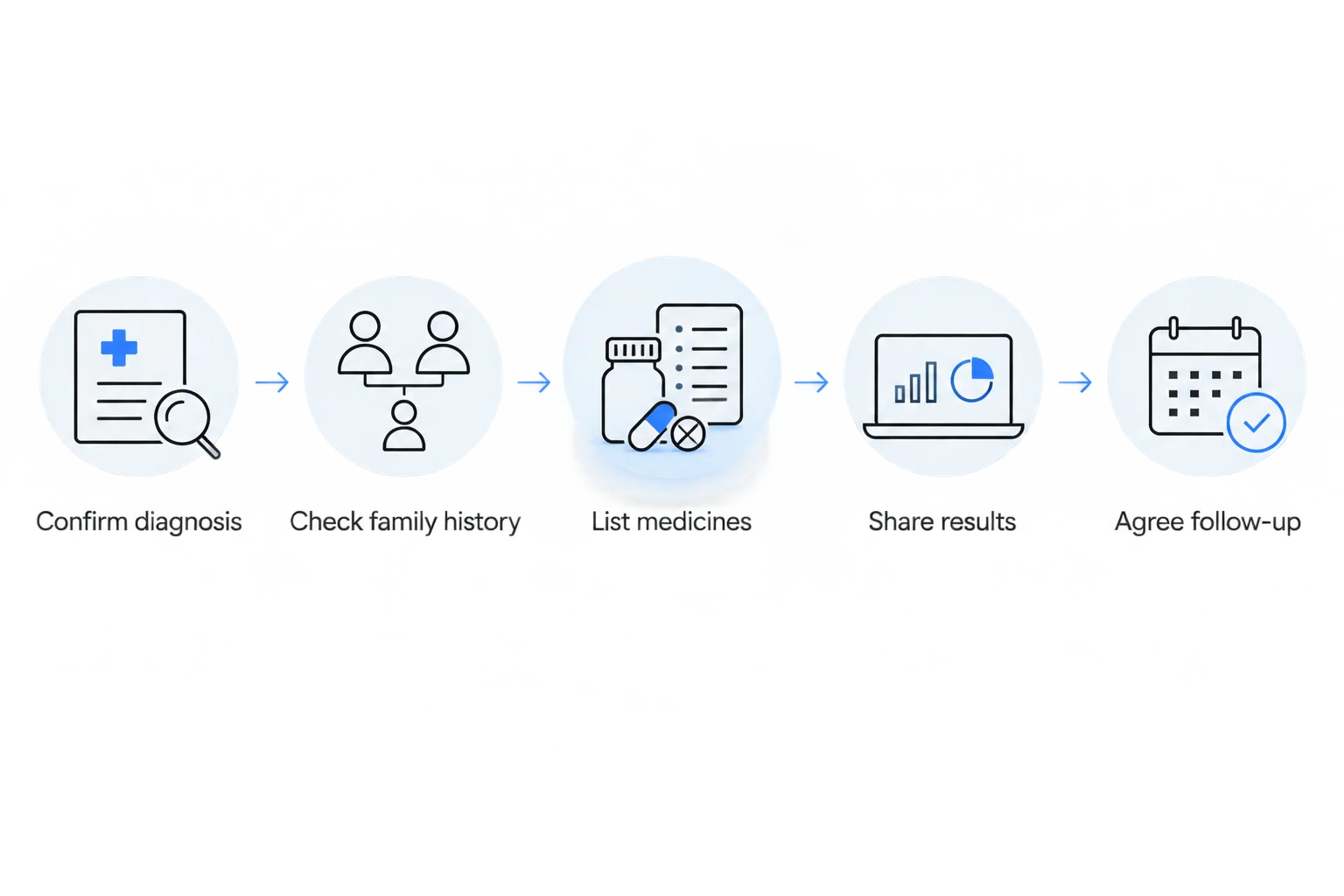
Prepare these details before a 2026 consultation so the clinician can assess your thyroid history without relying on an incomplete intake checkbox.
- Confirm diagnosis. Bring the exact thyroid diagnosis, including the type of any previous thyroid cancer.
- Check family history. Identify relatives with MTC or MEN2, and clarify unspecified thyroid cancer histories.
- List medicines. Include thyroid hormone, antithyroid treatment, supplements, and other prescriptions.
- Share results. Provide recent thyroid laboratory results and relevant ultrasound, biopsy, or surgery reports.
- Agree follow-up. Ask who will manage thyroid medication and which symptoms require earlier contact.
VEVArx is best for adults seeking online, medically supervised weight-loss care, not a substitute for thyroid specialist evaluation. VEVArx offers doctor-prescribed weight-loss treatment through telehealth; that format does not remove the need for an individualized safety assessment.
Before a VEVArx consultation, gather the same records you would bring to an in-person prescriber. If your history requires a physical examination, imaging, or specialist assessment, online weight-loss care does not replace that workup.
Do you need a thyroid ultrasound before tirzepatide?
A thyroid ultrasound is not a universal prerequisite for tirzepatide. FDA prescribing information states that routine calcitonin monitoring or thyroid ultrasound is of uncertain value for early detection of MTC in patients treated with tirzepatide.
That does not mean an existing nodule or suspicious symptom should be ignored. Your clinician should investigate thyroid findings according to the clinical situation. An ultrasound ordered for a palpable lump serves a different purpose from screening every person starting treatment.
For your 2026 appointment, ask why a test is being ordered and how its result will change care. A normal ultrasound is not permission to use tirzepatide when you have a contraindicating MTC history or MEN2.
What symptoms need urgent attention?
Seek prompt medical evaluation for a new neck mass, persistent hoarseness, or difficulty swallowing. Tell the clinician that you take tirzepatide and describe your thyroid history. Do not assume these symptoms are routine injection effects.
Trouble breathing requires emergency care. Do not wait for a routine telehealth message response when breathing is affected.
Persistent vomiting or inability to keep fluids down also needs medical advice because dehydration can become serious. Palpitations, tremor, or marked heat intolerance deserve assessment rather than an automatic assumption that your thyroid medicine needs changing. Your clinician must determine the cause before adjusting treatment.
Have questions about your options? Start with a quick online assessment.
Start My Pre-AssessmentFAQ
Can I take tirzepatide if I have Hashimoto’s disease?
Hashimoto’s disease alone is not a listed contraindication to tirzepatide. Your clinician still needs to review thyroid control, medications, and personal or family history of medullary thyroid carcinoma or MEN2.
Can I take tirzepatide if I take levothyroxine every morning?
Levothyroxine use does not automatically rule out tirzepatide. Tirzepatide delays stomach emptying, so discuss medication absorption, symptoms, and thyroid monitoring with your prescriber rather than changing your dose yourself.
Does tirzepatide cause thyroid cancer in humans?
Whether tirzepatide causes thyroid C-cell tumors, including medullary thyroid carcinoma, in humans is unknown. Its boxed warning reflects thyroid C-cell tumors found in rats, and the MTC and MEN2 contraindications still apply.
Can I take tirzepatide if thyroid cancer runs in my family?
A family history of medullary thyroid carcinoma makes tirzepatide contraindicated. If you only know that a relative had thyroid cancer, clarify the cancer type before starting treatment.
Can I take tirzepatide after having my thyroid removed?
Thyroid removal alone does not determine tirzepatide eligibility. The reason for surgery matters: a personal history of medullary thyroid carcinoma remains a contraindication after thyroid removal.
How long after changing levothyroxine should I repeat thyroid tests?
About 6–8 weeks after a levothyroxine dose change is a common thyroid-testing interval. Your clinician sets the timing for your diagnosis and treatment goals; this is not a required testing interval for everyone taking tirzepatide.
Should I stop thyroid medication when I start tirzepatide?
Do not stop prescribed thyroid medication simply because you start tirzepatide. Thyroid hormone replacement and weight-management treatment serve different purposes, and dose changes require clinical review.
One last thing
The reason your thyroid was removed matters more than the fact that it is gone. Surgery for a benign condition and surgery for MTC do not lead to the same prescribing decision. A past MTC diagnosis remains relevant even after thyroidectomy.
Before your first dose, replace any vague history of thyroid problems with the exact diagnosis. That single clarification helps prevent both unnecessary exclusion from treatment and unsafe prescribing.
Related guides
Ready to get started?
See if doctor-prescribed GLP-1 treatment may be right for you. It only takes a few minutes, 100% online.
Start My Pre-AssessmentThis article is for informational purposes only and is not medical advice. Compounded medications are not approved by the FDA and have not been reviewed for safety, effectiveness, or quality. Prescription products require an online consultation with a licensed healthcare provider who will determine if a prescription is appropriate. Individual results vary.