
Semaglutide vs tirzepatide: side effects compared (2026)
Semaglutide vs tirzepatide side effects: compare nausea, vomiting, diarrhea, and constipation rates, plus warning signs and questions for your doctor.

Disclosure: This comparison is published by VEVArx, one of the providers reviewed. We aim to describe every option fairly, but please confirm current details, pricing and availability directly with each provider.
Neither semaglutide nor tirzepatide is universally easier to tolerate: adult weight-management trials reported gastrointestinal side effects in 73% of Wegovy-treated participants and 56% of Zepbound-treated participants, but these were separate studies, not a head-to-head comparison. This 2026 guide from VEVArx compares the published rates, explains their limits, and identifies symptoms that need medical attention.
- Semaglutide vs tirzepatide side effects overlap: nausea, diarrhea, vomiting, and constipation are common with both medications.
- Wegovy reported more gastrointestinal reactions than Zepbound in separate trials; those percentages do not establish a safety winner.
- VEVArx serves US adults seeking doctor-prescribed GLP-1 weight-loss treatment online.
- Persistent vomiting, severe abdominal pain, or dehydration needs medical assessment, not another dose increase.
Why this matters
A lower trial percentage does not guarantee an easier experience for you. Your medical history, other medications, prescribed formulation, and response during dose escalation matter more than a simple side-effect ranking.
For a useful 2026 comparison, separate common digestive symptoms from serious warnings. Also distinguish FDA-approved injection data from compounded preparations: the table below describes specific branded products studied under controlled conditions, not every preparation containing the same active ingredient.
Curious whether you qualify? A licensed provider makes the final call.
Start My Pre-AssessmentSemaglutide vs tirzepatide side effects: benchmark table
A reported adverse-reaction rate is the percentage of treated participants who experienced that reaction during the study period. It does not measure how severe the reaction was or how long it lasted.
There is no valid combined average across these medications. The overall gastrointestinal-reaction row provides a within-product yardstick; individual symptoms overlap, so do not add the rows together.
| Reported reaction | Semaglutide: Wegovy 2.4 mg weekly | Tirzepatide: Zepbound 5 mg weekly | Tirzepatide: Zepbound 10 mg weekly | Tirzepatide: Zepbound 15 mg weekly |
|---|---|---|---|---|
| Overall gastrointestinal reactions | 73% | 56% | 56% | 56% |
| Nausea | 44% | 25% | 29% | 28% |
| Diarrhea | 30% | 19% | 21% | 23% |
| Vomiting | 24% | 8% | 11% | 13% |
| Constipation | 24% | 17% | 14% | 11% |
Sources: FDA-approved Wegovy prescribing information, June 2021, pooled adult weight-management trials; FDA-approved Zepbound prescribing information, November 2023, pooled adult weight-management Studies 1 and 2. These historical trial results are reference benchmarks for this 2026 comparison, not newly collected data.
Wegovy had the higher reported nausea rate at 44%; Zepbound rates ranged from 25% to 29%. Vomiting showed the same direction: 24% with Wegovy versus 8% to 13% across Zepbound doses. Neither comparison proves that an individual switching medications will have fewer symptoms.
Methodology: the table reproduces rounded percentages from each product’s separate placebo-controlled adult weight-management program. The central limitation is the absence of a shared randomized comparison in this table; participant characteristics, study procedures, and dosing schedules differ.
What the dose columns actually show
Within the Zepbound data, vomiting increased from 8% at 5 mg to 13% at 15 mg, while constipation decreased from 17% to 11%. Nausea did not rise consistently with dose.
That pattern matters. A population-level table cannot tell you that increasing your dose will improve constipation, or that a lower dose will prevent nausea. Your prescriber should assess your symptoms rather than use these columns as a personal dosing calculator.
The Wegovy column describes its studied maintenance regimen, not a starting dose. Do not start, switch, or increase either medication based on this table.
How to use these benchmarks
Use the 2026 side-effect comparison to prepare a clinical conversation, not to select your own prescription.
- Compare the symptom that matters to you. If vomiting previously interrupted treatment, discuss the 24% Wegovy rate and 8%–13% Zepbound range alongside your own history. The numbers support a question, not a guaranteed outcome.
- Ask about dose escalation before symptoms become disruptive. Both prescribing labels describe gastrointestinal reactions during escalation. Report symptoms before an increase rather than assuming you must tolerate them.
- Separate frequency from severity. The 73% and 56% overall figures include gastrointestinal reactions of different severities. They do not mean that those percentages experienced dangerous complications.
- Keep the formulation straight. These figures apply to the named FDA-approved injections and studied regimens. They are not verified adverse-reaction rates for compounded semaglutide or compounded tirzepatide.
What the comparison means for your prescription
Semaglutide activates the GLP-1 receptor. Tirzepatide activates both GIP and GLP-1 receptors. Both affect appetite and delay gastric emptying, which helps explain their overlapping digestive side effects.
Neither mechanism establishes a universal tolerability winner. A medication’s additional receptor activity does not, by itself, prove that it causes more or fewer adverse reactions for you.
| Option | Best for discussion with your prescriber | Potential advantage in this comparison | Limitation |
|---|---|---|---|
| Semaglutide | Adults considering a GLP-1 receptor agonist after an eligibility review | Its labeled adverse-reaction profile gives you specific symptoms to monitor | The Wegovy trials reported higher digestive-reaction percentages than the separate Zepbound trials |
| Tirzepatide | Adults considering a dual GIP/GLP-1 receptor agonist after an eligibility review | Its trials reported lower percentages for the listed digestive reactions | Those separate-trial results do not prove better personal tolerability; serious warnings still apply |
For VEVArx GLP-1 weight-loss care, the relevant starting point is a doctor’s assessment of whether treatment fits your health history. The platform offers online prescriptions; that does not make a benchmark table a substitute for individualized prescribing.
Common symptoms versus warning signs
Digestive symptoms to report
Nausea, diarrhea, vomiting, and constipation appear in both products’ prescribing information. Symptoms often arise during dose escalation, but timing alone does not establish that a symptom is harmless.
For mild nausea, eat slowly, choose smaller portions, and stop when you feel full. Keep fluids down and tell your clinician if symptoms persist, interfere with eating, or disrupt normal activities. Do not add anti-nausea medicines, laxatives, or other treatments without checking whether they fit your situation.
Persistent vomiting deserves particular attention. Fluid loss can lead to dehydration and kidney problems, especially when you cannot replace what you lose.
Symptoms needing prompt assessment
Do not treat severe abdominal pain as routine medication nausea. Contact a clinician promptly for persistent or severe abdominal pain, especially pain extending to the back, with or without vomiting; pancreatitis is a labeled warning for both medications.
Seek prompt assessment for upper abdominal pain accompanied by fever, jaundice, or pale stools because these symptoms can indicate gallbladder problems. Repeated vomiting, markedly reduced urination, or inability to keep fluids down also needs timely medical attention.
Trouble breathing, swelling of the face or throat, or collapse requires emergency help. These are not symptoms to manage through an online message or a planned follow-up visit.
Who needs a more careful safety review?
Both medications require a review of your health history and current prescriptions. The following issues belong in that conversation before treatment begins or changes.
- Thyroid history: Both carry boxed warnings about thyroid C-cell tumors observed in rodents. Human relevance is unknown; both are contraindicated with a personal or family history of medullary thyroid carcinoma or MEN 2.
- Digestive history: Tell your prescriber about severe gastroparesis, ongoing vomiting, previous pancreatitis, or gallbladder disease. A history of pancreatitis requires individualized assessment rather than a blanket online clearance.
- Other medicines: Insulin and sulfonylureas increase the concern for low blood sugar when used with these treatments. Your clinician should review the complete medication list.
- Pregnancy plans: Weight-loss treatment is not appropriate during pregnancy. Wegovy labeling instructs discontinuation at least 2 months before a planned pregnancy; discuss a medication-specific plan before trying to conceive.
- Procedures: Tell your anesthesia or procedure team that you take either medication. Delayed stomach emptying matters for procedural planning; do not set your own withholding schedule.
These warnings are separate from the common-reaction percentages. A low nausea rate does not cancel a contraindication.
Find out if GLP-1 treatment may be right for you.
Start My Pre-AssessmentBirth control is an important difference
Tirzepatide has a specific oral-contraceptive precaution. Zepbound labeling advises switching to a non-oral contraceptive or adding a barrier method for 4 weeks after starting treatment and for 4 weeks after each dose increase.
Wegovy does not carry that same oral-contraceptive instruction. However, vomiting or severe diarrhea can affect oral contraceptive use; follow the contraceptive’s instructions and contact your clinician or pharmacist when symptoms occur.
For additional context, read Can You Take Semaglutide With Birth Control. Your pregnancy-prevention plan should match the medication actually prescribed, not general advice about weight-loss injections.
Make your side-effect report useful
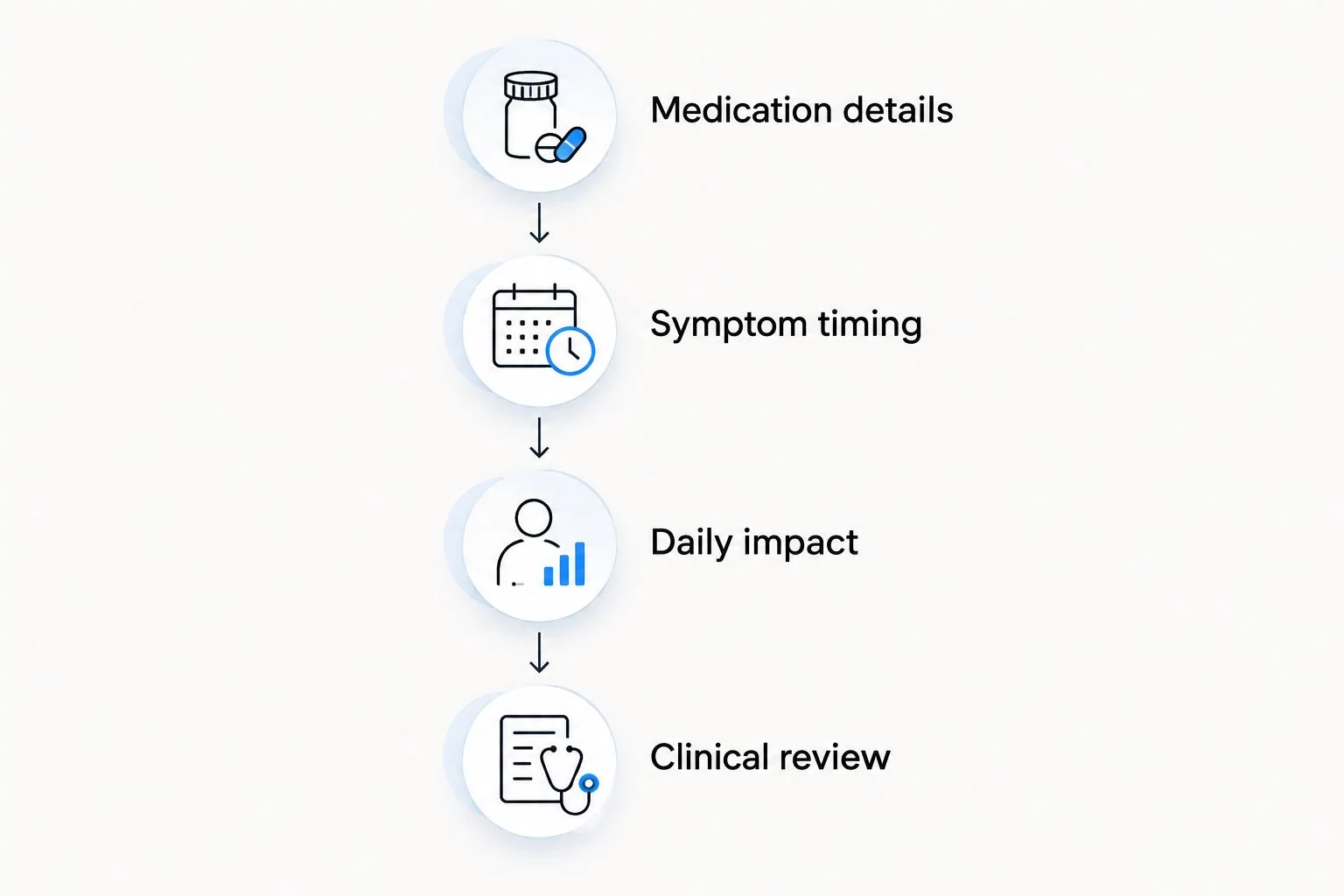
A useful 2026 symptom log connects what happened with your medication schedule. It should help your prescriber distinguish a manageable reaction from a problem requiring assessment.
- Medication details: Record the prescribed medication, formulation, dose, and injection date.
- Symptom timing: Note when nausea, vomiting, diarrhea, or constipation began and whether it followed a dose change.
- Daily impact: Describe whether you can drink, eat, urinate normally, and complete usual activities.
- Clinical review: Share the record before the next planned increase if symptoms remain troublesome. Seek urgent care instead of logging and waiting when warning signs occur.
Do not accelerate your schedule because you feel no nausea. Side effects are not a measure of whether treatment is working, and deliberately provoking symptoms is not a treatment goal.
Have questions about your options? Start with a quick online assessment.
Start My Pre-AssessmentFAQ
Which has fewer side effects, semaglutide or tirzepatide?
Neither medication is universally better tolerated. Separate adult weight-management trials reported gastrointestinal reactions in 73% of Wegovy-treated participants and 56% of Zepbound-treated participants, but those figures do not establish a head-to-head safety winner.
Does tirzepatide cause less nausea than semaglutide?
The cited Zepbound trials reported nausea in 25%–29% of treated adults, compared with 44% in the separate Wegovy trials. Different study populations and methods limit what that comparison predicts for you.
Are semaglutide and tirzepatide side effects the same in 2026?
Their common digestive side effects overlap: both include nausea, diarrhea, vomiting, and constipation. Their precautions are not identical; tirzepatide has a specific instruction about oral contraception after starting treatment and increasing the dose.
Should I increase my dose if I still feel nauseated?
Contact your prescriber before a planned increase if nausea remains troublesome. Do not accelerate or otherwise change your prescribed schedule on your own.
Can I switch to tirzepatide if semaglutide makes me sick?
A prescriber can assess whether switching is appropriate, but switching does not guarantee fewer symptoms. Both medications cause digestive reactions, and their doses are not interchangeable milligram for milligram.
What side effects need urgent medical attention?
Severe or persistent abdominal pain, repeated vomiting with inability to keep fluids down, or markedly reduced urination needs prompt medical assessment. Trouble breathing, throat swelling, or collapse requires emergency help.
Do these percentages apply to compounded medications?
No, the table reports results for FDA-approved Wegovy and Zepbound injections in their cited trials. It does not establish adverse-reaction rates for compounded preparations.
Does VEVArx offer online GLP-1 weight-loss prescriptions?
VEVArx offers doctor-prescribed semaglutide and tirzepatide through its online telehealth platform for US adults seeking medically supervised weight loss. A clinician must assess whether a medication is appropriate for your circumstances.
One last thing
Nausea is not proof that your medication is working. In 2026, judge treatment with your prescriber using your clinical response and tolerability—not how uncomfortable you feel after an injection.
Bring your symptom record to your next VEVArx GLP-1 weight-loss discussion. A useful treatment plan addresses both the intended benefit and whether you can safely continue it. This article provides education, not a diagnosis or individualized dosing instructions.
Related guides
Ready to get started?
See if doctor-prescribed GLP-1 treatment may be right for you. It only takes a few minutes, 100% online.
Start My Pre-AssessmentThis article is for informational purposes only and is not medical advice. Compounded medications are not approved by the FDA and have not been reviewed for safety, effectiveness, or quality. Prescription products require an online consultation with a licensed healthcare provider who will determine if a prescription is appropriate. Individual results vary.