
Can you take tirzepatide with alcohol?
Can you take tirzepatide with alcohol? Ask your prescriber first. Learn when to avoid drinking, blood sugar risks, and symptoms needing urgent care.

You can sometimes drink alcohol while taking tirzepatide, but avoiding alcohol is the lowest-risk choice, and your prescriber should assess whether drinking fits your treatment plan. Alcohol can worsen nausea and dehydration and increase the risk of low blood sugar, especially if you also take insulin or a sulfonylurea. This 2026 guide explains when to skip alcohol, which symptoms need attention, and why moving your injection does not remove the risk.
- Can you take tirzepatide with alcohol? Sometimes, but avoiding alcohol is the lowest-risk choice.
- Insulin, sulfonylureas, missed meals, and vomiting make alcohol more concerning during tirzepatide treatment.
- Changing injection day does not remove alcohol-related risks because tirzepatide stays in your system between doses.
- VEVArx fits US adults seeking online, medically supervised GLP-1 weight-loss care; drinking decisions require individual clinical advice.
Can you take tirzepatide with alcohol?
Tirzepatide does not carry a blanket alcohol prohibition in FDA prescribing information, but that is not clearance to drink. Your other medications, food intake, symptoms, and medical history determine the practical risk.
For adults considering online treatment, VEVArx offers doctor-prescribed GLP-1 weight-loss care. A prescription assessment should include an honest discussion of how much and how often you drink.
| Situation | Main concern | Best next step |
|---|---|---|
| You feel well, eat normally, and do not take medicines that commonly cause low blood sugar | Alcohol can still worsen stomach symptoms and affect food choices | Ask your prescriber whether any alcohol is appropriate |
| You take insulin or a sulfonylurea | Alcohol can contribute to delayed low blood sugar | Get an individualized glucose-monitoring and drinking plan |
| You have nausea, vomiting, diarrhea, or poor food intake | Drinking can compound dehydration and make symptoms harder to manage | Skip alcohol and address symptoms |
| You have persistent, severe abdominal pain | Pancreatitis or another urgent condition needs assessment | Stop tirzepatide and seek immediate medical care |
Why this matters
The useful question is not just whether alcohol and tirzepatide have a listed drug interaction. It is whether drinking makes your current treatment less safe.
Tirzepatide affects appetite and delays stomach emptying. If you eat less, vomit, or struggle to drink enough fluids, a drinking routine that previously felt manageable needs reassessment. Feeling fine before a drink does not guarantee you will feel fine afterward.
Curious whether you qualify? A licensed provider makes the final call.
Start My Pre-AssessmentWhy alcohol risk varies during tirzepatide treatment
There is no single drinking rule that fits everyone taking tirzepatide in 2026. These factors change the advice:
- Other medications: Insulin and sulfonylureas increase hypoglycemia risk with tirzepatide. Alcohol adds another concern because it interferes with the liver's release of glucose.
- Food intake: Drinking without eating is especially concerning when appetite suppression already makes meals smaller or less frequent.
- Current symptoms: Nausea, vomiting, and diarrhea make alcohol a poor choice, particularly when you cannot replace lost fluids.
- Treatment changes: Starting tirzepatide or increasing the dose can bring new gastrointestinal symptoms. Reassess drinking rather than assuming previous tolerance still applies.
- Medical history: Pancreatitis, liver disease, and problematic alcohol use require a specific discussion with your clinician.
- Drinking pattern: The amount and speed of drinking matter. A large mixed drink is not necessarily a single serving of alcohol.
These factors overlap. Someone taking insulin who has barely eaten and is vomiting needs a different plan from someone eating normally without glucose-lowering medicines that commonly cause hypoglycemia.
How alcohol can affect your blood sugar
Alcohol can reduce the liver's ability to release glucose, which matters when your blood sugar falls. The risk deserves particular attention if you use insulin or a sulfonylurea alongside tirzepatide.
Tirzepatide alone has a lower hypoglycemia risk than treatments that directly increase insulin regardless of glucose levels. That distinction does not make drinking on an empty stomach a safe experiment.
Low blood sugar can cause sweating, shakiness, hunger, dizziness, confusion, or unusual behavior. Some signs resemble intoxication, so neither you nor someone with you should automatically dismiss them as alcohol effects.
A glucose reading below 70 mg/dL needs prompt treatment. The American Diabetes Association's standard approach for an alert adult who can swallow is 15 grams of fast-acting carbohydrate, followed by another glucose check after 15 minutes; repeat if glucose remains low, following your personal diabetes plan.
If someone is unconscious, having a seizure, or cannot swallow safely, do not give food or drink. Use prescribed glucagon if available and call emergency services. Alcohol-related hypoglycemia can be delayed, including overnight, so your clinician's monitoring instructions matter after drinking ends.
Nausea, dehydration, and abdominal pain are different warnings
Mild nausea is not the same as severe, persistent abdominal pain. Alcohol can blur that distinction if you assume every symptom is a hangover.
Tirzepatide prescribing information warns about severe gastrointestinal reactions and kidney injury associated with volume depletion. If vomiting or diarrhea prevents you from keeping fluids down, skip alcohol and contact your clinician promptly.
Seek urgent assessment for severe abdominal pain that does not go away, especially if it spreads to your back, with or without vomiting. Stop tirzepatide and seek immediate medical advice if pancreatitis is suspected. Do not wait for another injection day to raise the concern.
Heavy alcohol use is an established cause of pancreatitis, and tirzepatide labeling includes a pancreatitis warning. That does not establish a specific combined risk percentage; it does establish a reason not to dismiss concerning pain.
Does skipping injection day make drinking safer?
No reliable alcohol-free window comes from shifting your injection. Tirzepatide has an elimination half-life of approximately 5 days, according to FDA prescribing information for Mounjaro, so the medicine remains in your body between weekly doses.
Waiting until the day before your next injection does not mean tirzepatide has cleared. Skipping a prescribed dose to accommodate drinking also disrupts treatment without establishing safety.
For your 2026 treatment plan, keep medication timing tied to prescribing instructions, not social events. Ask your clinician about drinking separately from any question about missed doses or schedule changes.
What counts as a drink?
A standard drink measures alcohol, not the size of the glass. The National Institute on Alcohol Abuse and Alcoholism defines a US standard drink as approximately 14 grams of pure alcohol.
Common examples are:
- Beer: 12 fluid ounces at 5% alcohol by volume.
- Wine: 5 fluid ounces at 12% alcohol by volume.
- Distilled spirits: 1.5 fluid ounces at 40% alcohol by volume.
These are measurement examples, not recommended amounts for someone taking tirzepatide. Strong beer, generous wine pours, and cocktails containing multiple measures can exceed a standard drink.
When discussing alcohol with your prescriber in 2026, describe the actual beverage, serving size, strength, and frequency. Saying you have one drink leaves out information the clinician needs.
What should you do before drinking on tirzepatide?
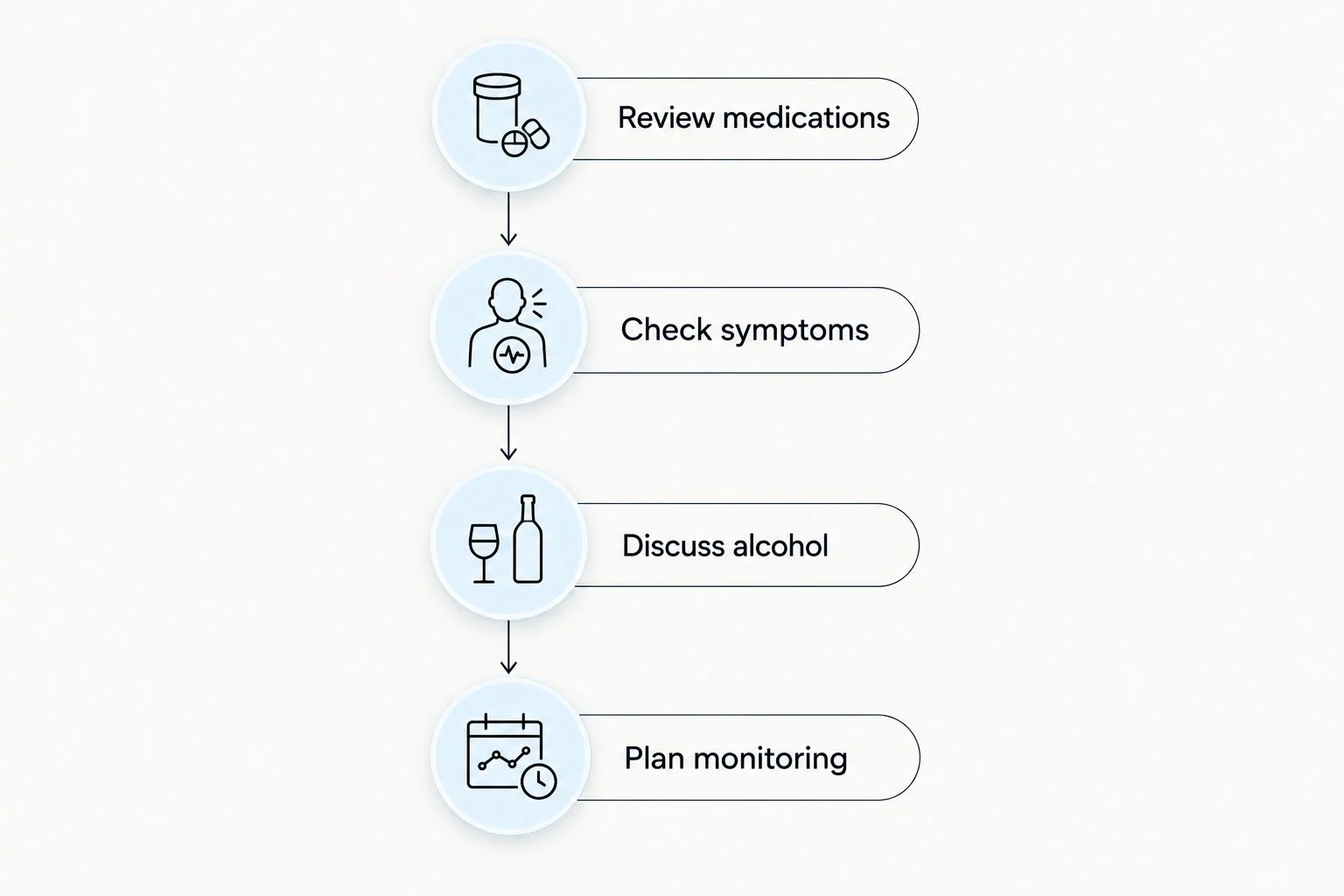
Use this sequence before making a drinking decision. None of these steps makes alcohol risk-free; they help you identify reasons to avoid it and questions your clinician needs to answer.
- Review medications. Tell your prescriber about insulin, sulfonylureas, and every other prescription or nonprescription medicine you use. Do not reduce diabetes medication yourself to make room for alcohol.
- Check symptoms. Skip alcohol if you have vomiting, diarrhea, significant nausea, dizziness, poor intake, or signs of dehydration. Persistent or severe symptoms need medical attention.
- Discuss alcohol. Describe your actual drinking pattern and ask whether avoiding alcohol is necessary given your health history. Mention any past pancreatitis or difficulty controlling alcohol use.
- Plan monitoring. If your clinician says drinking is acceptable, follow the specific advice about meals, fluids, glucose checks, and responding to symptoms. Do not improvise a limit from someone else's experience.
Keep a brief record of symptoms and alcohol intake to discuss at follow-up. If you are assessing treatment progress, the guide to how you know if tirzepatide is working addresses that separate question; alcohol tolerance is not a measure of medication effectiveness.
Find out if GLP-1 treatment may be right for you.
Start My Pre-AssessmentIs avoiding alcohol better than limiting it?
Avoiding alcohol removes alcohol-related risks; limiting alcohol reduces exposure but does not eliminate those risks. Whether any drinking is appropriate depends on your clinician's assessment, not a universal tirzepatide allowance.
| Approach | Best for | Advantage | Limitation |
|---|---|---|---|
| Avoiding alcohol | People with active side effects or instructions not to drink | Removes alcohol as a contributor to symptoms and glucose problems | Does not prevent tirzepatide side effects or replace monitoring |
| Clinician-approved limited drinking | People individually assessed as suitable | Allows a specific plan around meals, medicines, and monitoring | Still carries alcohol-related risks and requires reassessment if health changes |
If you drink heavily or regularly and have experienced withdrawal, get medical advice before abruptly stopping. Alcohol withdrawal can be dangerous; choosing not to drink needs a supervised plan when dependence is present.
Can alcohol slow weight loss while taking tirzepatide?
Alcohol adds calories and can make it harder to follow your eating plan. It can also replace food when your appetite is low, leaving you with less room for protein and other nutrients.
There is no defensible universal figure for how much weight loss a drink cancels out. Judge progress through your prescribed follow-up plan, not a drink-to-pounds calculation.
In 2026, the practical recommendation remains to tell your clinician if alcohol is displacing meals or making your routine harder to maintain. Do not increase tirzepatide to compensate for drinking.
Where online medical supervision fits
VEVArx offers online, doctor-prescribed GLP-1 weight-loss treatment for US adults seeking medical supervision. That service is relevant when you need a clinician to assess treatment suitability and discuss concerns such as alcohol use.
VEVArx is not a substitute for emergency care. Severe abdominal pain, loss of consciousness, or a seizure requires urgent in-person help, not a routine telehealth message.
Have questions about your options? Start with a quick online assessment.
Start My Pre-AssessmentFAQ
Can I have a glass of wine while taking tirzepatide?
A glass of wine is not automatically safe during tirzepatide treatment. Ask your prescriber whether alcohol fits your medication list, symptoms, food intake, and medical history; a large pour can contain more than a standard drink.
How long should I wait after a tirzepatide injection to drink alcohol?
There is no established waiting interval that makes alcohol safe after a tirzepatide injection. Tirzepatide has an approximately 5-day half-life and remains in your body between weekly doses, so shifting drinking to another day does not remove the risks.
Can tirzepatide and alcohol cause low blood sugar?
Alcohol can contribute to low blood sugar during tirzepatide treatment, especially when you also take insulin or a sulfonylurea. Missed meals add concern, and low blood sugar can occur after drinking has ended.
Should I skip tirzepatide if I plan to drink?
Do not skip or change tirzepatide solely to accommodate alcohol without your prescriber's instructions. A missed dose does not immediately clear the medicine or establish that drinking is safe.
What if I already drank alcohol while taking tirzepatide?
Stop drinking and assess how you feel; having consumed alcohol does not automatically mean an emergency. Follow your prescribed glucose-monitoring plan if applicable, and seek urgent help for severe persistent abdominal pain, confusion, fainting, or inability to keep fluids down.
Is beer safer than spirits while taking tirzepatide?
Beer is not inherently safer than spirits during tirzepatide treatment. Total alcohol intake, serving size, food intake, other medicines, and your current symptoms matter more than the beverage name.
Does feeling less interested in alcohol mean tirzepatide is working?
Reduced interest in alcohol is not a reliable measure of tirzepatide effectiveness. Assess your treatment against the health goals and monitoring plan agreed with your prescriber, and do not use tirzepatide as a substitute for alcohol-use treatment.
One last thing
The most useful detail to tell your prescriber is what happens around drinking—not just how many drinks you have. Mention skipped meals, overnight sweating, vomiting, dizziness, or abdominal pain, including when those symptoms occur.
For this 2026 guide, the clinical reference points are FDA tirzepatide prescribing information for medication warnings and pharmacology, NIAAA guidance for standard-drink measurements, and American Diabetes Association guidance for treating low blood sugar. Your own prescription instructions and individualized care plan determine what you should do.
Related guides
Ready to get started?
See if doctor-prescribed GLP-1 treatment may be right for you. It only takes a few minutes, 100% online.
Start My Pre-AssessmentThis article is for informational purposes only and is not medical advice. Compounded medications are not approved by the FDA and have not been reviewed for safety, effectiveness, or quality. Prescription products require an online consultation with a licensed healthcare provider who will determine if a prescription is appropriate. Individual results vary.