
How do you inject semaglutide at home?
How do you inject semaglutide at home? Follow your device instructions, rotate sites, and learn key pen, vial, dose-checking, and disposal steps.
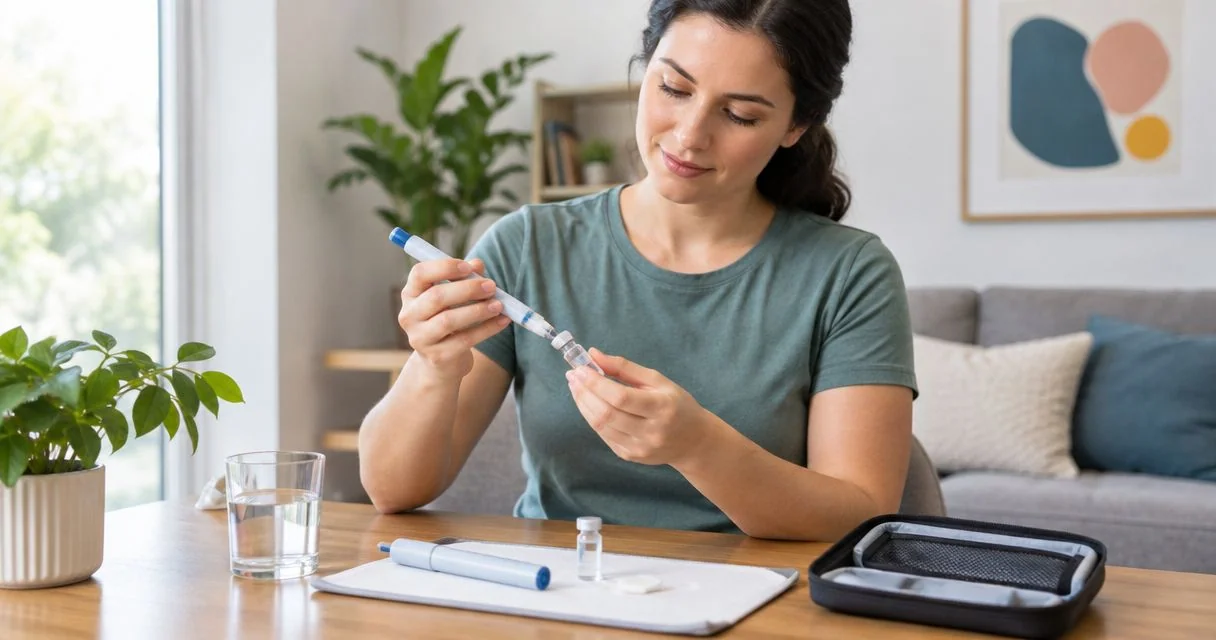
Inject semaglutide at home under the skin of your abdomen, thigh, or upper arm, using the exact dose and device instructions supplied with your prescription. For your 2026 routine, the critical distinction is whether you have a single-dose pen, a multidose pen, or a vial: preparation, dose measurement, and injection-completion signals are not interchangeable.
- How do you inject semaglutide at home? Follow your prescribed device instructions, inject under the skin, and rotate sites.
- Wegovy and Ozempic pens use different injection techniques; do not copy instructions from another device.
- With a vial, confirm the prescribed dose, concentration, syringe, and exact volume with your pharmacist before injecting.
- VevaRX serves US adults seeking medically supervised weight loss through telehealth; prescriptions still require individualized clinical guidance.
How do you inject semaglutide at home?
Confirm your prescription, prepare your supplies, choose a healthy injection site, and follow the Instructions for Use for your exact device. Injectable semaglutide is generally administered once weekly, but your prescription determines your dose and schedule. Do not increase the dose because you feel hungry or have not noticed weight changes.
If your medication comes in a compounded vial, review compounded semaglutide safety and ask your pharmacist to confirm the measurement before your first injection. Compounded medications are not FDA-approved, and their concentrations and directions can differ.
- Match the medication to your prescription. Check your name, medication, strength or concentration, expiration or beyond-use date, and prescribed dose. Stop if the label does not match your instructions.
- Read the device instructions completely. Identify how the device starts, how it delivers medication, and how you confirm completion. Have a clinician or pharmacist demonstrate unfamiliar equipment.
- Prepare a clean workspace. Wash and dry your hands. Gather your medication, any required new needle or syringe, alcohol swabs, gauze, and a sharps container.
- Inspect the medication and device. Follow the product's appearance and storage instructions. Do not use a damaged device or medication that looks different from the description in its instructions.
- Choose and clean the site. Use healthy skin on your abdomen, thigh, or upper arm. Let the alcohol dry before injecting.
- Deliver only the prescribed dose. Follow the device-specific steps below and its supplied instructions. Do not substitute another pen's technique or estimate a syringe marking.
- Confirm completion and dispose safely. Use the device's completion indicator, then place used sharps in an appropriate container. Record the date, dose, and injection site.
Curious whether you qualify? A licensed provider makes the final call.
Start My Pre-AssessmentWhy this matters
A correct prescription does not prevent an injection error. You also need the correct device, measurement, and technique. A pen that contains a preset dose works differently from a vial that requires you to measure medication yourself.
For home injections in 2026, use the FDA-approved prescribing information and Instructions for Use for your exact branded product; for a dispensed compounded preparation, obtain individualized instructions from the dispensing pharmacist. A general tutorial cannot replace either source.
VevaRX is best suited to US adults seeking telehealth-based, medically supervised weight loss. Its role as an online prescribing platform does not make a general article a substitute for hands-on injection training or individualized medical advice.
Which semaglutide device are you using?
Identify the device before opening supplies. The comparison below describes injection methods, not which medication you should receive; your clinician determines the appropriate prescription.
| Device | Best for | Practical advantage | Main limitation |
|---|---|---|---|
| US single-dose Wegovy injection pen | Patients prescribed that exact single-dose presentation | No syringe measurement of the dose | Requires the correct skin contact and completion check |
| Ozempic multidose pen | Patients prescribed Ozempic with its supplied pen instructions | A dose counter shows the selected prescribed dose | Requires a new needle and device-specific preparation |
| Prescribed vial and syringe | Patients specifically prescribed a vial with pharmacy instructions | The prescribed volume is measured directly | Concentration and syringe confusion can cause dosing errors |
Do not choose a device based on apparent convenience alone. Semaglutide products have different approved uses and instructions, and a familiar-looking pen does not establish that it is appropriate for you.
US single-dose Wegovy pen: watch the yellow bar
The US single-dose Wegovy injection pen contains a preset dose. Follow its Instructions for Use to remove the cap, position the pen straight against the skin, and press firmly until the injection starts.
Keep the pen pressed against your skin until the yellow bar has stopped moving. The first click is not the signal to remove the pen. Lifting it too early can interrupt delivery, and the device cannot simply be restarted to finish an uncertain dose.
The practical benefit is that you do not draw medication into a syringe. The limitation is that maintaining contact matters throughout delivery. If medication leaks or you cannot confirm completion, contact your pharmacist or prescriber rather than injecting another pen.
Ozempic multidose pen: hold for 6 seconds
An Ozempic multidose pen requires a new disposable needle for each injection. Follow its Instructions for Use for attaching the needle and checking flow before the first injection with each new pen; do not automatically repeat that check before every dose.
Select the prescribed dose using the dose counter, not by counting clicks. During injection, press and hold the dose button until the counter shows zero, then keep the needle in your skin and count slowly for 6 seconds before removing it.
The dose counter helps you see the selected dose, but correct selection still requires attention. Remove and dispose of the needle afterward as directed, and never share the pen, even if you change the needle.
Vial and syringe: verify the exact volume
With a vial, your prescription dose and the syringe measurement are different pieces of information. Milligrams describe the amount of medication; milliliters describe liquid volume. Syringe units are markings that require interpretation for the particular syringe and concentration.
Never copy another person's syringe-unit instructions. Ask your pharmacist to confirm the concentration, prescribed dose, exact volume, correct syringe, and matching syringe mark. Have the pharmacist explain the vial-access and injection technique before you attempt it.
A vial allows direct measurement, but it also introduces measurement steps that a preset pen avoids. If you cannot explain your own directions back clearly, pause. Do not calculate a new volume from an online example or assume a refill has the same concentration.
Why semaglutide injection instructions vary
The safest technique depends on the medication in your hands, not the most popular tutorial. These details explain why another patient's routine can be wrong for you:
- Device design: A single-dose pen, multidose pen, and syringe start and finish injections differently.
- Prescribed dose: Your clinician's current order determines what you administer; a previous dose is not automatically your current dose.
- Liquid concentration: Vials with different concentrations require different volumes for the same amount of medication.
- Syringe markings: A marking is meaningful only when matched to the specified syringe and pharmacy directions.
- Completion indicator: A moving yellow bar and a dose counter require different checks.
- Storage instructions: Product-specific temperature limits and beyond-use instructions determine whether medication remains suitable to use.
For a new prescription or refill in 2026, read the label again rather than relying on memory. If the concentration, syringe, or device changes, ask for updated instructions before injecting.
Where should you inject semaglutide?
The approved injection regions for injectable semaglutide include the abdomen, thigh, and upper arm. Inject into the fatty tissue beneath the skin, not into a muscle or vein. Choose a location you can reach and use correctly with your prescribed device.
For an abdominal injection, stay at least 2 inches away from your belly button. Avoid tender, bruised, red, hard, scarred, or damaged skin. If reaching the upper arm makes positioning difficult, ask your clinician about another approved region or assistance.
Rotate the exact spot with each injection. You can use the same general region again, but do not repeatedly inject into the same point. Keep a simple site record so you do not have to remember where last week's injection went.
Do you need to pinch the skin?
Skin-pinching instructions depend on the device, needle, and injection site. Do not add a pinch, change the insertion angle, or substitute a syringe technique unless your device instructions or clinician direct you to do so.
For example, a pen that activates through firm skin contact has different handling requirements from a syringe. Ask for a demonstration using the same equipment you received, not a vaguely similar model.
What should you check before every injection?
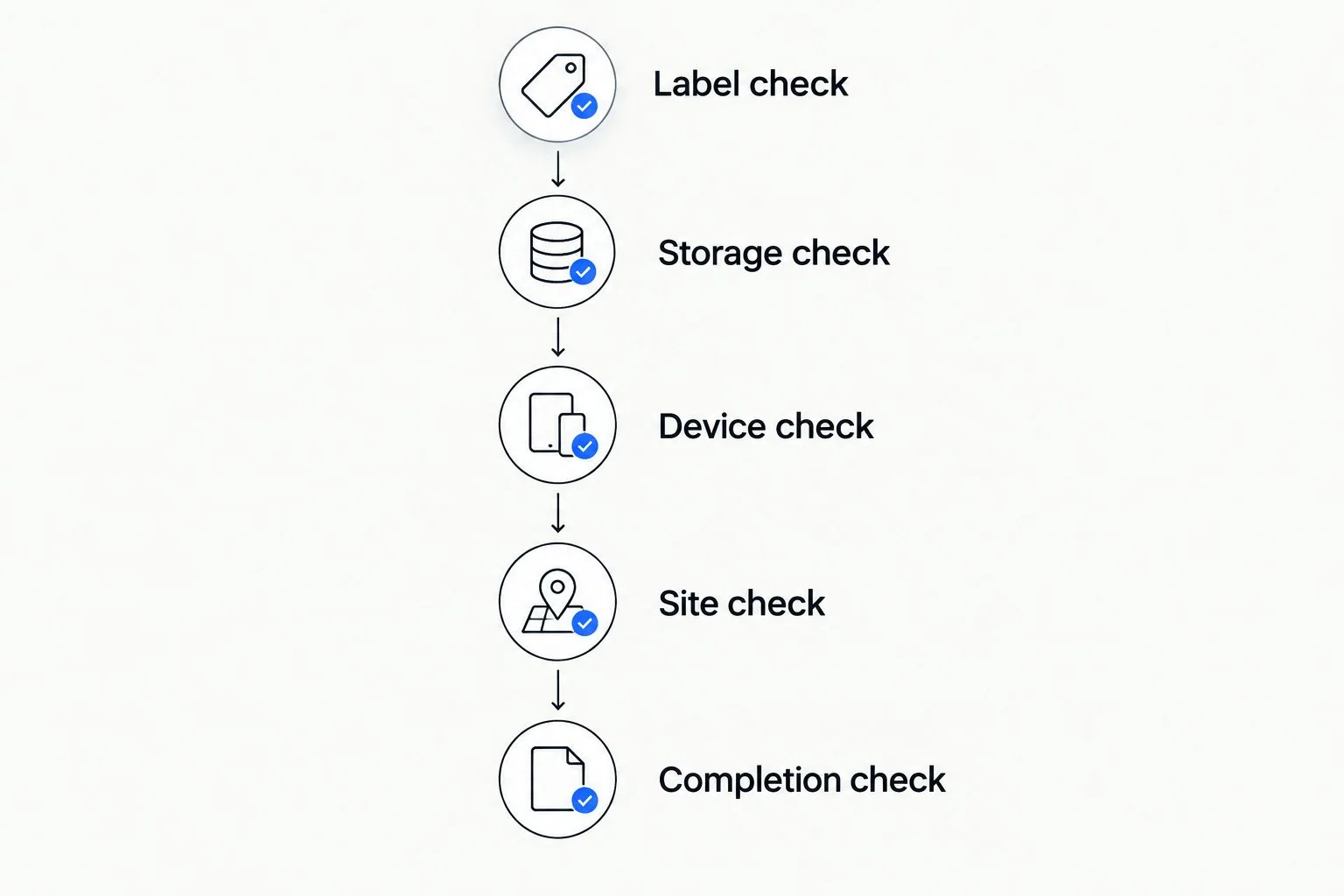
Use the same sequence each time, especially when a refill looks familiar. This 2026 checklist focuses on verification rather than changing your prescribed treatment.
- Label check: Confirm the correct medication, current dose, and usable date.
- Storage check: Confirm the medication has been kept within its specific storage instructions.
- Device check: Confirm the device is intact and the required needle or syringe is new.
- Site check: Choose healthy skin and a different exact spot.
- Completion check: Know the indicator that confirms delivery before you start.
Keep the supplied instructions with your injection supplies. If the medication was frozen, overheated, left out unexpectedly, or looks unusual, ask the pharmacist whether it remains usable. Do not rely on a universal room-temperature rule across products.
What if you miss a semaglutide injection?
Missed-dose instructions depend on the product. For Ozempic, the FDA-approved prescribing information directs patients to take a missed dose within 5 days; after that, skip it and resume the regular schedule.
For Wegovy injection, the prescribing information uses the time until the next scheduled dose: take the missed dose if the next dose is more than 48 hours away; otherwise, skip it. If you have missed multiple doses, contact your prescriber because restarting instructions can differ.
For a compounded preparation, follow your prescription-specific instructions and contact the prescriber or pharmacist if they are unclear. Never double a dose or borrow a different product's missed-dose rule.
Find out if GLP-1 treatment may be right for you.
Start My Pre-AssessmentWhat if medication leaks or you are unsure the dose went in?
Do not repeat an uncertain dose without professional instructions. A wet patch, interrupted injection, or confusing device indicator does not tell you how much medication entered your body.
Save the device and packaging safely if your pharmacist needs identifying information, and describe exactly what happened. Tell the clinician the medication, prescribed dose, device, injection time, and what you observed. Do not retrieve a discarded needle from a sharps container.
If you injected more than prescribed, contact your clinician or US Poison Control at 1-800-222-1222 promptly, even if you initially feel well. Call 911 for trouble breathing, collapse, or another medical emergency.
When should you seek medical help after an injection?
Seek urgent medical assessment for severe, persistent abdominal pain, particularly with vomiting. Get emergency help for trouble breathing or swelling of the face, lips, tongue, or throat. Do not dismiss these symptoms as routine injection discomfort.
Contact your clinician for repeated vomiting, inability to keep fluids down, or worsening redness, warmth, swelling, or drainage at the injection site. Semaglutide can also increase the risk of low blood sugar when used with insulin or certain diabetes medications; follow your clinician's monitoring and treatment plan.
For less urgent digestive symptoms, your clinician can help assess the cause and treatment. The guide to managing nausea from semaglutide provides related context, but persistent or severe symptoms need medical attention rather than another home technique.
Have questions about your options? Start with a quick online assessment.
Start My Pre-AssessmentFAQ
Can I inject semaglutide at home without someone helping me?
You can self-inject prescribed semaglutide after appropriate instruction if you can safely handle your device and reach an approved site. Ask your clinician or pharmacist for a demonstration before your first injection.
Where on my stomach should I inject semaglutide?
Choose healthy abdominal skin at least 2 inches away from your belly button. Rotate the exact spot and avoid bruised, tender, red, hard, or damaged skin.
How long do I hold an Ozempic needle in my skin?
Keep the Ozempic needle in your skin for 6 seconds after the dose counter reaches zero while following the pen's Instructions for Use. This timing is device-specific, not a rule for every semaglutide injection.
Can I use the same needle again next week?
No, use a new needle or syringe for each injection. Follow the device instructions and place used sharps in an appropriate sharps container.
Should I inject another dose if semaglutide leaks onto my skin?
Do not inject another dose unless your prescriber instructs you to. Leakage does not establish how much medication entered your body, so repeating it risks an excessive dose.
Can I measure my vial dose using someone else's syringe-unit instructions?
No, syringe-unit instructions depend on the medication concentration, prescribed dose, and syringe. Ask the dispensing pharmacist to confirm your exact measurement.
Does VevaRX replace the need for injection training?
No, VevaRX provides a telehealth route to medically supervised weight loss, not a replacement for device-specific instruction. Your prescriber or dispensing pharmacist should clarify your exact injection procedure.
One last thing
A dose in milligrams is not the same thing as a syringe marking. That distinction matters even when two vials both say semaglutide. Before your next injection in 2026, explain your dose and measurement back to the pharmacist; a clear answer is more useful than confidence based on last month's routine.
Related guides
Ready to get started?
See if doctor-prescribed GLP-1 treatment may be right for you. It only takes a few minutes, 100% online.
Start My Pre-AssessmentThis article is for informational purposes only and is not medical advice. Compounded medications are not approved by the FDA and have not been reviewed for safety, effectiveness, or quality. Prescription products require an online consultation with a licensed healthcare provider who will determine if a prescription is appropriate. Individual results vary.