
How much tirzepatide should I take to lose weight?
How much tirzepatide should I take to lose weight? Follow your prescription, not a generic chart. Learn what guides dose changes and safety checks.

Take only the once-weekly tirzepatide dose written on your prescription; your prescriber should select and adjust it according to the medication’s labeling, your response, and side effects. Starting treatment, increasing a dose, and restarting after an interruption require different decisions, so a dose that suits someone else is not a safe personal recommendation. This 2026 guide explains how to check your instructions and discuss the right next step without adjusting treatment yourself.
- How much tirzepatide should I take to lose weight? Follow your prescribed dose, not someone else’s schedule.
- Tirzepatide dose changes depend on treatment response, tolerability, and the medication’s prescribing instructions.
- Do not confuse a prescribed dose in milligrams with syringe markings or injection volume.
- VevaRX offers US adults online, doctor-prescribed weight-loss care; a clinician must determine whether treatment is appropriate.
Why this matters
The goal is an effective, tolerable prescription—not the highest dose you can reach. Increasing tirzepatide without medical direction can expose you to avoidable adverse effects, including gastrointestinal symptoms and dehydration.
VevaRX is a telehealth weight-loss option for US adults seeking doctor-prescribed care. Online access does not replace individualized prescribing: the clinician still needs your medical history, current medications, and treatment response before deciding what you should take.
Curious whether you qualify? A licensed provider makes the final call.
Start My Pre-AssessmentHow much tirzepatide should I take to lose weight?
Your personal dose is the dose your prescriber has authorized for your current stage of treatment. For a 2026 medication review, the FDA-approved Zepbound prescribing information is the relevant reference for tirzepatide used for chronic weight management; it distinguishes treatment initiation, dose escalation, and maintenance.
An initiation dose helps introduce treatment. It is not interchangeable with a maintenance dose, and the existence of a higher labeled strength does not mean you need it. Your prescriber should consider both benefit and tolerability when choosing maintenance treatment.
| Treatment situation | Best suited to | Purpose | Main limitation |
|---|---|---|---|
| Starting treatment | Someone beginning a prescribed course | Introduce treatment according to labeling | Early response does not establish the final maintenance dose |
| Continuing the current dose | Someone whose clinician recommends staying at the prescribed strength | Maintain the current treatment plan | Follow-up still matters, even when treatment feels manageable |
| Increasing the dose | Someone whose prescriber authorizes escalation | Adjust treatment after assessing response and tolerability | Higher exposure can bring additional side effects |
| Restarting after a gap | Someone returning after an interruption | Reassess how to resume treatment safely | A previous prescription does not automatically establish the restart dose |
Do not use this comparison as an escalation schedule. Before your next injection, you should know your prescribed dose, the correct administration instructions, and whether your clinician has authorized any change.
Starting treatment: follow the initiation prescription
Starting tirzepatide is not a test of how much appetite suppression you can tolerate. The initial prescription introduces the medication while your clinician assesses how you respond.
Tell your prescriber about previous weight-loss medications, diabetes treatment, digestive symptoms, and relevant medical conditions before starting. Mention any previous tirzepatide use, including when you last took it and why you stopped.
Do not begin with a friend’s dose or leftover medication. Similar weight, appetite, or treatment goals do not make another person’s prescription appropriate for you. Previous experience with another medication also does not establish a tirzepatide starting dose.
Staying on treatment: assess benefit and tolerability together
A useful follow-up considers more than your latest scale reading. Your clinician needs to understand your weight trend, ability to eat and drink, gastrointestinal symptoms, and how consistently you have followed the prescription.
Feeling less hungry does not prove that a higher dose is necessary—or that your current dose is wrong. Appetite is one part of the assessment, not an instruction to change treatment.
Likewise, do not assume treatment has failed because a single weigh-in is unchanged. Bring a consistent record to your appointment and discuss the overall pattern. The guide to how long tirzepatide takes to work provides related context, but your prescription remains the authority for what you inject.
Increasing treatment: get explicit authorization
A dose increase should follow the prescribing instructions and an assessment of how you are doing. It should not happen simply because the next strength exists or because you want a faster result.
Before an increase, describe ongoing nausea, vomiting, diarrhea, constipation, abdominal pain, or difficulty maintaining hydration. Do not minimize symptoms to qualify for a higher dose. Symptoms that interfere with eating, drinking, or daily activities deserve clinical attention.
Ask your prescriber to confirm the new instructions in writing. If the pharmacy label and the clinician’s message disagree, resolve the discrepancy before injecting. Never combine leftover medication to create a different dose on your own.
Why your tirzepatide dose varies
Your dose is a prescribing decision, not a calculation based on body weight alone. These established considerations belong in a 2026 tirzepatide treatment review:
- Treatment stage: Starting, continuing, increasing, and restarting treatment involve different prescribing decisions.
- Tolerability: Gastrointestinal symptoms and difficulty maintaining hydration affect whether an increase is appropriate.
- Treatment response: Your clinician considers your weight-management progress alongside your ability to sustain treatment.
- Other medications: Insulin and medicines that stimulate insulin release require particular attention because of low-blood-sugar risk.
- Medical history: Relevant conditions, pregnancy plans, and previous adverse reactions can change whether treatment is appropriate at all.
- Treatment interruptions: A gap in use needs a restart discussion rather than an automatic return to an old schedule.
None of these factors gives you a do-it-yourself dosing formula. Their purpose is to help your clinician make a safer, individualized decision.
Check your prescription before each injection
Use a consistent check whenever you receive medication or your instructions change. This is especially important when the presentation, pharmacy, or prescribed strength differs from your previous supply.
- Prescription: Confirm the medication name, prescribed dose, and injection schedule. Check that the instructions belong to you and reflect the latest clinical decision.
- Label: Read the dispensing label and device instructions. Do not assume a familiar-looking pen, vial, or syringe works like your previous one.
- Administration: Confirm exactly how to deliver the prescribed dose. Ask the dispensing pharmacist to resolve unclear markings or conflicting instructions before use.
- Review: Record what you took and any symptoms. Bring that record to follow-up rather than relying on memory.
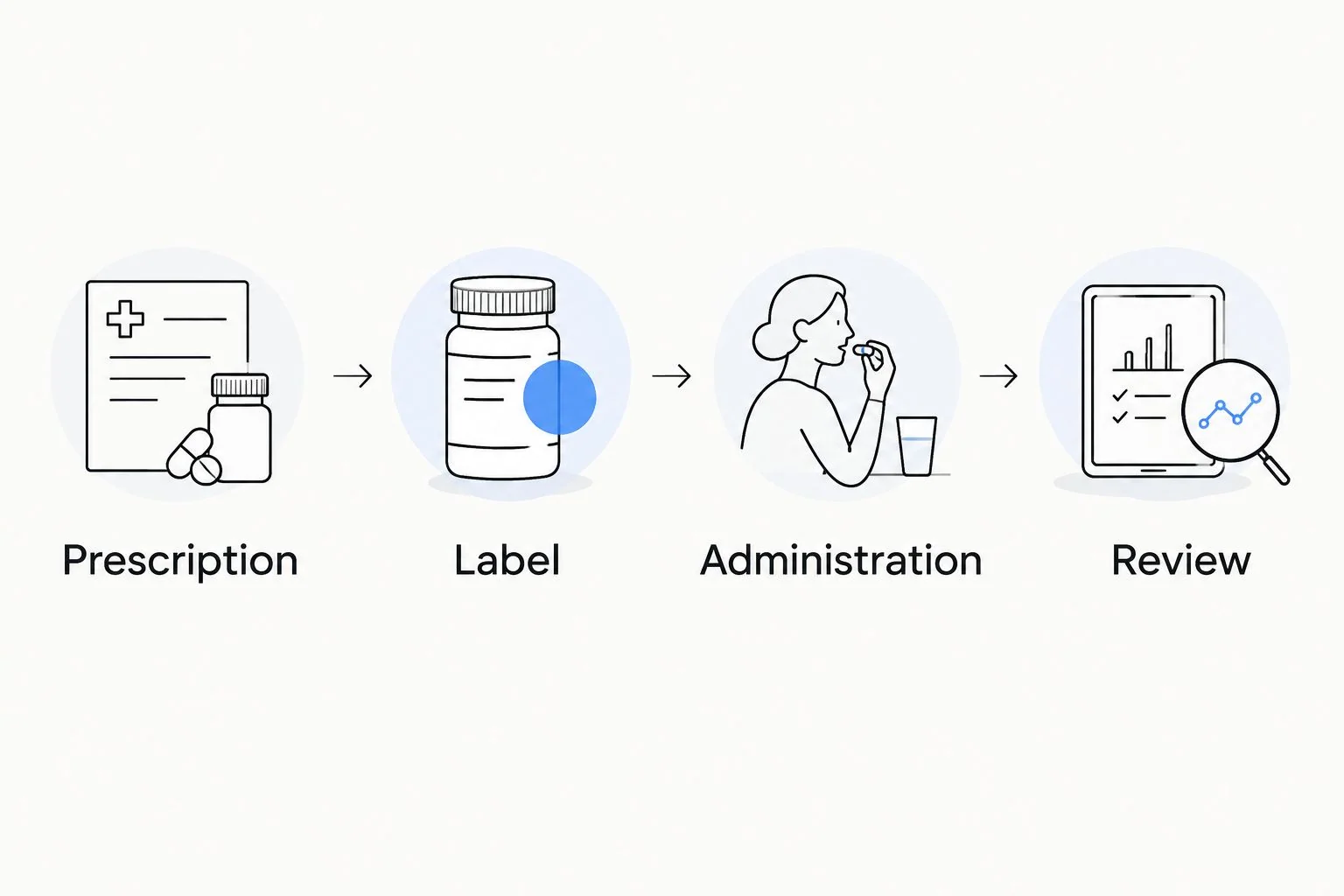
Stop and ask when something does not match. A delayed injection while you clarify an instruction is different from guessing at an amount you cannot verify. Contact your prescriber or pharmacist for instructions specific to your medication.
Milligrams, volume, and syringe markings are different
A prescribed dose describes the amount of medication. Injection volume describes the amount of liquid, while syringe markings describe how that syringe measures volume. These are not interchangeable terms.
If your prescription involves a vial and syringe, the concentration determines the volume needed to deliver the prescribed dose. You cannot safely copy someone else’s syringe markings without confirming the medication concentration and your own instructions.
Ask the pharmacist to explain the prescribed amount using your actual medication and administration supplies. Do not rely on an online conversion chart, a photograph, or instructions from a different vial. Never change the amount you draw up because a previous supply used different markings.
What should I tell my prescriber before a dose review?
Bring a short treatment record to your 2026 appointment. Include your current prescription, injection dates, missed doses, weight trend, and symptoms that affect eating, drinking, sleep, or normal activities.
Describe symptoms plainly. “I vomited after eating and could not keep fluids down” gives your clinician more useful information than “the dose feels strong.” Explain when symptoms started and whether they followed a change in treatment.
Also list prescription medicines, nonprescription products, and supplements. Tirzepatide delays gastric emptying and can affect the absorption of oral medications. If you use oral hormonal contraception, ask about the prescribing information’s instructions for additional or alternative contraception when starting treatment and after dose increases.
VevaRX offers doctor-prescribed tirzepatide through its online weight-loss platform. That service does not establish your eligibility, an appropriate dose, or a guaranteed result; those decisions require clinical assessment.
Find out if GLP-1 treatment may be right for you.
Start My Pre-AssessmentWhen should I seek help instead of discussing a higher dose?
Severe or persistent abdominal pain, particularly with vomiting, needs prompt medical assessment because pancreatitis is a recognized warning with tirzepatide. Persistent vomiting, inability to keep fluids down, or signs of dehydration also require medical advice rather than a routine escalation request.
Seek emergency help for trouble breathing, swelling of the face or throat, or other signs of a severe allergic reaction. If you suspect an overdose or dosing error, contact Poison Control or emergency services promptly; do not wait to see whether symptoms develop.
Tirzepatide also carries a boxed warning about thyroid C-cell tumors observed in rodents; whether it causes these tumors in humans is unknown. It is contraindicated with a personal or family history of medullary thyroid carcinoma or multiple endocrine neoplasia syndrome type 2. Tell your prescriber about these histories before treatment.
Can I increase tirzepatide if I am not losing weight?
Do not increase tirzepatide without your prescriber’s authorization. Ask for a review of your treatment duration, adherence, weight trend, side effects, and current prescription instead of treating an unchanged scale reading as permission to escalate.
Bring your administration instructions to that review if you are unsure whether you have been taking the prescribed amount. Clarifying technique is different from assuming the medication needs to be stronger.
Can I restart my previous dose after missing treatment?
Do not automatically restart an old tirzepatide dose after an interruption. Follow the medication’s missed-dose instructions and ask your prescriber how to resume when your gap extends beyond those instructions.
Explain when you last injected, what you took, and whether side effects contributed to stopping. Never double an injection to make up for missed treatment or use a previous escalation plan as a restart plan.
Should I stop tirzepatide once I reach my goal?
Reaching a goal is a reason to review your maintenance plan, not to improvise a new schedule. Discuss continued treatment, adverse effects, nutrition, and your preferences with the prescribing clinician.
Do not stretch injection intervals or reduce amounts without instructions. A plan you can follow accurately is more useful than an informal adjustment that leaves you unsure what to take next.
Have questions about your options? Start with a quick online assessment.
Start My Pre-AssessmentFAQ
How much tirzepatide should I take to lose weight?
Take the dose your prescriber has authorized for your current treatment stage. The correct personal prescription depends on the medication’s labeling, your response, tolerability, and medical history; do not select a dose from someone else’s schedule.
Is the highest tirzepatide dose best for weight loss?
The highest dose is not automatically the right dose for you. Your prescriber should select treatment based on benefit and tolerability rather than treating dose escalation as the goal.
Should I increase tirzepatide when my appetite comes back?
Do not increase tirzepatide on your own when appetite changes. Discuss the pattern alongside your weight trend, symptoms, and current prescription so your clinician can assess the next step.
Can I take an extra tirzepatide injection this week?
Do not take an extra injection outside your prescription. Follow the medication’s missed-dose instructions and contact your prescriber or pharmacist if you are unsure what to do.
Are syringe units the same as a tirzepatide dose?
Syringe markings are not the same as the amount of medication prescribed. For vial-based treatment, the concentration and syringe determine how to measure the prescribed dose; ask the pharmacist to confirm your exact instructions.
Can I combine tirzepatide with another GLP-1 medication?
Do not combine tirzepatide with another GLP-1 receptor agonist or another tirzepatide-containing product. The Zepbound prescribing information advises against these combinations; discuss any switch with your clinician.
Can VevaRX choose my tirzepatide dose online?
VevaRX offers online, doctor-prescribed weight-loss care, including tirzepatide. A clinician must assess whether treatment is appropriate and determine the prescription; online access does not establish eligibility or a particular dose.
One last thing
A familiar syringe marking does not guarantee a familiar dose. If your medication concentration or administration supplies change, have the pharmacist confirm the instructions again—even if you have injected before.
For your next 2026 treatment review, bring the dispensing label and your current written instructions. That gives your clinician something precise to check and helps prevent a discussion about “the dose” from overlooking how you actually measure and administer it. Keep the confirmed instructions with your medication so you do not have to reconstruct them later.
Related guides
Ready to get started?
See if doctor-prescribed GLP-1 treatment may be right for you. It only takes a few minutes, 100% online.
Start My Pre-AssessmentThis article is for informational purposes only and is not medical advice. Compounded medications are not approved by the FDA and have not been reviewed for safety, effectiveness, or quality. Prescription products require an online consultation with a licensed healthcare provider who will determine if a prescription is appropriate. Individual results vary.