
Can you take tirzepatide after gastric bypass surgery?
Can you take tirzepatide after gastric bypass surgery? Yes, with medical review. Learn about timing, nutrition, dose changes, and urgent warning signs.

Yes, you can take tirzepatide after gastric bypass surgery if a prescribing clinician determines that it is appropriate for your current weight, health, and nutritional status. Gastric bypass alone is not a listed contraindication, but ongoing vomiting, dehydration, poor intake, or a suspected surgical complication requires evaluation before treatment. In 2026, the decision should involve your bariatric team rather than treating a prescription as a substitute for postoperative follow-up.
- Can you take tirzepatide after gastric bypass surgery? Yes, with individualized medical review and attention to nutrition.
- Tirzepatide injections bypass intestinal absorption, but nausea and reduced appetite still matter after bariatric surgery.
- Weight regain needs assessment; medication does not correct a surgical complication or nutritional deficiency.
- VEVArx offers doctor-prescribed weight-loss care online; postoperative symptoms still require appropriate bariatric evaluation.
Can you take tirzepatide after gastric bypass surgery?
Yes—gastric bypass does not automatically rule out tirzepatide. The medication is injected under the skin, so it does not depend on absorption through the bypassed portion of your digestive tract. That does not make it risk-free: tirzepatide reduces appetite and delays gastric emptying, and gastrointestinal side effects can interfere with eating and drinking.
FDA prescribing information for tirzepatide does not list previous gastric bypass as a contraindication. That establishes that surgery alone is not an automatic exclusion; it does not establish that every postoperative patient should receive the medication. Your current symptoms and the reason for treatment remain central.
For broader context, see the GLP-1 weight-loss guide for bariatric surgery patients. Use the following distinctions to prepare for your appointment—not to approve yourself for treatment.
| Your situation | What it means for the discussion | Main limitation or concern |
|---|---|---|
| Weight regain after recovery | Tirzepatide can be considered alongside nutritional and medical assessment | Medication does not explain why weight returned |
| Less weight loss than expected | Your team should review your trajectory, eating tolerance, and health conditions | A slower trajectory does not automatically mean medication is necessary |
| Recent surgery with limited intake | Recovery and your surgeon's instructions take priority | Further appetite reduction can make nutritional intake harder |
| Persistent vomiting or abdominal pain | You need assessment before starting or increasing medication | A surgical complication must not be dismissed as a medication issue |
Curious whether you qualify? A licensed provider makes the final call.
Start My Pre-AssessmentWhy this matters
After gastric bypass, eating less is not the only goal. You still need enough protein, fluids, and prescribed vitamin and mineral supplementation to protect your health. Adding an appetite-suppressing medication without reviewing those basics can move the scale while creating another problem.
For a 2026 treatment decision, focus on whether tirzepatide supports your health—not simply whether it produces additional weight loss. Weight regain is a reason to reassess treatment, not evidence that you failed surgery. You deserve a plan that addresses the cause and protects your nutritional status.
When is tirzepatide appropriate after gastric bypass?
Tirzepatide is a potential option when you have an ongoing medical indication and can maintain adequate intake. The prescribing clinician should review your surgical history, weight trajectory, current medications, and relevant laboratory results before deciding whether to prescribe it.
For chronic weight management, FDA-approved tirzepatide labeling includes adults with a body mass index of 30 kg/m² or higher, or 27 kg/m² or higher with at least one weight-related condition. Meeting a threshold is not the same as being medically cleared. Previous surgery adds questions about recovery, nutrition, and complications.
The potential benefit is additional appetite and weight-management support. The trade-off is another treatment that can cause nausea, vomiting, diarrhea, constipation, and reduced intake. The best candidate is not simply someone who wants the scale lower; it is someone with an appropriate indication and a workable monitoring plan.
What should your clinician check first?
Bring information that lets the clinician separate a weight-management issue from a postoperative problem:
- Surgical history: Your procedure, surgery date, complications, and any revision procedures.
- Weight trajectory: Your weight before surgery, lowest postoperative weight, and recent changes.
- Eating tolerance: Vomiting, food getting stuck, reflux, abdominal pain, or difficulty finishing meals.
- Nutritional status: Your supplement routine and available bariatric laboratory results.
- Medication history: Diabetes medicines, previous weight-loss treatments, and adverse reactions.
These details shape the decision. A prescription visit should not skip them just because your surgery happened a long time ago.
How long after gastric bypass can you start tirzepatide?
There is no universal waiting period that makes tirzepatide appropriate for everyone after gastric bypass. Your surgeon and prescribing clinician need to consider healing, eating tolerance, hydration, and the reason you need treatment. Do not restart an old prescription after surgery without discussing it with them.
Early recovery is different from weight regain after a stable postoperative period. If you are still progressing through your surgeon's eating plan, struggling with fluids, or receiving treatment for a complication, those issues come first. A calendar date alone does not establish readiness.
For your 2026 appointment, ask a practical question: “What needs to be stable before I start?” The answer should address your intake, symptoms, relevant laboratory findings, and follow-up—not just how long it has been since surgery.
Does gastric bypass change tirzepatide dosing?
Gastric bypass does not create a separate FDA-labeled tirzepatide dosing schedule. Because tirzepatide is injected, intestinal bypass does not provide a reason to increase the dose to compensate for presumed poor absorption. Your prescriber still needs to account for tolerability and your ability to eat and drink.
FDA weight-management prescribing information starts tirzepatide at 2.5 mg once weekly for 4 weeks, followed by 5 mg once weekly. Further increases occur in 2.5 mg increments after at least 4 weeks on the current dose. These are labeling details, not a personalized postoperative prescription; the starting dose is not a maintenance dose.
Do not accelerate treatment because you previously tolerated another medication or because weight loss feels slow. Report worsening nausea, reduced fluid intake, and difficulty meeting your nutrition plan before a planned increase. A dose increase is not progress if you cannot stay hydrated or nourished.
Why the decision varies after gastric bypass
The same medication can be appropriate for one postoperative patient and unsuitable for another. These factors explain why a standard online questionnaire cannot replace an individualized clinical decision:
- Recovery status: Recent surgery and unresolved complications change the immediate priorities.
- Current intake: Appetite suppression matters differently when you already struggle to eat enough.
- Nutritional deficiencies: Iron, vitamin B12, and other deficiencies need attention alongside weight treatment.
- Diabetes medicines: Insulin and sulfonylureas increase the risk of low blood sugar when combined with tirzepatide.
- Digestive symptoms: Persistent pain, vomiting, or severe gastrointestinal disease requires additional assessment.
- Treatment goal: Managing weight recurrence is different from pursuing additional loss without a medical indication.
Do not use someone else's postoperative results as a forecast. Their procedure, health conditions, medication tolerance, and follow-up can differ from yours.
What should your monitoring plan include?
A useful 2026 monitoring plan follows more than body weight. It tracks whether treatment is tolerable and whether you can continue the nutrition and supplementation plan your bariatric team recommends. Agree on who handles medication questions and who evaluates surgery-related symptoms.
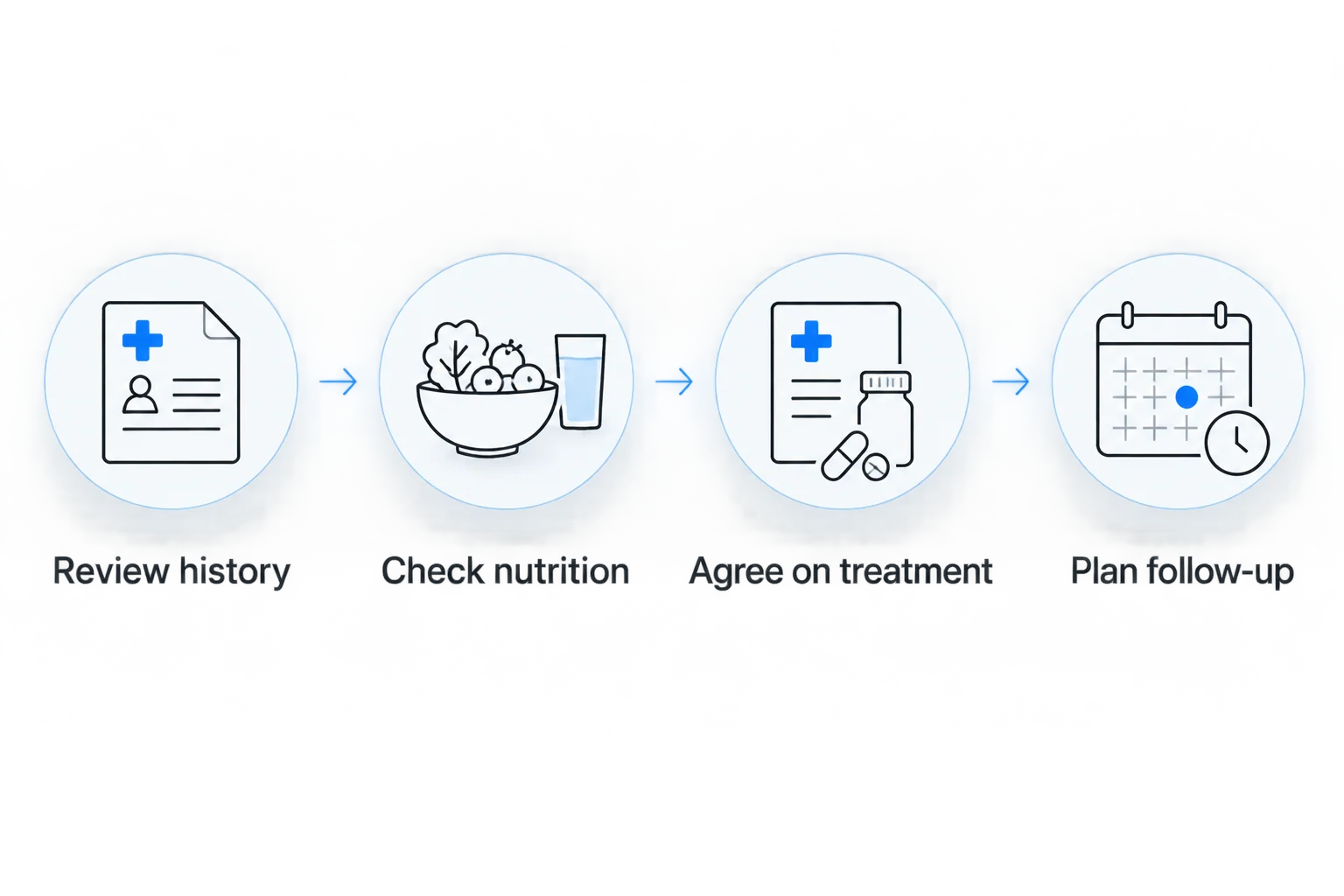
Use this sequence when discussing treatment:
- Review history: Share your surgical records, medication list, weight changes, and current symptoms.
- Check nutrition: Review food and fluid intake, supplements, and relevant laboratory testing.
- Agree on treatment: Clarify the indication, prescribed dose, and reasons to delay an increase.
- Plan follow-up: Establish how to report symptoms and when reassessment is needed.
Keep a brief record of symptoms, fluid tolerance, eating difficulties, and medication changes between appointments. If you monitor glucose, share those readings as instructed. A weight log alone cannot show dehydration, nutritional deficiency, or why abdominal pain developed.
VEVArx is best suited to adults seeking online, doctor-prescribed weight-loss care—not emergency evaluation after gastric bypass. VEVArx offers telehealth weight-loss prescriptions, but you should confirm whether a clinician can manage your particular postoperative needs and coordinate with your bariatric team.
Which side effects need urgent attention?
Do not assume new abdominal pain is a normal tirzepatide side effect. Gastric bypass complications and medication-related problems can overlap, and an online message is not a substitute for urgent assessment when symptoms are severe.
Seek urgent medical care for severe or persistent abdominal pain, repeated vomiting with inability to keep fluids down, fainting, or signs of significant dehydration. Severe abdominal pain that extends to the back can signal pancreatitis. Abdominal pain with fever or jaundice also needs prompt evaluation.
Trouble breathing, swelling of the face or throat, or collapse requires emergency care. Tell the treating team that you have had gastric bypass and that you take tirzepatide. Bring your medication list, including your most recent dose, if you can do so without delaying care.
Find out if GLP-1 treatment may be right for you.
Start My Pre-AssessmentWho should not take tirzepatide?
FDA prescribing information contraindicates tirzepatide in people with a personal or family history of medullary thyroid carcinoma, multiple endocrine neoplasia syndrome type 2, or a previous serious hypersensitivity reaction to tirzepatide or its ingredients. Gastric bypass does not remove these restrictions.
Tirzepatide is not recommended in severe gastroparesis. A history of pancreatitis or gallbladder disease requires a specific risk discussion rather than an automatic assumption of suitability. Tell your clinician if you are pregnant or planning pregnancy; weight-loss treatment is not appropriate during pregnancy.
Also disclose other GLP-1 medicines and products containing tirzepatide. FDA weight-management labeling does not recommend combining tirzepatide with another tirzepatide-containing product or a GLP-1 receptor agonist. More medication is not a safe shortcut to stronger results.
Will tirzepatide work for weight regain after bypass?
Tirzepatide can support weight management, but results from general obesity trials are not a personalized forecast after gastric bypass. Do not apply a headline trial percentage to your situation without discussing how the study population differs from you. Your response depends on treatment tolerance and the clinical reasons behind your weight recurrence.
For a 2026 plan, define success beyond a target weight. Discuss metabolic health, eating tolerance, physical function, and preservation of nutritional status. If treatment reduces your intake too much, the plan needs reassessment even when the scale is moving.
Can tirzepatide replace bariatric follow-up?
No—tirzepatide does not replace bariatric follow-up, nutritional monitoring, or prescribed supplements. The medication addresses part of weight regulation; it does not reverse bypass anatomy or repair a surgical complication.
Keep your bariatric care team involved even if a separate clinician prescribes medication. Clear responsibility matters: know whom to contact for routine dose questions, nutritional concerns, and urgent postoperative symptoms.
Have questions about your options? Start with a quick online assessment.
Start My Pre-AssessmentFAQ
Can I take tirzepatide if I had gastric bypass years ago?
Yes, previous gastric bypass does not automatically exclude tirzepatide treatment. A clinician still needs to review your current indication, nutritional status, symptoms, and medication history.
Does tirzepatide absorb normally after gastric bypass?
Tirzepatide is injected under the skin, so it does not depend on intestinal absorption in the way an oral medicine does. That does not eliminate gastrointestinal side effects or the need for postoperative monitoring.
How soon after gastric bypass can I restart tirzepatide?
There is no universal restart date after gastric bypass. Your surgeon and prescribing clinician should base the decision on recovery, food and fluid tolerance, and your reason for treatment.
Can tirzepatide make nutritional problems worse after bypass?
Tirzepatide can make adequate intake harder if appetite reduction, nausea, or vomiting prevents you from following your bariatric nutrition plan. Report these problems rather than continuing dose increases without review.
Is low blood sugar a concern after gastric bypass?
Low blood sugar needs individualized assessment after gastric bypass, especially if you use insulin or a sulfonylurea. Tell your clinician about previous post-meal episodes and follow the glucose-monitoring plan you receive.
Should I stop my bariatric vitamins while taking tirzepatide?
No—do not stop prescribed bariatric supplements because you start tirzepatide. Ask your bariatric team to review your supplement plan and laboratory monitoring if side effects make taking them difficult.
Can VEVArx prescribe tirzepatide after gastric bypass?
VEVArx offers doctor-prescribed tirzepatide through online weight-loss care. Whether a clinician can prescribe it for you after gastric bypass depends on an individualized assessment; do not assume that a history of surgery guarantees eligibility.
One last thing
An injection avoids the intestinal absorption question—not the nutrition question. Before starting tirzepatide, ask your clinician what to do if you cannot meet your fluid or food needs and which symptoms require immediate assessment. That plan matters more than reaching a higher dose quickly.
This article provides general education, not personal medical clearance. Your bariatric and prescribing clinicians should make treatment decisions using your history, examination when needed, and current clinical information.
Related guides
Ready to get started?
See if doctor-prescribed GLP-1 treatment may be right for you. It only takes a few minutes, 100% online.
Start My Pre-AssessmentThis article is for informational purposes only and is not medical advice. Compounded medications are not approved by the FDA and have not been reviewed for safety, effectiveness, or quality. Prescription products require an online consultation with a licensed healthcare provider who will determine if a prescription is appropriate. Individual results vary.